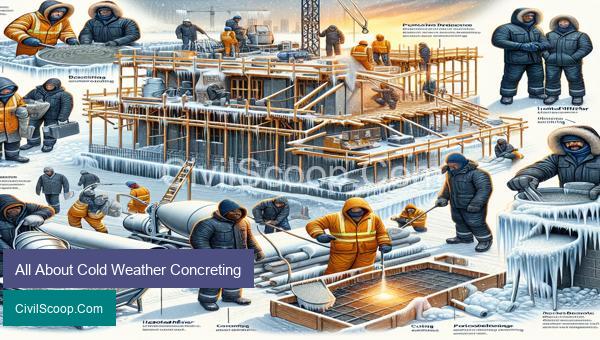
Winter weather can greatly impact construction projects, especially when it comes to concrete work. Cold temperatures, freezing conditions, and snowfall can all present challenges for contractors and engineers. However, with proper planning and techniques, cold weather conditions can be navigated successfully, allowing for continued progress even during the colder months. In this article, we will explore the ins and outs of cold weather concreting, from the effects of low temperatures on concrete to best practices for successful winter construction. If you have a project that requires concrete work in chilly weather, read on to learn all about cold weather concreting and how to make it a success.
Table of Contents
Common Mistakes in Cold Weather Concreting: How to Avoid Them?
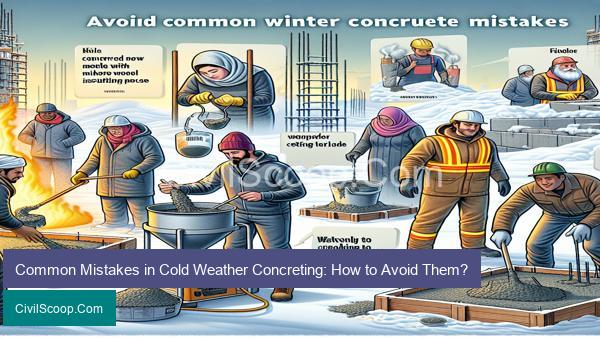
Cold weather concreting is a challenging process for civil engineers, as it involves placing and curing concrete in temperatures below 40 degrees Fahrenheit (4 degrees Celsius). The cold weather can significantly affect the performance and strength of concrete if not handled properly. Here are some common mistakes that engineers make in cold weather concreting and ways to avoid them.
1. Inadequate protection for concrete: Probably the biggest mistake in cold weather concreting is not providing adequate protection to the concrete. Concrete that is exposed to freezing temperatures can suffer from low strength, cracking, and surface scaling. Therefore, it is essential to use insulation blankets, heated enclosures, or curing compounds to protect the concrete and maintain a minimum temperature of 50 degrees Fahrenheit (10 degrees Celsius) during curing.
2. Incorrect mix design: In cold weather, concrete sets at a slower rate, which can delay construction schedules. As a result, some engineers may try to speed up the curing process by increasing the amount of accelerators or water in the concrete mix. While this may lead to faster setting, it can also result in weaker concrete. Engineers must ensure that the mix design is suitable for the expected temperature and follow the recommended guidelines for placement and curing.
3. Failure to control the concrete temperature: The temperature of concrete plays a critical role in its strength development. During cold weather concreting, it is crucial to monitor the temperature of the concrete throughout the entire process, including mixing, placing, and curing. If the concrete temperature falls below the specified levels, it can result in weaker and non-durable concrete. Engineers must have a plan in place to control and maintain the concrete temperature within the recommended range.
4. Improper curing techniques: Proper curing is essential for the strength and durability of concrete. In cold weather, the curing process can be challenging as the concrete can freeze before it reaches its desired strength. As a result, some engineers may neglect or shorten the curing period, leading to weaker concrete. It is essential to use appropriate techniques such as insulation blankets, curing compounds, or heated enclosures to maintain the recommended curing temperature and duration.
5. Lack of communication with contractors: A common mistake in cold weather concreting is the lack of communication between engineers and contractors. Engineers may not share the details of the project’s cold weather concreting requirements with the contractors, resulting in poor quality or delayed concrete. It is crucial to communicate and coordinate with contractors to ensure that the correct procedures are followed, and all necessary measures are taken to protect the concrete from low temperatures.
In conclusion, cold weather concreting requires careful planning and execution to produce high-quality and durable concrete. As a civil engineer, it is essential to be aware of the common mistakes and take all necessary precautions to avoid them. By providing adequate protection, using the correct mix design, monitoring concrete temperature, following proper curing techniques, and communicating with contractors, civil engineers can successfully complete cold weather concreting projects.
Conclusion
In conclusion, cold weather concreting is a complex process that requires careful planning and execution to ensure a successful outcome. By understanding the effects of cold weather on concrete and implementing the necessary precautions and techniques, construction projects can continue even in the coldest of climates. With the use of proper thermal insulating materials, heating methods, and specialized admixtures, the strength and durability of concrete can be maintained even in sub-zero temperatures. It is crucial for contractors and builders to stay informed and educated about the best practices for cold weather concreting to ensure the safety and quality of their projects. By following these guidelines, cold weather concreting can be a manageable and successful aspect of any construction project.