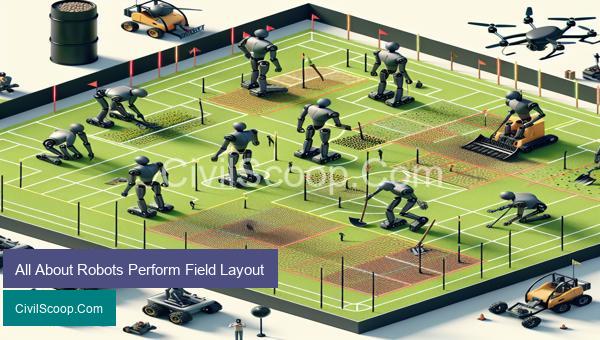
From manufacturing industries to healthcare systems, robots have become an integral part of our daily lives. These advanced machines have revolutionized the way we work and live by automating tasks and increasing efficiency. One particular area where robots have shown great potential is in field layout. In this article, we will explore the various aspects of robots performing field layout and how it is transforming various industries. We will delve into the technology behind these robots, their capabilities, and the benefits they bring to the table. So, let’s dive in and discover all about robots perform field layout.
Table of Contents
Robots Perform Field Layout at Consigli Site
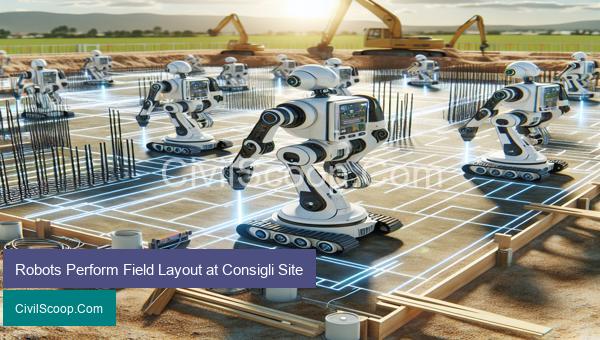
Robots have become an integral part of the construction industry and have revolutionized the way construction projects are carried out. One of the most exciting advancements in construction technology is the use of robots to perform field layout at Consigli sites.
Traditionally, field layout requires a team of surveyors and engineers to manually measure and mark the location of construction elements on the ground. This process can be time-consuming, tedious, and prone to human error. With the introduction of robot technology, this important task can now be performed in a more efficient and accurate manner.
Consigli, a leading construction company, has embraced the use of robots to perform field layout on their construction sites. These robots are equipped with laser scanners, GPS technology, and sophisticated algorithms that enable them to accurately identify and mark the location of construction elements on the ground.
The process begins with the creation of a 3D model of the project using Building Information Modeling (BIM) software. The BIM model contains all the necessary information about the project, including the location and dimensions of each element. The robot then uses this information to perform field layout with precision.
The robot is controlled by a trained operator who can program the specific layout points into the robot’s system. The robot then moves to the designated location and uses its laser scanner to accurately mark the point on the ground. This process is repeated for all the layout points, ensuring that the construction elements are placed in the correct location with minimal human error.
The use of robots for field layout at Consigli sites has numerous benefits. Firstly, it significantly reduces the time required for field layout, which means that construction projects can be completed more efficiently. This is especially beneficial when working on projects with tight deadlines.
Moreover, robots can work continuously without the need for breaks or rest, unlike humans who may get tired or make mistakes due to fatigue. This consistency ensures that the layout is accurate and minimizes the need for rework, saving both time and money.
Another advantage is the increased safety at construction sites. The use of robots eliminates the need for surveyors and engineers to be on the ground, which reduces the risk of accidents and injuries.
In addition to field layout, robots can also be used for quality control by comparing the actual construction with the digital plans to identify any discrepancies. This helps in ensuring that the project is built to the exact specifications and prevents errors from occurring.
In conclusion, the use of robots for field layout at Consigli sites has greatly improved the efficiency, accuracy, and safety of construction projects. With the rapid advancements in technology, we can expect to see even more integration of robots in the construction industry in the near future. As a civil engineer, I am excited to see how this technology will continue to transform the way we build.
Conclusion
In conclusion, the use of robots for field layout has greatly improved the efficiency and accuracy of this crucial aspect of construction and surveying projects. With advanced technologies such as GPS and laser scanning, robots are able to precisely mark out the layout of a field with minimal human intervention. This not only saves time and labor costs, but also reduces the margin for error, resulting in better quality and more precise projects. The versatility and adaptability of robots make them a valuable tool in multiple industries beyond construction, such as agriculture and military operations. As technology continues to advance and improve, we can expect to see further enhancements in the capabilities of robots for field layout, making it an essential element in modern-day project planning and execution. Exciting developments in the world