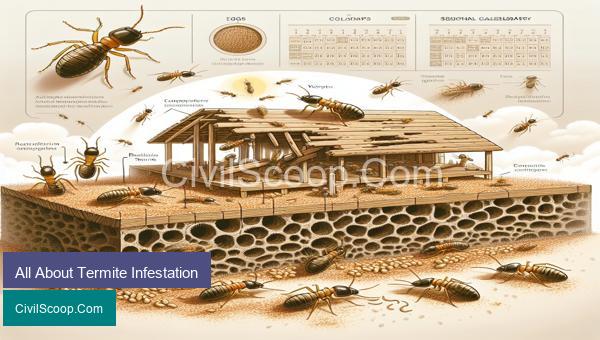
Termites are common pests that can cause significant damage to your home if left untreated. These small insects feed on wood and other cellulose-based materials, making them a threat to the structure of your house. In this article, we will explore everything you need to know about termite infestation, including how to identify signs of an infestation, the damage they can cause, and the steps you can take to prevent and treat an infestation. By understanding these key factors, you can protect your home and ensure that termites do not become a problem for you and your family.
Table of Contents
How to Identify Termite Infestation in Buildings
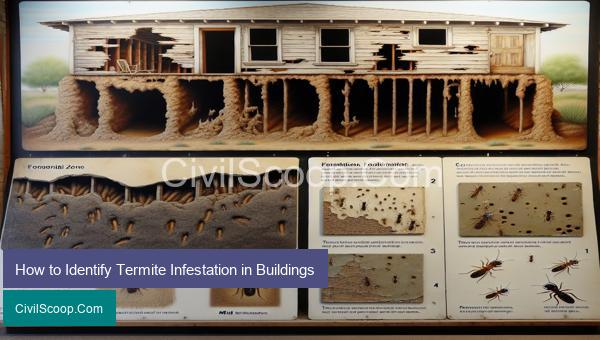
Termite infestation is a major concern for buildings and can lead to significant damage if left untreated. As a civil engineer, it is important to be able to identify termite infestation in buildings to mitigate potential structural damage. Here are some ways to identify termite infestation in buildings:
1. Look for mud tubes: Termites create mud tubes to protect themselves while traveling between the soil and wood. These mud tubes are about the diameter of a pencil and can be found on walls, foundations, and other wooden structures. If you see these tubes, it is a definite sign of termite infestation.
2. Check for wood damage: Termites feed on wood from the inside out, leaving only a thin layer of paint or veneer on the surface. Therefore, if you notice any wood that sounds hollow when tapped or has a honeycomb-like appearance, it could be a sign of termite infestation.
3. Inspect for sawdust-like droppings: Termites produce wood-colored droppings that resemble sawdust. These droppings are usually found near the area where they are feeding and can be a clue to identify termite infestation.
4. Look for unusual cracks in walls and ceilings: Termites can create small tunnels in drywall or wallpaper, which can cause cracks and bulges in the surface. These cracks can also lead to structural damage in the long run.
5. Check for discarded wings: Some species of termites swarm during their mating season, and the discarded wings can be found near windowsills and other entry points. If you see these wings, it could indicate the presence of a termite colony nearby.
6. Monitor for moisture and mold: Termites thrive in damp and moist environments, and their presence can lead to the growth of mold and mildew. Therefore, if you notice any unusual dampness or mold growth, it could be a sign of termite infestation.
7. Conduct regular inspections: It is important to conduct regular inspections of buildings for termite infestation, especially in areas where termites are prevalent. This can help in identifying any problems early on and preventing severe damage to the building.
In conclusion, identifying termite infestation in buildings is crucial for preventing structural damage. As a civil engineer, it is important to be vigilant and regularly lookout for signs of termite activity to ensure the safety and integrity of buildings. If termite infestation is confirmed, it is best to seek professional help for effective treatment and prevention.
Conclusion
Termites are insects that can cause massive damage to your home or property if left untreated. In this article, we have discussed the basics of termite infestation and how it can be prevented and treated.
We have learned that termites are not just a nuisance, but they are also a serious threat to the structural integrity of our homes. Their ability to consume wood at a rapid pace can result in extensive and costly damages. However, with proper prevention techniques such as regular inspections, moisture control, and removing wood debris, we can significantly reduce the risk of termite infestations.
In case of an infestation, it is important to act swiftly and seek professional help. Different treatment methods like chemical barriers, baiting systems, and fumigation