
Construct Overhead Masonry Water Tank is a crucial component in many residential and commercial buildings for storing and circulating water. It plays a critical role in areas where the water supply is limited or unreliable. This type of water tank is made up of high-quality masonry materials and requires careful planning, design, and construction to ensure its functionality and longevity. In this article, we will delve into the various aspects of Construct Overhead Masonry Water Tank, including its design, construction process, advantages, and maintenance tips. So, let’s dive into the world of these essential water storage structures and understand why they are the preferred choice for many.
Table of Contents
How to Construct Overhead Masonry Water Tank?
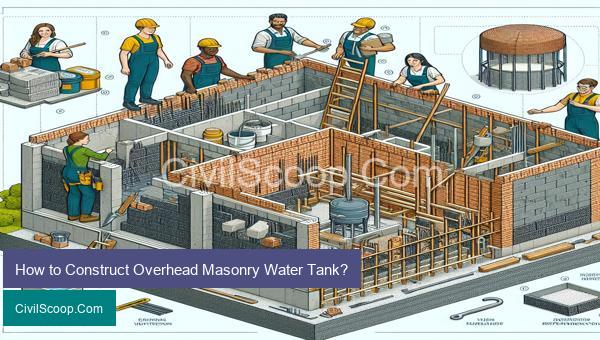
Constructing an overhead masonry water tank is a complex process that requires careful planning, meticulous construction techniques, and adherence to safety standards. It is used to store water for domestic, commercial, and industrial purposes. An overhead masonry water tank is a type of elevated tank that is built on a raised platform, supported by columns or walls, and made of masonry or brickwork.
Here are the steps involved in the construction of an overhead masonry water tank:
1. Planning and Design:
The first step in constructing an overhead masonry water tank is proper planning and design. This involves determining the size and capacity of the tank based on the water demand and available space. The tank’s location should also be carefully chosen to ensure it is easily accessible for maintenance and repairs.
2. Excavation and Foundation:
Once the design is complete, the site is prepared by excavating the ground to create a level base. The foundation is then laid, which provides a stable and strong base for the tank. The depth and width of the foundation will depend on the size and capacity of the tank.
3. Construction of the Support Structure:
The support structure for the tank can be made of reinforced concrete or brick masonry walls. The columns or walls should be strong enough to bear the weight of the tank when filled with water. It is essential to use good quality materials and follow proper construction techniques to ensure the stability of the tank.
4. Masonry Work:
Once the support structure is in place, the masonry work can begin. The walls or columns should be raised to the desired height and thickness, leaving openings for the inlet, outlet, and overflow pipes. These pipes should be properly fitted and secured to avoid any leakage.
5. Installation of the Roof:
The roof of the tank is usually made of reinforced concrete, which is supported by the walls or columns. The roof should be designed to slope towards the center to allow for proper drainage of rainwater. This will prevent any water from accumulating and causing damage to the tank’s structure.
6. Plastering and Waterproofing:
After the tank walls and roof are completed, they should be plastered and waterproofed to prevent any seepage of water. This step is crucial as it ensures that the tank is watertight and prevents any leaks that can lead to structural damage or contamination of the stored water.
7. Installation of Accessories:
The final step is the installation of accessories such as the inlet and outlet pipes, valves, and level indicators. These should be carefully installed to avoid any leaks or malfunctions.
In conclusion, constructing an overhead masonry water tank requires expertise, proper planning, and adherence to safety standards. It is a time-consuming and labor-intensive process, but when done correctly, it can provide a reliable and safe source of water for various purposes. It is essential to regularly maintain and inspect the tank to ensure its longevity and functionality. By following these steps, a sturdy and efficient overhead masonry water tank can be successfully built.
Location of Tank

Location of a tank is an important consideration in civil engineering, especially in the planning and design of water distribution systems. A tank is a structure used to store liquids, and in civil engineering, it is mainly used for storing water. The location of a tank should be carefully chosen to meet the requirements of the water supply system.
There are various factors that need to be considered when determining the location of a tank, including topography, proximity to the water source, accessibility, and structural stability.
Topography is an important consideration as it determines the elevation and slope of the land. The tank should be located at an elevated position to ensure that the water can flow through gravity to the distribution network. This eliminates the need for pumping, thereby reducing energy and maintenance costs. The topography should also be stable enough to support the weight of the tank and the stored water.
The proximity to the water source is another vital factor to be considered. Ideally, the tank should be located close to the water source to minimize the length of the pipelines required to transport the water. This reduces the risk of leakage and contamination, thereby ensuring that high-quality water reaches the end-users.
Accessibility is also a crucial factor that should be taken into account when choosing the location of a tank. It is essential to have easy access to the tank for maintenance and repair activities. The location should be easily accessible for the transportation of materials required for construction and routine maintenance.
Structural stability is another critical aspect that should not be overlooked. The location of the tank should be on stable ground to avoid the risk of settlement or failure. The ground should be able to withstand the weight of the tank and the water it holds, as well as any external forces such as earthquakes or high winds.
In addition to these factors, the location should also take into consideration any environmental impact. It should not be located near sensitive areas, such as wetlands or protected wildlife habitats. The tank also has to be designed and constructed in compliance with environmental regulations to prevent any negative effects on the surrounding ecosystem.
In conclusion, the location of a tank is a crucial element in the design of a water distribution system. It should be strategically chosen to ensure that it meets the requirements of the system, such as gravity flow, accessibility, stability, and environmental impact. Careful consideration of these factors will result in a well-designed and efficient tank that can provide a reliable water supply to the community it serves.
Size of the Tank
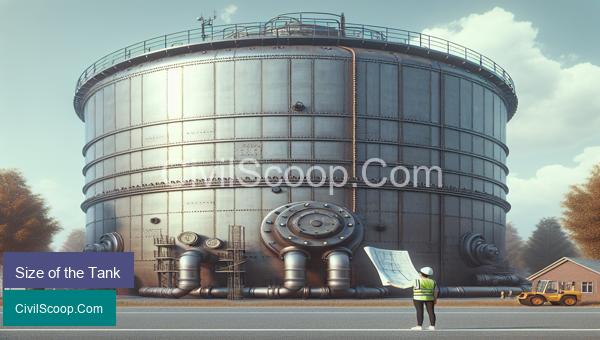
The size of a tank is an important aspect of its design and function, especially in civil engineering projects where it is often used for storing water or other liquids. The size of the tank will depend on several factors such as the purpose of the tank, the amount of liquid to be stored, and the available space for installation.
In general, tanks are designed to meet the specific requirements of a project. For example, a small tank with a capacity of a few hundred liters may be suitable for residential use or a small-scale industrial project. On the other hand, a large tank with a capacity of several thousand liters may be needed for commercial or industrial use, such as in a factory or a power plant.
The size of the tank is directly related to its capacity, which is the maximum volume of liquid it can hold. This capacity is typically measured in liters, gallons, or cubic meters. The capacity of a tank is determined by considering the peak demand for the liquid being stored and the frequency of refilling or replenishment.
Apart from capacity, the size of the tank also depends on the type and level of tank support needed. Tanks can be installed above ground, underground, or on a support structure. The size and shape of the tank will vary depending on where it is placed and the support required. For example, an above-ground tank may have a larger footprint compared to an underground tank as it needs to be supported by a strong foundation.
The material used for the construction of the tank also plays a crucial role in determining its size. Larger tanks, especially those used for industrial or commercial purposes, are often made of concrete or steel for durability and strength. On the other hand, smaller tanks, such as those used in households, may be made of plastic or fiberglass.
In summary, the size of a tank is a crucial factor in its design and installation. The capacity, support, and material considerations, as well as the intended purpose, must be carefully evaluated to determine the appropriate size of the tank for a given project. Adequately sized tanks are essential for sustainable and efficient water management, making it an important consideration for civil engineers in their projects.
Construction of Overhead Masonry Water Tank on Terrace

The construction of an overhead masonry water tank on a terrace is a common practice in urban areas where space for ground-level water storage tanks is limited. It involves building a water tank on the rooftop of a building, usually made of masonry materials such as bricks, blocks, or concrete.
The first step in constructing an overhead masonry water tank is to prepare the terrace for the tank’s installation. The terrace must be strong enough to support the weight of the tank when filled with water. A structural engineer should be consulted to ensure that the terrace can withstand the load.
Once the terrace is deemed suitable, the construction of the water tank can begin. The first layer of masonry is laid using mortar, which is a mixture of cement, sand, and water. The corners of the tank should be reinforced with steel bars to provide strength and stability.
Next, the walls of the tank are built by laying bricks, blocks, or concrete blocks on top of the first layer of masonry. Care should be taken to ensure that the walls are plumb and level, as any deviation can affect the structural integrity of the tank.
At this stage, openings for inlet pipes, outlet pipes, and overflow pipes are also created using precast concrete pipes or metal pipes embedded in the masonry. These pipes are essential for filling the tank, drawing water, and regulating the water level.
After the walls are built to the desired height, a reinforced concrete slab is constructed as the tank’s roof. The slab should be at least 4 inches thick and reinforced with steel bars to bear the weight of the water and tank structure.
The final step is to plaster the interior and exterior of the tank walls and roof to prevent leakage and to provide a smooth surface. A waterproofing coating should also be applied to further protect the tank from any water seepage.
Proper drainage should be installed around the tank to divert any excess water away from the terrace. Furthermore, a suitable platform should be constructed around the tank for easy access during maintenance and repairs.
In conclusion, the construction of an overhead masonry water tank on a terrace requires careful planning and execution. It is essential to consult with a structural engineer and follow all safety measures to ensure the tank’s stability and durability.
Conclusion
In conclusion, construct overhead masonry water tanks are a reliable and cost-effective option for storing and distributing water. These tanks are built using sturdy and durable materials, and their design allows for easy installation and maintenance. With proper construction techniques and regular upkeep, these tanks can last for many years, providing a steady supply of water for various purposes. It is important to consult with professionals and follow necessary safety precautions during the construction process to ensure the tank is built to standard and can withstand various environmental conditions. Overall, understanding the benefits and proper maintenance of an overhead masonry water tank is essential in ensuring a sustainable and efficient water storage solution for both residential and commercial use.