
Spiral staircases have been a symbol of elegance and architectural perfection for centuries. With their mesmerizing designs and efficient use of space, these staircases have captured the attention of people all over the world. From grand castles to modern homes, spiral staircases continue to add a touch of sophistication to any space they are incorporated into. In this article, we will take a deep dive into the world of spiral staircases, exploring their history, design styles, and practical uses. Whether you are looking to add a spiral staircase to your home or simply want to satisfy your curiosity, this article is your ultimate guide to all things spiral staircase.
Table of Contents
How to Design a Spiral Staircase?

A spiral staircase is a popular and elegant choice for many buildings, adding a unique architectural element and maximizing space efficiency. As a civil engineer, it may be your responsibility to design a spiral staircase for a project. In this article, we will discuss the steps involved in designing a spiral staircase.
1. Determine the purpose and location of the staircase: The first step in designing a spiral staircase is to understand the intended use and location. The purpose of the staircase will impact its dimensions, materials, and design. For example, a residential spiral staircase will have different requirements than a commercial one. The location of the staircase will also influence its size, shape, and style.
2. Calculate the dimensions: To design a spiral staircase, you will need to determine its dimensions, including the height, width, and diameter. The height of the staircase will depend on the number of floors it needs to connect, and the width will be determined by the amount of space available. The diameter of the staircase is crucial as it will determine the turning radius and the available walking space.
3. Consider building codes and regulations: It is essential to check local building codes and regulations before designing a spiral staircase. These codes will dictate the minimum height and width requirements, maximum steepness and rise of the stairs, and construction materials allowed. Adhering to these codes is essential to ensure the safety and functionality of the staircase.
4. Choose the material: The material used to construct the staircase will depend on its location, purpose, and budget. Common materials used for spiral staircases are wood, metal, and concrete. Each material has its advantages and disadvantages, and it is important to consider factors such as strength, durability, and aesthetics when making a choice.
5. Select a design: The design of a spiral staircase can vary greatly, from traditional to modern, sleek to ornate. It is crucial to choose a design that complements the overall style of the building. The design should also consider factors like handrails, balusters, treads, and risers.
6. Determine the spiral pattern: Depending on the location and design, there are different spiral patterns that can be used for a staircase, such as circular, elliptical, and helical. The spiral pattern will affect the shape and dimensions of the stairs, as well as the landing at the top and bottom.
7. Create a structural design: Once all the dimensions and materials have been determined, the next step is to create a structural design for the staircase. This includes calculating the loads and forces acting on the staircase and selecting the appropriate structural elements such as beams, columns, and connections.
8. Consider safety features: As with any staircase, safety is a top priority. Ensure that proper lighting is provided, and the treads and risers are designed to prevent slips and falls. The stairway should also include handrails, landings, and guardrails for added safety.
9. Obtain necessary approvals: Before construction can begin, the staircase design must be approved by the local building department. This process typically involves submitting detailed drawings and obtaining permits.
In conclusion, designing a spiral staircase requires a thorough understanding of the intended use, location, and building codes. By following these steps and considering all the necessary factors, you can design a safe and functional spiral staircase that adds both beauty and functionality to a building.
Design of Spiral Staircase
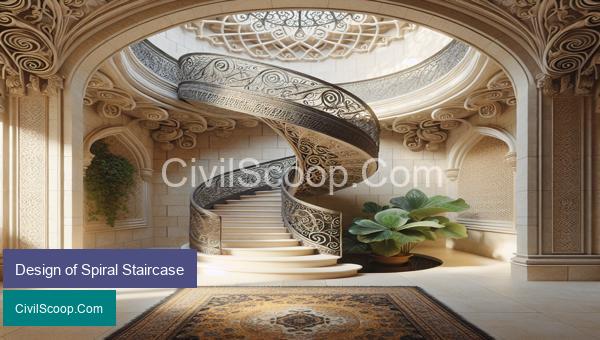
A spiral staircase, also known as a circular staircase, is a unique and elegant type of staircase that is commonly found in residential and commercial buildings. Its main feature is its circular or helical shape, which makes it stand out from traditional straight staircases. Spiral staircases not only serve as a means of moving between different levels of a building, but they also add aesthetic value to the space they are placed in. The design of a spiral staircase requires careful consideration to ensure its functionality, safety, and visual appeal.
When designing a spiral staircase, there are three main components to consider: the treads, the risers, and the central post. The treads are the individual steps that the user will step on to ascend or descend the staircase. They are usually wedge-shaped or triangular, with one side attached to the central post and the other side attached to the wall or a handrail. The risers are the vertical components that connect each tread, forming the overall shape of the staircase. They are essential for providing stability and preventing slips and falls.
The central post is the supporting element of the spiral staircase, and its design is crucial for the stability of the entire structure. It is typically made of steel, wood, or concrete, and it runs from top to bottom, connecting all the treads and risers. The diameter of the central post will determine the size and shape of the staircase. The post must be designed and installed correctly to prevent any wobbling or instability in the structure.
One of the significant factors to consider when designing a spiral staircase is the location of the staircase within the building. This will determine the shape of the staircase, its size, and the angle of ascent. For instance, if the staircase is placed in a small space, a narrow and steep design may be more suitable. On the other hand, if the staircase is meant to be a central feature in a large room, a wider and less steep design may be more appropriate.
Another crucial aspect of spiral staircase design is the calculation of the treads and risers’ dimensions. The treads must be deep enough for a person’s foot to fit comfortably, with an average depth of around 9 to 11 inches. The risers’ height should also be consistent to ensure safe and comfortable movement on the staircase. Generally, the riser height should be between 7 and 8 inches, with no more than 9 inches at its tallest point. The calculation of these dimensions is critical to ensure the staircase’s safety and to comply with building codes and regulations.
In addition to functionality and safety, the aesthetics of a spiral staircase should not be overlooked. The shape, materials, and finishes chosen for the staircase can significantly impact the overall look of the space. Some popular options for materials include steel, wood, glass, and even stone. Spiral staircases can also be designed with handrails, balustrades, and decorative elements to enhance their visual appeal.
In conclusion, designing a spiral staircase requires a balance of functionality, safety, and visual appeal. The location, size, shape, and materials used should all be carefully considered to create a staircase that is both practical and visually appealing. With proper design and construction, a spiral staircase can add character to a space and become a focal point in any building.
Steps to Design a Spiral Staircase

Designing a spiral staircase may seem like a daunting task, but if done correctly, it can be a striking and functional addition to any building. As a civil engineer, it is important to understand the steps involved in designing a spiral staircase to ensure that it meets safety and structural standards. Here are the steps to design a spiral staircase:
1. Determine the Purpose and Location of the Staircase
The first step in designing a spiral staircase is to determine its purpose and location. Will it be used as the main means of access or as a secondary staircase? The location will also determine the available space and the shape and size of the staircase.
2. Calculate the Rise and Run
The rise is the vertical distance between the floors, while the run is the horizontal distance covered by the staircase. Using the measurements of the available space, the rise and run can be calculated using the building code requirements or a formula specific to spiral staircases.
3. Decide on the Direction and Pitch
The direction of the spiral staircase can be clockwise or counterclockwise. The direction should be chosen based on the location and usage of the staircase. The pitch, or angle, of the stairs should also be determined, keeping in mind the comfort and safety of those using the staircase.
4. Determine the Staircase Configuration
There are three main types of spiral staircase configurations: circular, elliptical, and helical. The circular configuration is the most common and can be easily constructed. The elliptical and helical configurations require more complex calculations and may be more suitable for larger spaces.
5. Design the Treads and Risers
The treads are the horizontal steps that people walk on, and the risers are the vertical components between each tread. The tread and riser dimensions should comply with building codes and be designed for comfortable and safe use.
6. Calculate the Stringers
The stringers are the structural supports for the treads and risers. They can be either made of metal or wood, and their size and spacing should be calculated based on the rise and run of the stairs.
7. Consider Guardrails and Handrails
Safety is a crucial aspect of staircase design. Guardrails are used to prevent falls, and handrails provide support for people using the stairs. These should be designed according to building codes and should be able to withstand the appropriate amount of force.
8. Finalize the Design and get Approvals
Once the design has been completed, it is important to review it and make any necessary adjustments. The design should then be submitted to the building authorities for approval, ensuring compliance with safety and structural standards.
9. Construction and Installation
The final step is the construction and installation of the spiral staircase according to the approved design. This should be done by experienced contractors who have the knowledge and skills to build a safe and structurally sound staircase.
In conclusion, designing a spiral staircase requires careful planning and consideration of various factors such as space, function, safety, and structural requirements. As a civil engineer, it is important to follow these steps and ensure that the design meets all necessary standards for a functional and visually appealing spiral staircase.
Conclusion
In conclusion, spiral staircases have a long and rich history, serving not only as a functional means of vertical transportation but also as a beautiful and visually striking architectural element. From their practical uses in ancient civilizations to the intricate designs of the Renaissance, and their modern adaptations in contemporary architecture, the spiral staircase continues to captivate and inspire. With a wide variety of materials, styles, and configurations available, these unique staircases offer homeowners and designers endless possibilities for adding character and charm to any space. Whether used indoors or outdoors, spiral staircases are a timeless and versatile choice that can enhance the aesthetic appeal and functionality of any building.