
In today’s fast-paced world, managing time and activities effectively is essential to boost productivity. With increasing demands and distractions, it can be challenging to stay focused and efficiently use the limited hours in a day. However, with the right strategies and techniques, it is possible to maximize productivity and achieve more in less time. In this article, we will delve into the importance of effective time and activity management, as well as provide practical tips and advice on how to implement it in your daily life. By the end, you will have the tools to take control of your time and activities, and ultimately increase your productivity.
Table of Contents
How to Effectively Manage Time and Activity to Boost Your Productivity?

As a civil engineer, your job requires a high level of organization, attention to detail, and time management skills. The ability to effectively manage your time and activities is essential in order for you to maximize your productivity and success in your career. Here are some tips on how to manage your time and activities effectively:
1. Create a schedule and stick to it: The first step to effective time management is creating a schedule that outlines your tasks and responsibilities for the day. Set aside specific time slots for each task and try to stick to this schedule as closely as possible. This will help you stay on track and complete your work within a designated time frame.
2. Prioritize your tasks: As a civil engineer, you may have multiple projects and tasks to juggle at once. It is important to prioritize your tasks based on their level of urgency and importance. Start with the most critical tasks and work your way down the list. This will help you focus on the most important tasks and avoid wasting time on less important ones.
3. Use time blocking: Time blocking is a popular time management technique where you group similar tasks together in a block of time. For example, you can set aside a specific block of time for answering emails or attending meetings. This allows you to focus on similar tasks without being interrupted, increasing your productivity and efficiency.
4. Avoid multitasking: While many people think multitasking is an effective way to get more done in less time, it can actually be counterproductive. Switching between tasks causes a loss of focus and can lead to mistakes. Instead, focus on one task at a time and complete it before moving on to the next one.
5. Take breaks: It is important to take breaks throughout the day to avoid burnout and maintain productivity. Make sure to schedule some short breaks in your schedule to recharge and reset your mind. This will help you stay focused and motivated throughout the day.
6. Use a time-tracking tool: There are many time-tracking tools available that can help you manage your time more effectively. These tools allow you to track the time you spend on various tasks and analyze how efficiently you are using your time. This can help you identify areas for improvement and make adjustments to your schedule as needed.
7. Learn to delegate: As a civil engineer, you may have a team of people working under you. It is important to delegate tasks to your team members when necessary. This will not only help you manage your workload but also give your team members the opportunity to learn and grow.
8. Be flexible: No matter how well you plan your day, unexpected tasks or emergencies may come up. It is important to be flexible and adjust your schedule accordingly. This will help you handle unexpected situations without disrupting your entire day’s plan.
In conclusion, effective time management and activity planning are crucial for boosting productivity in your role as a civil engineer. By following these tips, you can better manage your time and tasks, reduce stress, and increase your overall efficiency and success in your career.
Ways of Increasing Productivity

Productivity is a crucial factor in the success of any industry, organization or project. As a civil engineer, it is essential to constantly strive to increase productivity in order to complete projects on time and within budget. This can lead to better client satisfaction, improved profitability and a good reputation in the industry. Here are some ways in which civil engineers can increase productivity:
1. Efficient Planning and Design: The first step towards increasing productivity is to create a detailed and efficient plan for the project. This includes thorough research, proper design and accurate estimations. A well-planned project can help in avoiding delays, reducing errors and optimizing the use of resources.
2. Automation and Technology: In today’s digital age, there are numerous technological tools available that can help civil engineers increase their productivity. These include software for project planning, design, 3D modeling, data analysis and project management. Automation of certain processes can also save time and reduce the chances of errors.
3. Embracing Lean Principles: Lean principles focus on eliminating waste and optimizing processes. This can be applied to civil engineering projects by identifying and eliminating unnecessary steps, reducing idle time, and improving communication and coordination among different teams. This can lead to faster and more efficient project completion.
4. Implementing Time Management Techniques: Time management is crucial in order to increase productivity. This includes setting realistic deadlines, creating a schedule, prioritizing tasks, and delegating work. The use of modern project management techniques, such as Agile or Scrum, can also help in improving time management.
5. Continuous Training and Development: In order to stay ahead in the constantly evolving field of civil engineering, it is important for engineers to continuously upgrade their skills and knowledge. This can be achieved through training programs, attending conferences and workshops, and staying updated with the latest industry developments. With improved skills and knowledge, engineers can work more efficiently and effectively, leading to increased productivity.
6. Collaborating with Stakeholders: Collaboration is key to the success of any project. Civil engineers must work closely with their clients, project managers, contractors, and other stakeholders to create a cohesive plan that meets everyone’s goals and expectations. Regular communication, problem-solving, and conflict resolution can help in minimizing delays and ensuring smooth project execution.
7. Maintaining a Safe Work Environment: A safe work environment leads to happier, motivated and more productive employees. Civil engineers must ensure that all safety protocols are followed on-site, proper safety measures are in place, and necessary training is provided to workers. This can result in a more efficient and focused workforce, leading to increased productivity.
In conclusion, civil engineers have a critical role to play in increasing productivity in the construction industry. By following these tips and continuously striving for improvement, civil engineers can lead their teams towards successful and timely project completion. This can not only benefit individual projects but also contribute to the growth and development of the entire construction industry.
Steps for Effective Time Management
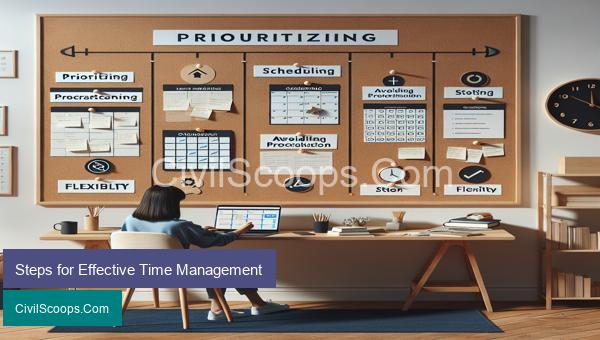
Effective time management is a crucial skill for any civil engineer. With the demanding nature of the job and the tight deadlines to meet, managing time effectively can be a daunting task. However, with proper planning and the right strategies, it is possible to handle multiple projects while maintaining work-life balance. Here are some steps for effective time management for civil engineers.
1. Set clear goals and priorities: The first step in managing time effectively is to define your goals and priorities. As a civil engineer, you have multiple tasks and projects to handle. Categorize them based on their urgency and importance. This will help you focus on the most critical tasks and avoid wasting time on less important ones.
2. Create a schedule: Once you have identified your goals and priorities, create a schedule or a to-do list. This will act as a roadmap for your daily activities. Make sure to allocate enough time for each task and be realistic about the time needed to complete them. This will help you stay on track and avoid procrastination.
3. Organize your workspace: A cluttered workspace can be a major hindrance in managing time effectively. Make sure your desk is organized, and all the necessary documents and tools are easily accessible. This will save time and improve your productivity.
4. Utilize technology: Take advantage of technology to streamline your work processes. Use project management software or apps to track your progress, collaborate with team members, and stay organized. You can also use time-tracking tools to monitor how much time you spend on each task and identify areas for improvement.
5. Prioritize your tasks: Prioritizing your tasks not only helps you manage time but also ensures that you complete the most important ones on time. Start your day by tackling the most crucial and challenging tasks. This will help you avoid the stress of rushing to meet deadlines and give you a sense of accomplishment.
6. Delegate and outsource tasks: As a civil engineer, you cannot do everything by yourself. Learn to delegate tasks to your team members or outsource tasks that can be handled by external contractors. This will free up your time to focus on tasks that require your expertise and help you manage your workload effectively.
7. Take breaks: It may seem counterintuitive, but taking breaks can actually improve your productivity. Overworking yourself can lead to burnout and decreased efficiency. Schedule short breaks in between tasks to recharge and refocus your mind.
In conclusion, effective time management is crucial for a civil engineer’s success. By setting clear goals, organizing your workspace, utilizing technology, prioritizing tasks, and taking breaks, you can manage your time efficiently and meet project deadlines while maintaining a healthy work-life balance.
Conclusion
In today’s fast-paced world, time management and productivity are becoming increasingly important to achieve success in both personal and professional aspects of life. By incorporating effective time management techniques and organizing activities, individuals can boost their productivity and achieve their goals efficiently. This article has explored various strategies such as setting realistic goals, prioritizing tasks, avoiding procrastination, and taking breaks to effectively manage time and increase productivity. It is essential to understand that time is a valuable resource, and learning how to manage it efficiently can lead to positive outcomes. By implementing these tips, individuals can effectively manage their time and activities, leading to increased productivity and a sense of accomplishment. Remember, the key to success lies in finding a balance between work and personal life, and effective time management