
The Howrah Bridge, located in the bustling city of Kolkata, India, is an iconic symbol and a major landmark of the country. Spanning across the Hooghly River, this magnificent engineering marvel has stood the test of time and has witnessed the changing face of the city over the years. In this article, we will delve into the rich history, remarkable architecture, and interesting facts surrounding the Howrah Bridge, giving readers a comprehensive insight into one of the most renowned structures in the world. Join us as we take a walk down the lanes of this iconic bridge and uncover its significance in the cultural and architectural landscape of India.
Table of Contents
Howrah Bridge: Construction of the Longest Cantilever Bridge in India
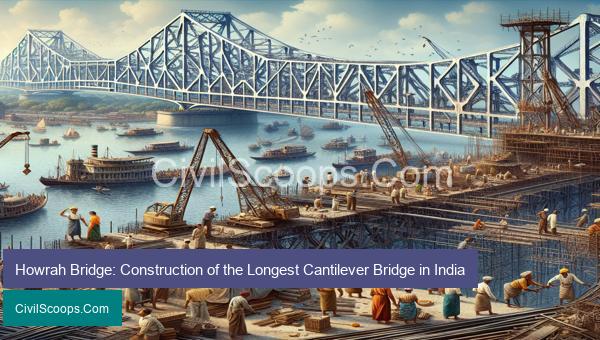
Howrah Bridge, also known as Rabindra Setu, is a marvel of engineering and a significant landmark of Kolkata, India. It is a cantilever bridge that connects Howrah and Kolkata over the Hooghly River. At the time of its construction in 1943, it was the longest cantilever bridge in India and the third-longest in the world.
The idea for a bridge over the Hooghly River was conceived in the early 19th century by the British government. The idea was to ease the transportation of goods and people between the two cities. The location for the bridge was carefully chosen to avoid disrupting the busy shipping traffic on the river. After several years of planning and designing, construction work on the bridge began in 1936.
The construction of the Howrah Bridge posed significant challenges due to the strong currents of the Hooghly River and the soft soil on the riverbed. The engineers opted for a cantilever bridge design supported by two main towers to tackle these challenges. The cantilever design provides maximum strength and stability to the bridge.
The bridge was constructed using 26,500 tons of high tensile steel, which was imported from England. The steel was used to build the two main towers, each standing at a height of 82m and connected by a 457.5m central span. The entire structure is supported by 76 pillars on the riverbed. The construction of the bridge was carried out by a joint venture of British and Indian engineers, led by Sir Bradford Leslie as the chief engineer.
One of the most impressive features of Howrah Bridge is that it was constructed without any nuts and bolts, and instead, rivets were used. The steel sections were pre-fabricated in England and then shipped to India for assembly. The bridge was built using a cantilever system, where each pier supports the horizontal girder and extends it to the next pier, forming a cantilever arm that supports the weight of the bridge.
The construction of Howrah Bridge was completed in 1943, and it was opened for public use on February 3rd of the same year. The bridge was initially named after the Emperor of India, George VI, but was later renamed as Rabindra Setu in honor of the renowned Indian poet, Rabindranath Tagore.
Today, Howrah Bridge stands as a symbol of triumph over engineering challenges and a significant contributor to the growth and development of Kolkata. It has withstood the test of time and remains an important mode of transportation, carrying a daily traffic of over 100,000 vehicles and an estimated 150,000 pedestrians.
In conclusion, the construction of Howrah Bridge is a testament to the skill and ingenuity of the engineers involved in the project. It is a proud symbol of India’s engineering capabilities and a reminder of the rich history and progress of the country. Howrah Bridge continues to be a popular attraction for tourists and a vital link between the two cities of Kolkata and Howrah.
Selection of the Site of Howrah Bridg
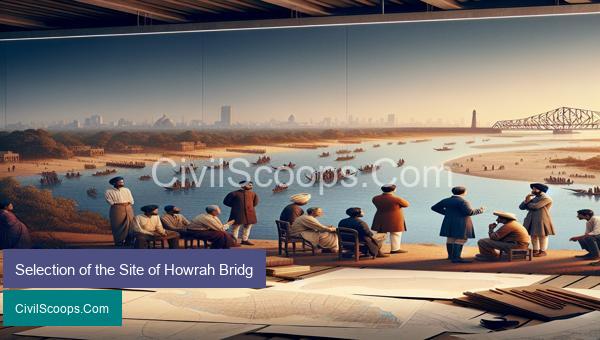
The Howrah Bridge, also known as the Rabindra Setu, is a famous cantilever bridge spanning over the Hooghly River in West Bengal, India. With a length of 450 meters, it is one of the busiest bridges in the world, carrying an estimated load of over 100,000 vehicles and 150,000 pedestrians daily. The selection of the site for this iconic structure was a crucial step in its design and construction, and it required careful consideration of various factors.
Here are some of the key aspects that were taken into account for the selection of the site for the Howrah Bridge:
1. Geographical Location and Topography: The first and foremost factor that was considered was the location of the bridge. As the Hooghly River is a tidal river, the site needed to be strategically chosen to ensure it was at a suitable location with the necessary depth of water, avoiding flood-prone areas, and with stable banks. The site chosen for the bridge was near the city of Howrah, which was the center of trade and commerce at that time.
2. Traffic Considerations: The site for the bridge was selected to cater to the high traffic demand between Howrah and Kolkata, which were the two busiest cities in West Bengal. The site needed to have good connectivity with both the cities and be easily accessible for the heavy flow of vehicles.
3. Soil and Foundation Conditions: As a civil engineer, I know that soil and foundation conditions play a pivotal role in the stability of any bridge. Extensive soil tests were conducted to determine the strength and stability of the riverbed at different points. The site chosen had strong and stable soil conditions, which were ideal for supporting the foundation of the bridge.
4. Wind and Maritime Conditions: The chosen site needed to be able to withstand strong winds, as the bridge was to be designed as a cantilever structure with no intermediate support. The possibility of tidal surges, heavy rainfall, and marine traffic also needed to be taken into account while selecting the site for the bridge.
5. Availability of Land: The site selected for the Howrah Bridge had to have enough land area for construction to accommodate the long approach ramps on both sides of the river. It also needed to have ample space for the machinery and equipment to be used during the construction.
6. Aesthetic Considerations: The Howrah Bridge is not just a functional structure but also a landmark and symbol of Kolkata. The site was chosen to ensure that the bridge could be seen from various points in the city, adding to its grandeur and aesthetic appeal.
In conclusion, the selection of the site for the Howrah Bridge was a result of a thorough analysis of multiple factors, including geographical, topographical, traffic, soil and foundation, wind and maritime conditions, availability of land, and aesthetic considerations. The successful choice of the site was crucial in the construction of this magnificent bridge, which has stood the test of time and remains an important landmark in India’s history.
Planning Phase of Howrah Bridge

The Howrah Bridge, also known as Rabindra Setu, is a symbol of Kolkata, India. It is one of the oldest and busiest cantilever bridges in the world, connecting the city of Howrah to the bustling metropolis of Kolkata over the Hooghly River. The planning phase of this iconic bridge was a crucial and challenging task for the engineers involved in its construction.
The planning phase of Howrah Bridge began in the late 19th century when the British colonial government decided to construct a bridge over the Hooghly River. The objective was to connect the operating freight port in Kolkata to the industrial town of Howrah, which was experiencing rapid development at that time. A committee was set up to oversee the planning and construction of the bridge, consisting of renowned engineers and architects.
The planning phase involved conducting surveys and feasibility studies to determine the most suitable location for the bridge. The site chosen was between Howrah Railway Station and Calcutta Mint, as it was the shortest distance between the two banks of the river and had stable soil conditions for constructing the piers. The design chosen for the bridge was a cantilever truss, which was considered the most feasible and economical option.
The next step in the planning phase was the preparation of detailed drawings and calculations, considering various design options and materials. The plans were reviewed and refined multiple times to ensure the structural integrity and feasibility of the bridge. As the bridge was meant to connect two major cities, it was crucial to determine the optimal width and number of lanes to accommodate the expected traffic. Special considerations were also given to the strength and stability of the bridge to withstand the enormous weight of heavy vehicles.
Another essential aspect of the planning phase was the cost estimation and budgeting. The estimated cost of the bridge was 25 million rupees, which was a significant sum at that time. The committee had to carefully evaluate the expenses and keep them within the budget while not compromising the structural integrity and safety of the bridge.
One of the biggest challenges faced during the planning phase was the unpredictable monsoon season in Kolkata. The design of the bridge had to account for the strong river currents, high tidal range, and frequent floods that could potentially damage the structure. The engineers devised a unique solution by incorporating a granite flooring on the bridge deck, which provided a textured surface for better traction during monsoon and high-speed winds.
In conclusion, the planning phase of Howrah Bridge was a remarkable feat of engineering and project management. It required extensive research, meticulous planning, and innovative solutions to overcome the challenges presented by the geographical location and environmental factors. The success of the planning phase is evident in the longevity and resilience of the bridge, which continues to serve as a crucial transportation link for over eight decades.
`Materials Used for the Construction of Howrah Bridge

The Howrah Bridge, officially known as the Rabindra Setu, is one of the most iconic bridges in India and a symbol of Kolkata’s rich history and culture. Built over the Hooghly River, it is a cantilever bridge that connects the city of Howrah to Kolkata, the capital of West Bengal. The construction of this bridge started in 1936 and was completed in 1942. It stands as a testimony to the advanced engineering techniques and materials used during that time.
The materials used in the construction of the Howrah Bridge were carefully chosen to ensure its durability, strength, and stability. Here are the major materials used for this iconic feat of engineering:
1. Steel:
Steel is the primary material used in the construction of the Howrah Bridge. The entire superstructure of the bridge, including the piers, cantilevers, and the suspended span, is made of steel. More specifically, around 26,500 tons of high-tensile steel was used, which was imported from England. This high-quality steel provides the bridge with the necessary strength to withstand the heavy traffic and dynamic loads.
2. Iron:
Besides steel, iron was also used in the bridge’s construction, particularly in the foundations and the anchorage blocks. The iron used was made of scrap and was locally sourced from the nearby shipyards. It was used to reinforce the concrete and add more strength to the foundations.
3. Concrete:
The foundations of the Howrah Bridge are made of concrete, a durable and versatile material. Around 95,000 cubic meters of concrete were used to construct the foundation on the river bed. This helped in anchoring the bridge and spreading the load evenly on the soft river bed.
4. Stone:
The base of the Howrah Bridge is built on massive stone blocks that act as piers or pillars to support the weight of the steel superstructure. These piers were constructed with stones and were tightly packed together to make them impermeable and durable against the water flow.
5. Cables:
The main span of the Howrah Bridge is held up by cables made of high-tensile steel wires. In total, there are 37,000 kilometers of steel wire cables, which are arranged in the shape of a catenary curve to distribute the weight evenly. The cables are connected to the two main towers at either end of the bridge and anchored to the ground through the anchors buried deep underground.
6. Paint:
The Howrah Bridge is painted in a distinct blue color, known as the ‘Howrah Bridge Blue.’ The color not only adds to the bridge’s aesthetic appeal but also acts as a protective layer against corrosion and rust.
In conclusion, the materials used for the construction of the Howrah Bridge were carefully selected and tested to maintain structural integrity and withstand the harsh environmental conditions. The use of steel, iron, concrete, stone, and cables, combined with skilled engineering, has made the bridge a lasting symbol of Kolkata’s legacy.
Geology of Howrah Bridg
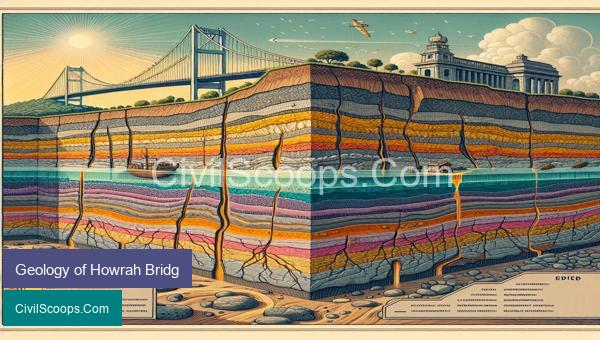
The Howrah Bridge, officially known as the Rabindra Setu, is an iconic structure connecting the city of Howrah to Kolkata (formerly known as Calcutta) in the Indian state of West Bengal. It is one of the busiest bridges in the world, with an estimated 100,000 vehicles and over 150,000 pedestrians crossing it every day.
The geology of the Howrah Bridge can be traced back to its location on the Hooghly River, which is a distributary of the Ganges River. The Hooghly River is a tidal river, with strong currents and varying water levels, making it a challenging location for bridge construction.
The soil on either side of the Hooghly River consists mainly of alluvial deposits, which are made up of finely grained sediments such as clay, silt, and sand. These sediments were deposited by the river as it flowed towards the Bay of Bengal, creating a thick layer of soft, loose soil.
To provide a strong foundation for the bridge, engineers had to conduct extensive soil investigations and analysis. They found that the soil on the Howrah side of the river was relatively stable, while the Kolkata side had softer and more compressible soil. This meant that different foundation techniques had to be used for each side.
On the Howrah side, the bridge rests on large concrete blocks, called well foundations, which are sunk into the river bed and then filled with concrete. These well foundations act as piers, supporting the weight of the bridge deck and transferring it to the underlying soils.
On the Kolkata side, where the soil is softer, a different approach was used. The bridge is supported on a single pile foundation, where a large reinforced concrete column is driven deep into the ground to support the weight of the bridge deck.
Aside from the challenging soil conditions, strong tides and unpredictable river currents also posed a significant obstacle during the construction of the bridge. To overcome this, engineers used an innovative cantilever construction method, where the bridge piers were built on land and then extended outwards towards the center of the river.
The materials used in the construction of the Howrah Bridge also played a crucial role in its durability. The main structure of the bridge is made of high tensile steel, designed to withstand the strong currents and potential impact from shipping vessels.
The geology of the Hooghly River also affected the bridge’s maintenance and repair work. Due to the strong tidal currents, the river bed constantly undergoes erosion, causing the foundations of the bridge to shift. Regular maintenance and repair work is necessary to keep the anchorages and piers stable and maintain the integrity of the structure.
In conclusion, the geology of the Howrah Bridge played a significant role in its design and construction. The alluvial soil, tidal river currents, and soft river bed required innovative engineering solutions and careful selection of materials to build and maintain this iconic structure that has stood the test of time for over 75 years.
Structural Details of Howrah Bridge
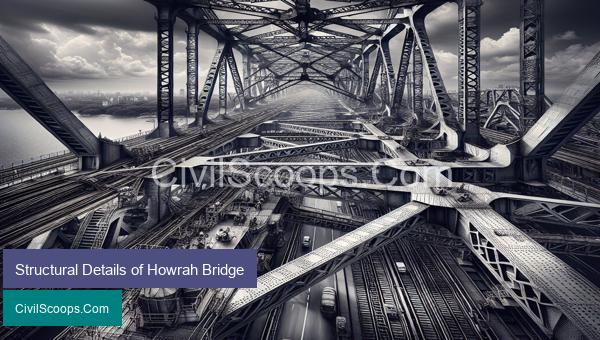
Howrah Bridge, also known as Rabindra Setu, is a famous landmark and one of the busiest bridges in India, connecting the city of Howrah to Kolkata. This iconic cantilever bridge was completed in 1943 and is known for its impressive engineering and architectural details.
Structure and Materials Used:
The Howrah Bridge is a 705m long and 30m wide bridge that spans across the Hooghly River. It has a central span of 457.5m, with two main towers measuring 82m in height. The construction of the bridge was a challenging task, as the riverbed was prone to strong currents and tidal variations.
The bridge is made up of 26,500 tons of high-tensile steel, 4.5 million rivets, and 2.2 million steel nuts and bolts. The steel used in the bridge is a special type called Tiscrom steel, which has high corrosion resistance and strength, making it suitable for use in marine environments. The bridge also features 12m wide concrete anchorages on either end to provide stability and support to the bridge.
Structural Design:
The Howrah Bridge is a cantilever bridge, which means it is supported only on one end, using a cantilever arm. The bridge is designed to withstand high wind pressures and seismic forces. The main towers are anchored deep into the riverbed and connected to the bridge deck through a series of bracings. The central span of the bridge is supported by two doubled cantilevers, creating a balanced and symmetrical structure.
The bridge has a unique truss design, with three sets of trusses supporting the bridge deck. The outer trusses are made of steel and act as the main load-carrying members, while the inner trusses are made of wrought iron and act as stiffeners for the bridge. The deck is suspended from the main towers using steel girders.
Maintenance and Upgrades:
The Howrah Bridge has undergone several maintenance and repair works over the years, with the most significant renovation taking place in 1991. Apart from regular painting and cleaning, maintenance work includes replacing corroded steel members, strengthening weak points, and upgrading the electrical and lighting systems.
In 2019, the bridge was also fitted with a state-of-the-art lighting system, making it a major tourist attraction at night.
Conclusion:
In conclusion, the Howrah Bridge is a magnificent engineering marvel that stands as a testament to the skill and expertise of its architects and engineers. Its unique design, use of high-quality materials, and regular maintenance ensure its longevity and functionality for many more years to come.
Foundation Details of Howrah Bridge

The Howrah Bridge, also known as the Rabindra Setu, is one of the most iconic landmarks of Kolkata, India. It is a cantilever bridge that spans over the Hooghly River and connects the city of Howrah to Kolkata. It was opened to the public in 1943 and is considered a masterpiece of civil engineering.
The foundation of the Howrah Bridge was designed by the famous British civil engineer, Sir Bradford Leslie. The foundation of the bridge is crucial as it supports the entire structure and its heavy traffic load. Its construction was a challenging task due to the strong currents and depth of the Hooghly River.
The depth of the riverbed at the location of the bridge is constantly changing due to siltation from the river. To counter this, the foundation of the bridge was designed to withstand river currents of up to 84 km per hour. The foundation was also designed to withstand earthquakes of up to magnitude 7 on the Richter scale.
The foundation of the bridge consists of 2 huge pillars on either side of the river. These pillars are made of reinforced cement concrete (RCC) and have a height of 280 feet. The two pillars are connected by a central span which is 1520 feet long. The central span is suspended by two anchor arms from the pillars. These pillars were sunk deep into the riverbed and were fixed on bedrock using 82-meter-long wells.
The foundation is also reinforced with 41 steel wells on either side of the river which act as counterweights for the bridge. These wells were sunk deep into the riverbed and were filled with concrete to provide stability and balance to the structure.
The entire foundation of the Howrah Bridge rests on a total of 2600 tons of steel. This steel was used to reinforce the pillars, anchor arms, and counterweights. The foundation was also designed to allow for constant maintenance and replacement of damaged parts.
In addition to the strength and stability aspects, the foundation of the Howrah Bridge also had to fulfill aesthetic requirements. To achieve this, the pillars were designed with a neo-Gothic style, giving the bridge a majestic appearance.
In conclusion, the foundation of the Howrah Bridge is a remarkable feat of civil engineering. It not only supports the entire structure of the bridge but also withstands strong river currents and earthquakes. This foundation continues to uphold the iconic structure and remains a testament to the ingenious design and engineering skills of Sir Bradford Leslie.
Conclusion
In conclusion, the Howrah Bridge is a remarkable feat of engineering and a significant landmark of Kolkata, India. It has not only withstood the test of time but also witnessed the ever-changing cityscape and the cultural, social, and economic development of the city. From being the busiest bridge in the world to being a symbol of pride for the people of Kolkata, the Howrah Bridge holds a special place in the hearts of many. Its strength, beauty, and historical significance continue to attract tourists and locals alike. As we look towards the future, the Howrah Bridge will continue to stand tall as a symbol of India’s architectural brilliance and cultural heritage.