
Concrete slump test is a widely used method for determining the consistency and workability of freshly mixed concrete. It is a simple and convenient test that measures the slump or deformation of concrete when placed in a slump cone. However, at times, the concrete slump test can fail to provide accurate results, leading to potential issues in the construction process. In this article, we will delve into the different factors that can contribute to a failed concrete slump test and the importance of conducting this test correctly. Understanding the causes and implications of a failed concrete slump test is crucial for ensuring the structural integrity and durability of concrete structures.
Table of Contents
Failed Concrete Slump Test? Here is What you Should do

The concrete slump test is a widely used method to determine the consistency of fresh concrete. It measures the degree of workability of the concrete and is an important indicator of its overall quality. However, there are instances where the concrete slump test can give a failed result. This could be due to a number of factors and it is important for engineers to know what to do in such situations.
Firstly, it is important to understand why the concrete slump test may have failed. This could be due to incorrect batching of materials, improper mixing, low-quality or contaminated materials, or incorrect testing procedures. It is crucial to identify the root cause in order to take necessary corrective measures and ensure the quality of the construction.
If the slump test fails, it is recommended to take another sample of the concrete from the same batch and conduct the test again. This will help to eliminate any possible errors in the testing procedure or equipment.
If the second test also fails, the next step would be to check the mix design of the concrete. It is possible that the proportion of ingredients was incorrect, leading to a failed slump test. In such cases, it is important to consult with the concrete supplier or a qualified engineer to adjust the mix proportions.
Another reason for a failed slump test could be due to the presence of excess moisture in the concrete. This can lead to a higher water to cement ratio and affect the strength and durability of the concrete. In such cases, engineers can add more cement or reduce the amount of water in the mix to improve the slump.
If the concrete is found to be contaminated with materials such as clay, soil, or organic matter, the batch should be rejected and a new batch should be prepared. This is because these materials can affect the strength and durability of the concrete and compromise the overall quality of the structure.
In some cases, a failed slump test could also be the result of improper placement or compaction of the concrete. If the test is conducted on a sample that has not been properly compacted, it may give a lower slump value. In such cases, the concrete should be properly placed and compacted before conducting the test again.
It is important to keep in mind that a failed slump test does not necessarily mean that the concrete is unsuitable for use. Only a qualified engineer can determine whether the concrete can still be used for its intended purpose or if it needs to be rejected.
In conclusion, a failed concrete slump test can be a cause for concern, but it is important for engineers to understand the reasons behind it and take appropriate corrective measures. This will help to ensure the quality and durability of the concrete in construction projects. Regular testing and proper quality control measures can prevent such failures and ensure the strength and durability of concrete structures.
Slump Test Failure Criteria
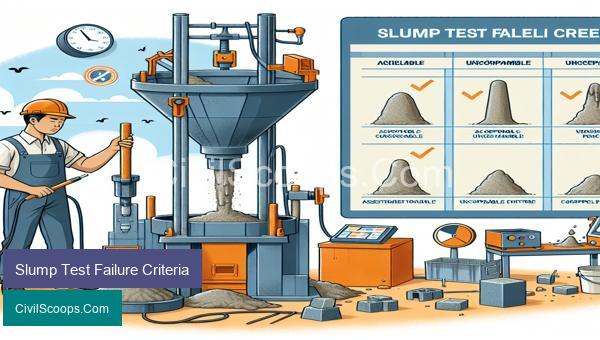
Slump test is a widely used and accepted method for determining the consistency and workability of concrete. It is a simple and effective test that measures the deformation of concrete when subjected to a standard and defined amount of compaction. However, there are instances where slump test may fail, indicating potential issues with the concrete mix.
Slump test failure criteria refer to the factors that can cause the slump test results to be unreliable and not representative of the actual workability of the concrete. These criteria are crucial to identify and address as they can affect the quality and strength of the concrete in construction projects.
The following are some common reasons for slump test failure:
1. Incorrect Water Content: The water content in the concrete mix plays a significant role in its workability. If there is too much or too little water in the mix, it can result in an inaccurate slump test.
2. Improper Mixing: Proper mixing of ingredients is essential for achieving a uniform and consistent concrete mix. Inadequate mixing can lead to variations in the slump test results.
3. Delayed Testing: Concrete is a time-sensitive material, and its workability can change with time. Delayed testing can result in incorrect slump test results and affect the quality of the concrete.
4. Improper Sample Preparation: The slump cone must be clean and moist before conducting the test. If the cone is dirty or dry, it can affect the surface tension of the concrete and lead to inaccurate readings.
5. Inconsistent Compaction: When performing the slump test, the concrete should be compacted evenly and gently. Inconsistent compaction can result in non-uniform deformations and affect the test results.
6. Use of Admixtures: Admixtures are chemical additives used in concrete to improve its properties. However, some admixtures can affect the slump test results, especially if their dosage is not optimized.
7. Bleeding and Segregation: Bleeding refers to the process in which water rises to the top of the concrete mix, leaving behind a layer of cement and aggregates. Segregation occurs when the heavier particles settle at the bottom, and the lighter particles rise to the top. Both these issues can affect the workability of concrete and cause slump test failure.
To ensure accurate and reliable slump test results, it is crucial to follow proper testing procedures and address potential causes of failure. If the slump test fails, it is recommended to retake the test and check for any discrepancies or issues in the concrete mix. Any issues found should be addressed promptly to prevent further complications.
In conclusion, slump test failure can indicate underlying issues with the concrete mix and affect the overall quality and strength of the structure. It is essential to identify and address the potential causes of failure to ensure a successful construction project. Regular testing and monitoring of concrete during construction can prevent significant issues and ensure the durability and safety of the structure.
What Should Engineer Do If On-site Slump Test Fails?

The slump test is a standard procedure used in the construction industry to measure the workability of fresh concrete before it is poured into place. It is an important quality control test that helps engineers ensure that the concrete being used on a project is of the correct consistency. However, there are times when the slump test can fail, resulting in discrepancies in the intended workability of the concrete. In such cases, it is essential for engineers to take prompt action to address and rectify the issue. This article will discuss what engineers should do if the on-site slump test fails.
1. Identify the Cause of the Failure
The first step that an engineer should take when the on-site slump test fails is to determine the cause of the failure. There can be various reasons why the slump test may not yield accurate results, such as incorrect proportioning of materials, inadequate mixing, or improper sampling methods. It is crucial to identify the exact cause to take appropriate corrective actions.
2. Retest the Concrete
As a standard practice, if the slump test fails, the engineer should conduct a second test using a different sample of the concrete. The second sample should be taken from a different batch of concrete mix. This can help in determining if the first sample was faulty or if there is an issue with the mix design itself.
3. Adjust the Mix Design
If the second slump test also fails, it may be an indication that there is a problem with the mix design. In such cases, the engineer should review the proportions of the materials used in the concrete mix and adjust them accordingly. This may require consulting with the concrete supplier or conducting a trial mix to determine the correct proportions.
4. Check for Improper Placement or Compaction
Sometimes, the slump test may fail due to improper placement or compaction of the concrete. For instance, if the concrete is too dry or is placed in thin layers, it can result in a lower slump value. To rectify this, the engineer may need to make adjustments to the placement and compaction methods to ensure that the concrete is properly placed and compacted.
5. Consider Different Test Methods
If the results of the slump test are consistently inaccurate, the engineer may need to use alternative test methods to determine the workability of the concrete. Some other tests that can be used include the flow table test, the Vee-Bee consistometer test, or the Kelly ball test. These tests may provide more accurate results in certain situations, and the engineer should use their discretion to select the appropriate method.
6. Monitor On-site Conditions
Finally, engineers should continuously monitor the on-site conditions to prevent any future problems with the slump test. Factors such as temperature, humidity, and wind speeds can significantly affect the workability of concrete. Hence, it is essential to make adjustments to the mix design or placement methods based on the prevailing on-site conditions.
In conclusion, if the on-site slump test fails, engineers have a crucial role to play in identifying and rectifying the issue promptly. It is their responsibility to ensure that the concrete used on a project is of the required workability to ensure its structural integrity and longevity. By following the steps mentioned above, engineers can effectively address and resolve any issues with the slump test to ensure the successful completion of the project.
Conclusion
In conclusion, the concrete slump test is a crucial method to determine the consistency and workability of freshly mixed concrete. However, if the test results in a failed slump, it indicates potential issues with the concrete mixture, such as incorrect proportions or premature setting. It is essential to identify the cause of the failure and take necessary measures to rectify it before proceeding with the construction work. Regular and proper sampling, testing, and monitoring of concrete during the construction process can help prevent failed slump tests and ensure the structural integrity of the project. It is crucial to follow standard procedures and guidelines while conducting the slump test and to seek professional assistance if needed. By understanding the causes of a failed concrete slump test and taking corrective actions, we can ensure the quality and