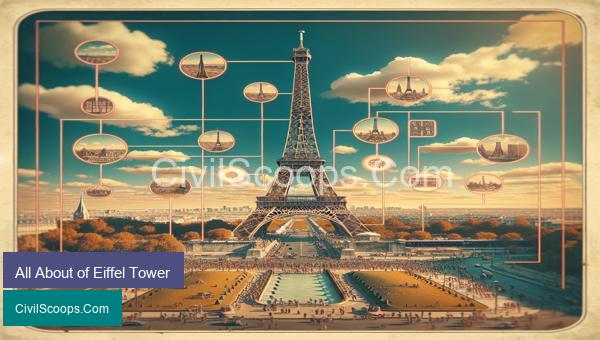
The Eiffel Tower is an iconic symbol of Paris and one of the most recognized landmarks in the world. Standing at 324 meters tall, this towering structure attracts millions of visitors each year, eager to experience the history, engineering marvel, and breathtaking views it has to offer. But beyond its impressive exterior, there is a rich history and fascinating facts that make up the story of the Eiffel Tower. From its controversial beginnings to its significance in popular culture, this article will delve into all aspects of the Eiffel Tower, giving you a comprehensive understanding of this magnificent structure.
Table of Contents
Eiffel Tower: Construction Features of the Iron Giant
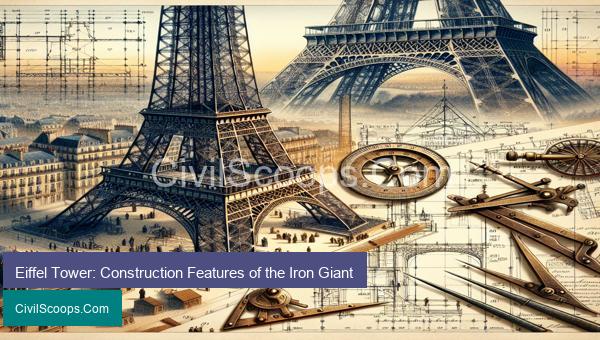
The Eiffel Tower, also known as the Iron Giant, is an iconic landmark located in Paris, France. It is a symbol of the city and one of the most visited tourist attractions in the world. This magnificent structure was built by the renowned civil engineer, Gustave Eiffel, in 1889 for the World’s Fair.
Construction of the Eiffel Tower began in January 1887 and was completed in just over two years, in March 1889. The tower stands at a height of 324 meters (1,063 feet) and is made up of over 18,000 iron pieces, held together by around 2.5 million rivets. It was the tallest man-made structure in the world for 41 years until the completion of the Chrysler Building in New York in 1930.
One of the most intriguing features of the Eiffel Tower is its unique design. The tower is made of four lattice-like iron frames, each narrowing as it reaches the top. This design provides both strength and stability to the tower, allowing it to withstand strong winds and other weather conditions.
The construction of the Iron Giant was challenging as it involved working at extreme heights and using innovative construction techniques. As the tower got taller, scaffoldings and cranes were used for the construction, allowing workers to reach different sections of the tower easily. Safety measures were also taken, such as the use of safety harnesses and a safety net underneath the tower to prevent any accidents.
The materials used in the construction of the Eiffel Tower were carefully chosen to ensure durability and strength. The iron components were prefabricated off-site and transported to the site, where they were bolted and riveted together. The base of the tower is made of concrete, while the upper sections are made of wrought iron, a type of iron that is strong and flexible.
Another interesting feature of the Eiffel Tower is the elevator system. Three elevators were installed during the construction, two in the east and west legs and one in the south leg. These elevators were powered by steam engines and were responsible for transporting both workers and materials during the construction phase.
Despite its grandeur, the Eiffel Tower was initially met with criticism and opposition from the public. Many thought that it would be an eyesore in the city’s skyline. However, Gustave Eiffel’s innovative design and the tower’s impressive construction changed their minds, and it soon became a beloved structure.
Today, the Eiffel Tower remains a marvel of engineering and a testament to the creativity and technical expertise of its designer and construction team. It has become an enduring symbol of Paris and a monument to the ingenuity of civil engineering. The Iron Giant continues to attract millions of visitors each year, making it one of the most recognized and admired structures in the world.
Geology of Site of Eiffel Tower
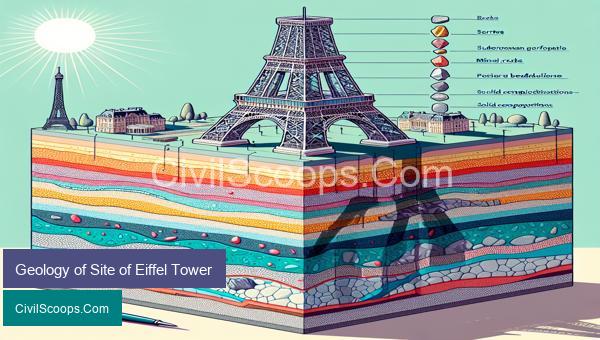
The Eiffel Tower, located in Paris, France, is one of the most iconic man-made structures in the world. As a civil engineer, it is important to understand the geology of the site where this magnificent tower was built.
The Eiffel Tower stands on the Champ de Mars, a large public green space in the heart of Paris. The site was originally a marshland formed by the Seine River, but it was drained and filled with soil in the 17th and 18th centuries. This soil is mainly composed of sand and alluvial deposits, making it ideal for construction.
Underneath this layer of soil is a layer of limestone, known as the Paris Basin Limestone. This is a type of sedimentary rock formed from marine organisms such as shells and coral. The limestone in this area is relatively soft, making it easy to excavate and shape into the foundation of the tower.
During excavation for the foundation, engineers encountered an unexpected layer of sandstone, known as the “Marnes à Licous”. This sandstone proved to be a challenge as it was much harder to work with compared to the limestone. To overcome this obstacle, the engineers used dynamite to blast through the sandstone and create a solid foundation for the tower.
Another important factor that had to be considered during the construction of the Eiffel Tower was the depth of the water table. The tower was initially planned to be constructed on top of the Champ de Mars, but it was eventually moved closer to the river in order to avoid any potential issues with a high water table.
The soil and rock composition of the site also played a crucial role in the design of the tower’s foundation. The foundation consists of four massive concrete slabs, each measuring 30 meters long, 18 meters wide, and 2.5 meters thick. These slabs distribute the weight of the tower evenly over the soft soil and prevent it from sinking into the ground.
One of the reasons why the Eiffel Tower has stood the test of time is due to the careful selection of materials that went into its construction. The limestone, sandstone, and concrete used for the foundation and other structural components were all carefully chosen for their strength and durability.
In conclusion, the geology of the site of the Eiffel Tower played a significant role in its construction. The soil and rock composition of the site, as well as the depth of the water table, were all important factors that had to be taken into consideration. Today, the Eiffel Tower stands as a testament to the ingenuity and expertise of the engineers who built it on this unique geological site.
Structural Members of Eiffel Tower
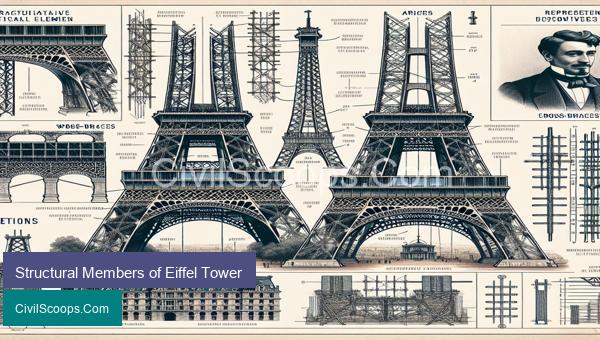
The Eiffel Tower, standing at 324 meters tall, is an iconic landmark and one of the most recognizable structures in the world. It was built by French civil engineer Gustave Eiffel for the 1889 World’s Fair in Paris. The tower’s unique design and distinctive appearance have made it a symbol of France and a masterpiece of structural engineering.
The Eiffel Tower is made up of several structural members that work together to support its immense weight and withstand external forces such as wind and earthquakes. These members can be broadly categorized into three main types: compression, tension, and flexural.
1. Compression Members - The compression members of the Eiffel Tower are the vertical and diagonal iron columns that support the immense weight of the structure. There are a total of 4 huge iron columns, one at each corner of the tower, that are 2.5 meters wide at the base and taper to 1.2 meters at the top. These columns were made by riveting together 18 individual pieces of iron. The diagonal bracing members, consisting of latticework, help to redistribute the loads, decrease the wind pressure, and make the tower more stable.
2. Tension Members - The most prominent tension member of the Eiffel Tower is the famous wrought iron lattice framework. The lattice design consists of intersecting diagonal struts and horizontal beams that create a triangular pattern. These triangles are an integral part of the tower’s structure and provide stability against horizontal forces. The lattice also acts as a tension member, distributing the weight of the tower evenly and transferring the loads to the compression members.
3. Flexural Members - Flexural members, also known as bending members, are the structural elements that resist bending forces and help maintain the tower’s shape. The curved arc of the tower’s legs provides the necessary strength and stability to withstand vertical and horizontal forces. The curvature of the tower also reduces the wind resistance, allowing the Eiffel Tower to sway during strong winds rather than breaking under the pressure.
In addition to these main structural members, the Eiffel Tower also contains other elements such as cross bracing, diagonal floor beams, and riveted joints that work together to provide additional support and stability to the structure.
The choice of wrought iron as the primary material for the Eiffel Tower was a significant engineering breakthrough at the time. Wrought iron is a malleable and ductile metal, making it an excellent choice for constructing tall structures. Additionally, the innovative design of the lattice framework allowed for maximum strength with minimum material, making the tower not only structurally sound but also cost-effective.
In conclusion, the Eiffel Tower is a testament to the genius of Gustave Eiffel and the remarkable structural engineering behind it. The combination of compression, tension, and flexural members, along with other structural elements, has made this iconic structure not only a symbol of France but also a lasting masterpiece of civil engineering.
Foundation Details of Eiffel Tower
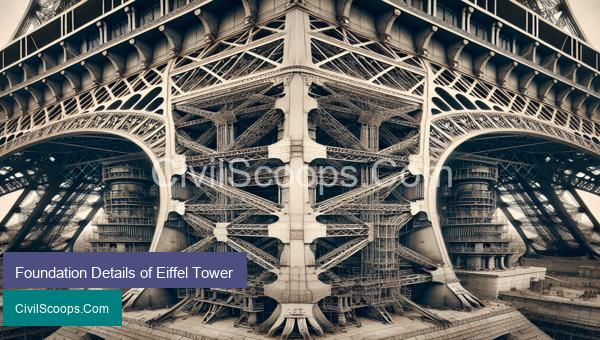
The Eiffel Tower, one of the most iconic structures in the world, stands tall and proud in the heart of Paris, France. This towering structure is not only a symbol of the city, but also a testament to the brilliant engineering and construction techniques used in its creation. The foundation of the Eiffel Tower is one of the key factors that have enabled it to stand strong for over 130 years.
The Eiffel Tower was built between 1887 and 1889 by renowned civil engineer Gustave Eiffel. Its foundation was designed to support the weight of the 10,100 ton structure and withstand the powerful winds that can blow through Paris. The foundation work began in January 1887 and was completed in just over a year.
The foundation of the Eiffel Tower consists of four prominent supporting legs, each made of wrought iron. These legs are anchored deep into the ground and were built on top of concrete bases, known as pedestals, that were specially designed to distribute the weight of the structure evenly. The foundations were established by excavating four cylindrical shafts, measuring 20.5 meters in depth and 4.5 meters in diameter, at each corner of the tower. The excavated holes were filled with concrete and the wrought iron legs were secured into the concrete foundations using bolts.
In addition to the legs, the foundation of the tower also consists of a network of diagonal beams that provide extra support and stability. These beams are connected to the legs at the base and again at the second level of the tower, creating a strong truss system that helps distribute the weight of the structure evenly and resist any lateral forces.
To further strengthen the foundation of the tower, a 2.5-meter thick concrete slab was placed beneath the four pedestals. This slab acted as a massive anchor, spreading the load of the Eiffel Tower over a wider area and preventing any sinking or tilting.
The foundation of the Eiffel Tower was designed with meticulous precision and incorporated advanced engineering techniques for its time. Despite the lack of modern technology, the foundation was able to support the massive weight of the structure and withstand various natural elements, such as wind and soil movements.
In conclusion, the foundation of the Eiffel Tower is a testament to the genius and skill of the civil engineers and workers involved in its construction. It has enabled the tower to stand tall and remain a beloved and recognizable structure for centuries, attracting millions of visitors each year.
Wind Load Consideration of Eiffel Tower
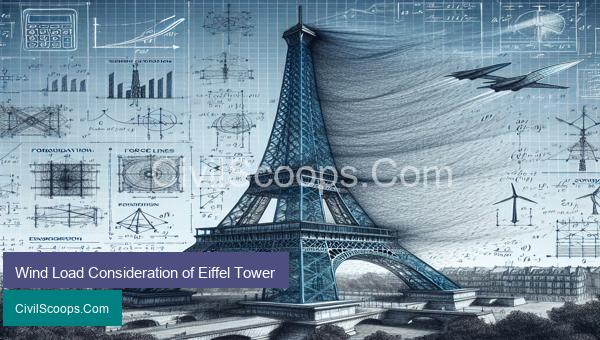
The iconic Eiffel Tower, located in Paris, France, is one of the most recognizable structures in the world. Standing at a height of 324 meters, it is a testament to the technical and engineering genius of its designer, Gustave Eiffel. However, with its immense height and unique design, the wind load consideration for the Eiffel Tower was one of the most crucial factors in its construction.
Wind load is defined as the force exerted by the wind on a structure or object. It is a significant factor to consider in the design and construction of tall structures, especially in areas with high wind speeds. In the case of the Eiffel Tower, it had to withstand the strong winds of Paris, which can reach speeds of 90 km/h.
The design of the Eiffel Tower incorporated several techniques to minimize the impact of wind load. For example, its distinctive lattice work construction allowed wind to pass through it instead of pushing against it, reducing the overall force. The tower also follows a pyramidal shape, which is known to be aerodynamically stable compared to other geometric shapes.
To accurately determine the wind load on the Eiffel Tower, wind tunnel testing was conducted on a 1:50 scale model. This testing helped engineers understand how the tower would respond to different wind speeds and directions. The results of the testing were used to make design modifications, such as adding diagonal bracings and changing the shape of the supporting columns, to further improve its stability.
In addition to the structural design, the Eiffel Tower also has several key features that help mitigate the impact of wind load. The tower consists of three levels, with the first two situated closer to the ground and acting as buffers against strong winds. Furthermore, the use of riveted joints instead of welded ones allows the structure to flex and withstand the wind better.
Despite all these considerations, the Eiffel Tower does experience some swaying during high winds. However, this movement is well within the tolerance limit set by the engineers and does not affect the structural integrity of the tower. In fact, the design of the tower has been proven to be so effective that it can withstand wind speeds of up to 300 km/h.
In conclusion, wind load consideration played a crucial role in the design and construction of the Eiffel Tower. Innovative design techniques, wind tunnel testing, and strategic placement of levels and joints all contributed to making it one of the most stable and enduring tall structures in the world. As such, the Eiffel Tower serves as a great example of how thorough wind load analysis is an integral part of any construction project, especially for tall and complex structures.
Construction Process of Eiffel Tower
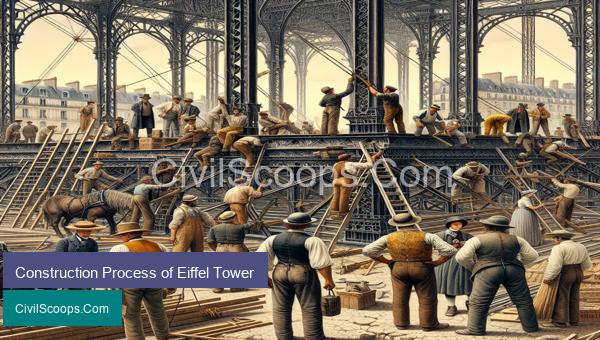
The construction of the Eiffel Tower, one of the most iconic landmarks in the world, began in January 1887 and was completed in March 1889. The tower was designed by French engineer Gustave Eiffel and was built as the entrance arch for the 1889 World’s Fair, held in Paris to commemorate the 100th anniversary of the French Revolution.
The construction process of the Eiffel Tower can be divided into three main phases: design, fabrication, and erection.
Design:
The design of the Eiffel Tower started with extensive research and calculations by Gustave Eiffel and his team of engineers and architects. They used advanced mathematical models and wind tunnel studies to determine the most stable and efficient design for the tower. The final design consisted of a wrought iron lattice structure in the shape of an inverted pyramid, with four curved legs meeting at a single point at the top.
Fabrication:
The fabrication of the Eiffel Tower took place in a factory located on the outskirts of Paris. The work involved cutting, shaping, and assembling over 18,000 pieces of wrought iron using cranes, forges, and other specialized equipment. Every piece was designed to fit perfectly into its place in the structure, and any mistake could have compromised the stability of the tower.
Erection:
The onsite construction of the Eiffel Tower began in January 1887. It involved the assembly of the pre-fabricated pieces and the installation of the elevators, stairs, and platforms. A team of 50-60 workers, led by Gustave Eiffel himself, worked tirelessly to ensure that the tower was completed on time for the World’s Fair. They used movable scaffolding and derricks to lift the heavy iron pieces and guide them into position.
The construction of the tower was not without its challenges. The workers had to contend with strong winds, extreme heights, and tight deadlines. To ensure the stability of the tower, Gustave Eiffel used a unique method of cross-bracing the four legs together. This innovative design made the tower resistant to high winds and has since become a standard in modern-day skyscraper construction.
The Eiffel Tower was inaugurated on March 31, 1889, and has since become an iconic symbol of France and an architectural marvel. It stands at a height of 324 meters and held the title of the world’s tallest structure for 41 years until the completion of the Chrysler Building in New York City.
In conclusion, the construction of the Eiffel Tower was a remarkable feat of engineering, requiring a combination of technical expertise, innovative design, and sheer determination. Its enduring legacy and popularity continue to awe and inspire people even after more than a century of its construction.
Conclusion
In conclusion, the Eiffel Tower is a magnificent architectural wonder that has become an iconic symbol of Paris. Its construction and design were revolutionary for its time and it continues to impress visitors with its grandeur and beauty. From its rich history to its breathtaking views, there is much to discover and appreciate about this famous landmark. The Eiffel Tower truly embodies the spirit and charm of Paris and serves as a testament to human ingenuity and creativity. Whether you are visiting for the first time or have admired it from afar, the Eiffel Tower will always hold a special place in our hearts and minds as a symbol of romance, adventure, and the timeless beauty of France.