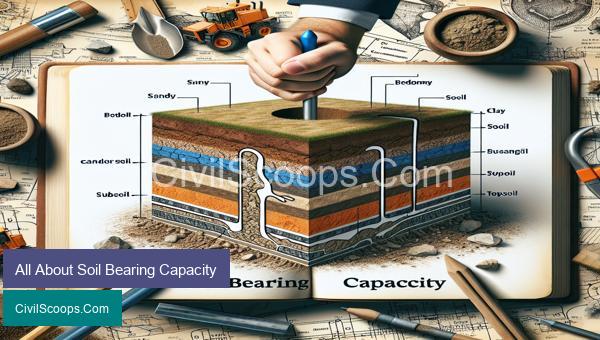
Soil bearing capacity is an essential factor in construction and engineering, determining the stability and safety of structures built on the ground. It refers to the maximum load that the soil can support without experiencing excessive settlement or failure. Understanding the soil bearing capacity is crucial for engineers and builders to ensure the structural integrity and longevity of buildings, roads, and other constructions. In this article, we will explore all about soil bearing capacity, including its definition, factors affecting it, methods of determining it, and its significance in construction projects.
Table of Contents
What is Improve Soil Bearing Capacity?
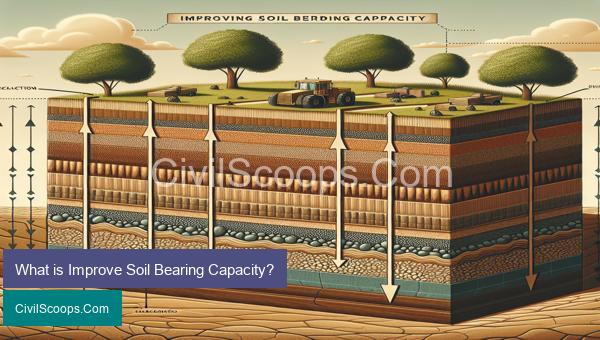
Soil bearing capacity refers to the ability of soil to support the weight of structures or heavy loads without experiencing excessive settlement or failure. It is a vital factor in construction projects, as the stability and safety of a structure greatly depend on the soil’s bearing capacity.
However, there are instances where the natural soil on a site may not have the required bearing capacity for a construction project. In such cases, soil improvement techniques are used to increase the soil’s bearing capacity.
Improve soil bearing capacity involves the use of various methods and techniques to enhance the soil’s strength, stability, and ability to support heavy loads. The choice of method depends on the site conditions, type of soil, and the magnitude of the load to be supported.
One commonly used method to improve soil bearing capacity is compaction. Compaction involves the mechanical process of increasing soil density and removing air voids, which results in a more stable soil mass. This is achieved by rolling or tamping the soil layer, making it denser and capable of supporting greater loads.
Another method is the use of stone columns or piles. This technique involves driving prefabricated columns or piles into the ground to improve the load-bearing capacity of the soil. The columns or piles transfer the load from the structure to the deeper and more stable layers of the soil.
Chemical methods, such as grouting and chemical stabilization, are also used to improve soil bearing capacity. Grouting involves injecting cement or chemical mixtures into the soil to fill voids and create a stronger and more stable soil mass. Chemical stabilization, on the other hand, involves mixing chemicals such as lime, cement, or fly ash with the soil to increase its strength and stiffness.
For specific soil conditions, techniques like preloading, soil reinforcement, and soil mixing may also be used to improve soil bearing capacity. Preloading involves placing a temporary surcharge load on the soil to consolidate and increase its density. Soil reinforcement uses techniques like geotextiles or geogrids to reinforce the soil and enhance its load-bearing capacity. Soil mixing involves blending the in-situ soil with a stabilizing material to create a stronger and more stable soil mass.
In conclusion, improving soil bearing capacity is a crucial step in construction projects to ensure the stability and safety of structures. There are various methods and techniques available, and the most suitable one must be chosen based on site conditions and project requirements. It is essential to consult a qualified engineer for proper soil testing and analysis to determine the most appropriate method to improve soil bearing capacity.
How to Use Preloading to Improve Soil Bearing Capacity?
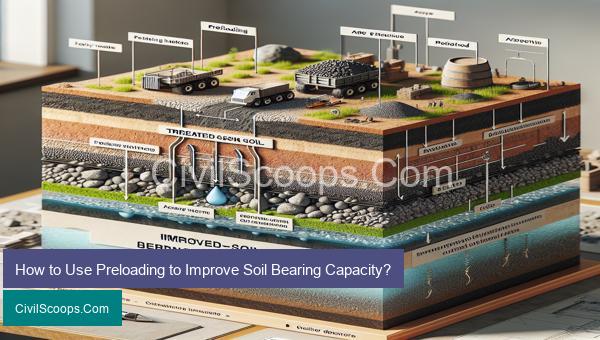
Preloading is a common technique used in civil engineering to improve soil bearing capacity. It involves the application of a static load on the ground surface for a significant period of time before construction begins. This gradually compresses the underlying soil, improving its strength and reducing its settlement potential. Preloading is especially useful in areas with weak or compressible soils, as it helps to stabilize the ground and ensure the stability of structures built on top of it. In this article, we will discuss the steps involved in using preloading to improve soil bearing capacity.
Step 1: Site Investigation and Soil Testing
The first step in using preloading is to conduct a thorough site investigation to understand the soil conditions. This includes conducting soil tests such as penetrometer tests, cone penetration tests, and laboratory tests to determine the soil type, strength, and compressibility. The results of these tests will help in designing the preloading plan and determining the duration and magnitude of the preload.
Step 2: Designing the Preloading Plan
Based on the soil investigation and testing results, a preloading plan is designed. This includes determining the type and weight of the load to be applied, the duration of the preload, and the placement of load distribution platforms. The type of preload used can vary, such as sand embankment, prefabricated vertical drains (PVDs), or wick drains, depending on the soil conditions.
Step 3: Installing Load Distribution Platforms
To distribute the preload evenly on the ground surface, load distribution platforms are installed. These can be either rigid platforms made of steel or timber, or soft platforms made of geotextile or geogrids. The choice of platforms depends on the type of preload being used and the soil conditions. These platforms also serve as a working surface for construction equipment during the preload period.
Step 4: Applying Preload and Monitoring
Once the load distribution platforms are installed, the preloading process can begin. The preload is applied gradually in multiple stages, with frequent monitoring of the settlement and soil behavior. The monitoring involves measuring the settlement at different locations using settlement plates, inclinometers, or surveying techniques. This helps in determining the rate of consolidation and adjusting the preload accordingly.
Step 5: Post-Preloading Settling and Construction
After the desired settlement is achieved, the preload is maintained for a period of time to allow for any post-preloading settling. This period can vary from a few months to a year, depending on the soil conditions. Once the post-preloading settlement is completed, the load is removed, and construction can take place on the now stabilized ground.
It is important to note that preloading should be carried out by experienced engineers and contractors to ensure its success. Proper monitoring and careful analysis of the soil conditions are crucial to designing an effective preloading plan. It is also essential to adhere to safety measures during the preload process, as it involves heavy loads and construction equipment.
In conclusion, preloading is an effective method for improving soil bearing capacity and reducing the potential for settlement in weak or compressible soils. With proper planning and execution, preloading can provide a stable and solid foundation for the construction of various structures, ensuring their long-term stability and durability.
Conclusion
In conclusion, soil bearing capacity is a crucial factor to consider in any construction project. It determines the ability of the soil to support the weight of the structure and ultimately determines the safety and stability of the building. Understanding the different factors that affect soil bearing capacity and using appropriate methods to test and analyze it is essential for the success of any construction project. By taking the necessary steps to ensure adequate soil bearing capacity, it is possible to avoid costly and dangerous failures in the long run. With proper planning and knowledge, engineers and builders can confidently design and construct structures that will last for many years to come. Happy building!