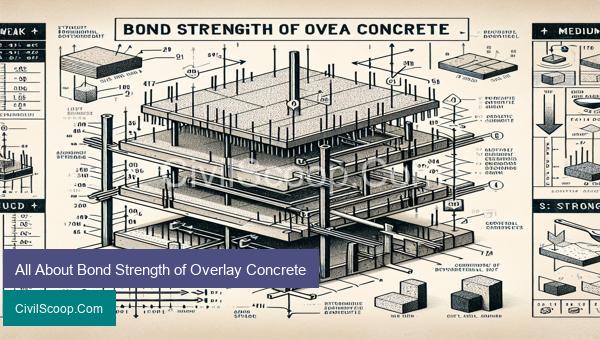
The bond strength between overlay concrete and the underlying substrate is a crucial factor in the success and longevity of any concrete repair or resurfacing project. It affects the structural integrity and performance of the finished product, and must be carefully considered and managed during the construction process. In this article, we will delve into the various aspects of bond strength for overlay concrete, including its importance, factors that influence it, and methods of testing and improving it. Whether you are a contractor, engineer, or homeowner, understanding the bond strength of overlay concrete is essential for ensuring a successful and durable concrete surface.
Table of Contents
Factors Affecting Bond Strength of Overlay Concrete on Bridge Decks
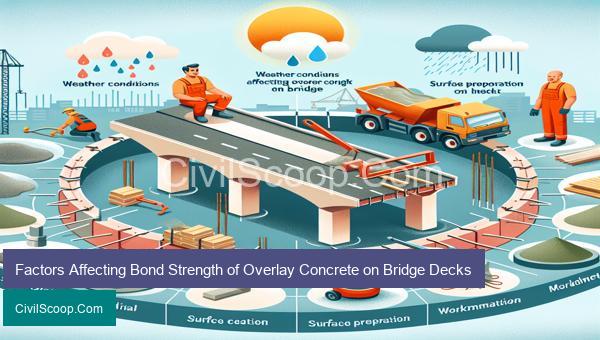
Bond strength is an important factor for the durability and structural integrity of concrete bridge decks. It is the measure of the strength of the connection between the overlay concrete and the existing concrete structure. A strong bond ensures that the two concrete layers work together as one solid unit, providing adequate load transfer and preventing cracks, delamination, and other types of distress. There are several factors that can affect the bond strength of overlay concrete on bridge decks, including:
1. Surface Preparation: The surface of the existing concrete deck must be properly prepared to achieve a good bond with the overlay concrete. Any loose particles, dirt, or grease on the surface can prevent the concrete from bonding effectively. Surface preparation techniques such as high-pressure water blasting, sandblasting, or diamond grinding can help to remove contaminants and create a rough surface for better adhesion.
2. Moisture Content: The moisture content of the existing concrete deck and the overlay concrete is a crucial factor affecting bond strength. If the overlay concrete is placed on a wet surface, the excess moisture can dilute the cement paste and weaken the bond strength. On the other hand, a dry surface can lead to a rapid loss of moisture from the fresh concrete, preventing proper hydration and resulting in poor bond strength.
3. Concrete Mix Proportions: The mix design of both the existing concrete deck and the overlay concrete can influence the bond strength. A high water to cement ratio or poor aggregate grading can result in weaker concrete with low bond strength. It is crucial to design the concrete mixes properly to achieve the required bond strength and ensure compatibility between the two layers.
4. Concrete Age: The age of the existing concrete deck is an important factor to consider when placing an overlay. Freshly cured concrete has higher bond strength than old, aged concrete, which has developed a hardened surface layer due to carbonation. This layer may need to be properly removed to ensure a good bond with the overlay concrete.
5. Concrete Surface Condition: Any surface defects, such as cracks, laitance, or voids on the existing concrete deck, can negatively impact the bond strength. These defects can create a weak zone where the overlay may separate and fail prematurely. Proper repairs and surface treatments must be carried out before placing the overlay concrete.
6. Adhesive/ Bonding Agents: Adhesives and bonding agents are sometimes used to improve the bond between the existing and overlay concrete layers. These materials can help to fill the voids and micro-cracks on the surface and promote adhesion. The selection and application of the right adhesive or bonding agent are crucial in achieving adequate bond strength.
7. Curing: Proper curing of the overlay concrete is essential for the development of high bond strength. Adequate curing ensures that the concrete achieves its full strength potential and minimizes cracking. Curing also helps to prevent rapid moisture loss, which can cause the surface to shrink and weaken the bond with the existing concrete.
In conclusion, the bond strength of concrete overlay on bridge decks is influenced by several factors, and careful consideration must be taken during design, construction, and maintenance to ensure a durable and strong connection between the two concrete layers. Proper surface preparation, concrete mix design, moisture control, curing, and use of bonding agents can help to achieve an adequate bond strength and extend the service life of the bridge deck.
Factors Affecting Bond Strength of Overlay Concrete
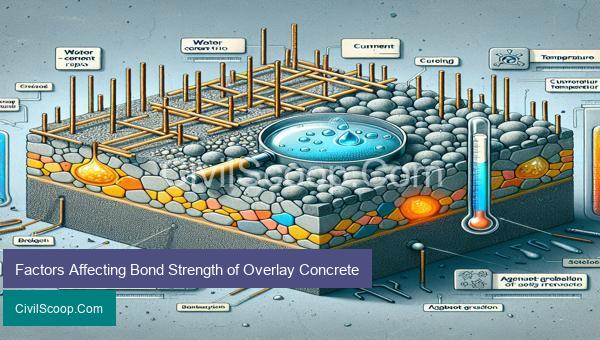
The bond strength of overlay concrete refers to the ability of the overlay material to adhere to the existing concrete surface. This is an important factor to consider in construction projects, as it directly affects the durability and performance of the overlay structure. The bond strength is influenced by various factors, including surface preparation, material properties, and environmental conditions. In this article, we will discuss the key factors affecting bond strength of overlay concrete.
1. Surface Preparation:
Proper surface preparation is crucial for achieving good bond strength of overlay concrete. The existing concrete surface should be clean, sound, and free from any contaminants such as dirt, oil, grease, and loose particles. Any existing cracks, spalls, or delaminations should be repaired before applying the overlay material. If these surface defects are not addressed, they can reduce the surface contact between the existing concrete and the overlay, leading to poor bond strength.
2. Material Properties:
The properties of both the overlay material and the existing concrete play a significant role in determining the bond strength. The overlay material should have good adhesion properties and compatibility with the existing concrete. The tensile strength of the overlay should be higher than that of the existing concrete to ensure proper bonding. The coefficient of thermal expansion should also be similar to avoid differential movements between the overlay and the existing concrete.
3. Type of Bonding Agent:
The type of bonding agent used to bond the overlay to the existing concrete surface can greatly affect the bond strength. The most commonly used bonding agents include epoxy, acrylic, and latex-based adhesives. Epoxy bonding agents provide the highest bond strength, followed by acrylics and latex-based adhesives. The type of bonding agent used should be suitable for both the overlay material and the existing concrete surface.
4. Curing Time:
Proper curing is essential for achieving optimum bond strength. Inadequate curing time can result in a weak bond between the overlay and the existing concrete. On the other hand, over-curing can cause the surface to dry out, resulting in a poor bond. The recommended curing time for the bonding agent should be followed to ensure proper adhesion between the two surfaces.
5. Environmental Conditions:
Environmental conditions such as temperature and moisture can affect bond strength. For example, high temperatures can cause the bonding agent to dry too quickly, reducing its effectiveness. Similarly, moisture can interfere with the bonding process, resulting in a weak bond. It is essential to follow the manufacturer’s instructions regarding temperature and humidity requirements for the overlay material to achieve optimum bond strength.
6. Construction Techniques:
The construction techniques used for placing the overlay material can also affect bond strength. The use of proper equipment and techniques such as vibrating screeds, trowels, and finishing techniques can ensure good surface contact and proper bonding between the two materials.
In conclusion, achieving good bond strength of overlay concrete requires proper surface preparation, the use of suitable bonding agents, and careful consideration of environmental conditions. It is also essential to follow the manufacturer’s instructions and use proper construction techniques to achieve optimum bond strength. By considering these factors, engineers can ensure the long-term performance and durability of overlay concrete structures.
Condition of Deck Concrete Affecting Bond Strength of Overlay Concrete
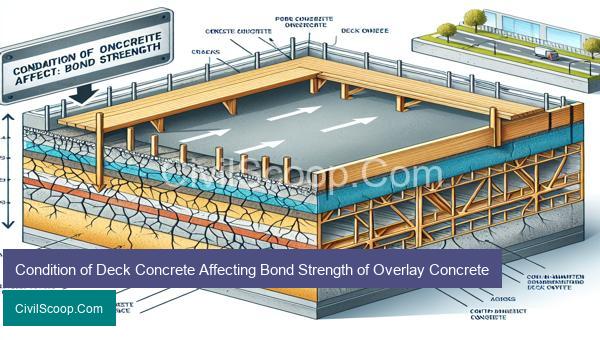
Deck concrete refers to the top layer of a bridge or roadway that supports the weight of vehicles. Overlay concrete is a layer of concrete that is applied over the top of existing deck concrete to improve its strength and durability. The bond strength between these two layers is crucial for the performance and safety of the structure. In this article, we will discuss how the condition of deck concrete can affect the bond strength of overlay concrete.
1. Surface Preparation:
The condition of the deck concrete surface plays a critical role in the bond strength of the overlay concrete. A smooth and clean surface is essential for proper adhesion between the two layers. If the deck concrete surface is contaminated with dust, dirt, or other debris, it can hinder the bonding process. Similarly, an excessively rough or uneven surface can also affect the bond strength of the overlay concrete. Therefore, proper surface preparation, such as shot blasting or scarification, is crucial to achieving a strong bond between the two layers.
2. Moisture Content:
The moisture content of the deck concrete is another factor that can affect the bond strength of overlay concrete. Moisture acts as a barrier between the two layers and can prevent proper adhesion. Deck concrete with high moisture content can lead to poor bonding and weaken the overall structure. Moisture levels should be checked before applying the overlay concrete to ensure optimal bonding.
3. Surface Condition:
The condition of the deck concrete surface can be affected by various factors such as age, traffic, and exposure to harsh weather conditions. Older deck concrete tends to have a weaker surface, which can affect the bond strength of the overlay concrete. Similarly, heavy traffic can cause wear and tear on the surface, resulting in a weaker bond. Exposure to extreme temperatures, freeze-thaw cycles, and chemicals can also deteriorate the surface of the deck concrete and affect the bond strength.
4. Quality of Materials:
The quality of materials used for both the deck and overlay concrete can also impact the bond strength between the two layers. If low-quality materials are used, it can result in a weak bond, leading to cracking and delamination of the overlay concrete. It is crucial to use high-quality materials that are compatible with each other to ensure a strong bond.
5. Construction Techniques:
The construction techniques used for placing the deck and overlay concrete can also affect the bond strength between the two layers. Improper placement or curing methods can result in a weak bond and reduce the longevity of the structure. Adequate supervision and proper construction techniques should be employed to ensure a strong bond between the deck and overlay concrete layers.
In conclusion, the condition of the deck concrete has a significant impact on the bond strength of overlay concrete. Proper surface preparation, moisture control, and using high-quality materials are essential for achieving a strong bond between the two layers. Additionally, proper construction techniques and regular maintenance are crucial to ensure the durability and safety of the structure.
Extent of Damage Affecting Bond Strength of Overlay Concrete
Overlay concrete, also known as topping concrete, is a layer of concrete applied over an existing surface to provide additional strength, durability, or improve its appearance. It is commonly used in construction projects, such as pavements and flooring, to prolong the life of existing structures.
However, the bond strength between the overlay concrete and the existing surface is crucial for the success and longevity of the project. Any damage to the existing surface can significantly affect the bond strength, leading to potential failures and costly repairs.
Extent of Damage:
1. Cracks: Cracks in the existing surface, such as concrete or asphalt, can significantly reduce the bond strength of the overlay concrete. These cracks can create spaces for air and moisture to penetrate, leading to the formation of voids and weak spots in the bond line. As the overlay concrete cures, it will shrink, which can cause further cracking and delamination of the layers.
2. Spalling: Spalling occurs when the surface of the existing concrete breaks off in small pieces due to the pressure of expansion or contraction, causing damage to the bonding surface. The rough and uneven surface left behind after spalling can affect the bond strength, leading to potential delamination.
3. Poor Surface Preparation: Proper surface preparation is essential for achieving good bond strength between the existing surface and the overlay concrete. Insufficient cleaning, roughness, or contamination of the surface can result in poor adhesion, leading to eventual failure of the overlay.
4. Moisture: Moisture is a significant factor that affects the bond strength of the overlay concrete. Excess moisture, either within the existing surface or from the surrounding environment, can weaken the bond line and cause delamination. Concrete surfaces must be completely dry before the application of the overlay, and proper drainage systems must be in place to prevent the build-up of water beneath the overlay.
5. Chemicals: Exposure to certain chemicals can also affect the bond strength of overlay concrete. For instance, oil, grease, and other contaminants on the surface can hinder proper bonding. Similarly, acidic substances, such as acids used for cleaning or de-icing, can cause corrosion of the existing surface, leading to reduced bond strength.
Conclusion:
In conclusion, any damage to the existing surface can have a significant impact on the bond strength of overlay concrete. It is crucial to conduct a thorough inspection of the surface before the application of the overlay and address any potential issues that may affect the bonding process. Proper surface preparation, moisture control, and protection against chemicals are crucial for achieving a strong bond between the overlay and existing surface. Negligence in addressing these factors can result in costly and potentially hazardous failures in the future.
Concrete Surface Preparation for Placement of Overlay Concrete
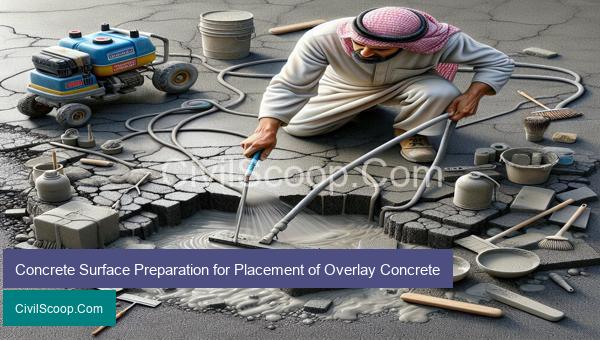
Concrete surface preparation is a critical process that must be done before placing an overlay concrete on an existing surface. This process ensures that the overlay concrete bonds properly with the original surface, resulting in a durable and long-lasting structure. It involves several steps that must be carefully executed to achieve the desired results.
1. Cleaning the surface: The first step in concrete surface preparation is to clean the surface thoroughly. This includes removing all debris, dirt, oil, grease, and any other contaminants that may affect the bonding of the overlay concrete. Any loose or deteriorated concrete must also be removed.
2. Repairing cracks and defects: After cleaning, all cracks and defects on the surface should be repaired. This will prevent these imperfections from being transferred to the overlay concrete. Epoxy or mortar-based patching compounds can be used to fill cracks and repair damaged areas.
3. Roughening the surface: Next, the surface must be roughened to improve the bond between the overlay concrete and the existing surface. This can be achieved by sandblasting, shot blasting, scarifying, or grinding. The selected method will depend on the condition of the surface and the type of overlay concrete to be placed.
4. Applying a bonding agent: To ensure maximum bond strength, a bonding agent should be applied to the prepared surface. This agent will enhance the adhesion between the overlay concrete and the existing surface, improving the overall durability of the structure.
5. Moistening the surface: Before placing the overlay concrete, the prepared surface should be moistened to prevent it from absorbing water from the fresh concrete. This will help in achieving a uniform and consistent cure of the overlay concrete.
6. Placing the reinforcement: In some cases, a reinforcement layer may be required to increase the load-carrying capacity of the structure. This layer should be placed on the prepared surface before pouring the overlay concrete.
7. Placing the overlay concrete: Finally, the overlay concrete can be placed on the prepared surface by pouring it in layers and consolidating it with a vibrator. Care should be taken to ensure that the overlay concrete is of the same thickness throughout the structure.
Proper surface preparation is crucial for the success of any concrete overlay project. It ensures the structural integrity of the new concrete by providing a strong bond with the original surface. Neglecting this process can lead to premature failure and costly repairs. Therefore, it is essential to follow all the necessary steps and techniques for concrete surface preparation before placing an overlay.
Placement and Compaction of Overlay Concrete
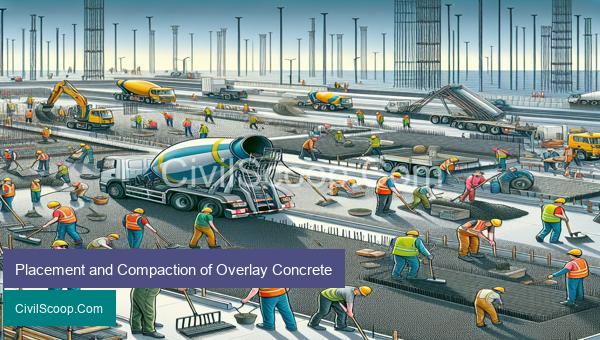
Placement and compaction of overlay concrete is a crucial step in the construction process that significantly affects the quality and durability of the finished product. Overlay concrete refers to a layer of concrete placed on top of an existing surface, typically used for repairing or strengthening old and damaged structures.
The placement process of overlay concrete begins with surface preparation. The existing surface must be thoroughly cleaned and free of any debris, grease, oil, or loose particles. Any cracks, potholes, or uneven surfaces should be repaired, and the surface should be primed if necessary.
After surface preparation, an appropriate bonding agent or primer is applied to the existing surface to ensure adequate adhesion between the old and new concrete. This is particularly crucial for concrete overlays on asphalt or other non-concrete surfaces.
The overlay concrete is then placed on the surface using a pump, chute, or wheelbarrow, depending on the size of the project. Skilled workers use specialized tools, such as screeds, to evenly distribute the concrete and ensure a consistent thickness throughout.
Once the concrete is placed, the compaction process begins. Compaction is the process of removing air voids from the concrete and ensuring proper consolidation. Effective compaction is essential for achieving the desired strength and durability of the concrete.
Several compaction methods can be used for overlay concrete, including manual tools, vibratory screeds, and rollers. The most common method is the use of vibratory screeds, which use high-frequency vibrations to settle the concrete evenly and remove any air voids.
Proper timing is critical during the compaction process. If the compaction is done too early, it can cause segregation and weakening of the concrete. On the other hand, waiting too long to compact the concrete can result in an uneven surface and poor bonding with the existing surface.
During the placement and compaction process, it is essential to monitor the thickness and level of the concrete layer constantly. Any deviations should be corrected immediately to ensure the desired outcome.
Once the concrete is properly placed and compacted, it is left to cure. Curing is the process of maintaining adequate moisture and temperature conditions for the concrete to achieve the desired strength and durability. Proper curing is crucial for overlay concrete to prevent cracking and achieve a long-lasting surface.
In conclusion, placement and compaction of overlay concrete require careful preparation, skilled workers, and appropriate equipment. It is a crucial step in the construction process that significantly affects the quality and lifespan of the finished product. Proper execution of this process is necessary to ensure the structural integrity and performance of the overlay concrete.
Curing of Placed Overlay Concrete for Good Bond Strength

Curing is an essential process in the construction of any concrete structure. It involves ensuring the proper hydration and hardening of the concrete to achieve optimal strength and durability. This is especially important when it comes to overlay concrete, which is a thin layer of new concrete placed on top of existing concrete surfaces. Curing of placed overlay concrete plays a crucial role in achieving good bond strength between the new and old concrete layers. In this article, we will discuss the importance of curing in the placement of overlay concrete and the methods used to ensure good bond strength.
Why is Curing Important for Placed Overlay Concrete?
Curing is important in the placement of overlay concrete for several reasons. First and foremost, it ensures that the concrete achieves the desired strength and durability. Without proper curing, the overlay concrete may develop cracks and other defects, compromising its structural integrity. These cracks not only affect the appearance of the concrete but also reduce its bond strength.
In addition, curing helps to create a favorable environment for the concrete to harden. When concrete is placed, the water in the mix is used for the hydration process, which is responsible for the hardening of the concrete. During curing, the concrete is protected from excessive moisture loss, which can lead to shrinkage and cracking. It also allows for the proper development of chemical bonds between the cement and aggregates, which is crucial for achieving good bond strength.
Methods of Curing Placed Overlay Concrete
There are several methods used to cure placed overlay concrete to achieve good bond strength. These methods include:
1. Water Curing: This is the most common and effective method of curing concrete. It involves keeping the concrete wet by applying a continuous supply of water on the surface. This method is suitable for overlay concrete as it ensures a high level of moisture retention, which is essential for the proper hydration process.
2. Blanket Curing: This method involves covering the surface of the concrete with a plastic or impervious material to prevent moisture loss. The edges of the material are secured to the existing concrete to create a seal. This method is useful in areas with limited access to water or in cold weather conditions, where water curing is not feasible.
3. Curing Compounds: These are chemical treatments applied to the surface of the concrete to prevent moisture loss. These compounds form a thin film on the concrete’s surface, which creates a barrier against evaporation. Curing compounds are commonly used for large areas of the overlay concrete, such as roads or parking lots.
4. Steam Curing: This method involves exposing the concrete to high temperatures and humidity, which accelerate the hydration process. Steam curing is useful in cold weather conditions or when a quick strength gain is required.
It is essential to note that all these curing methods should be accompanied by proper surface preparation and protection to ensure the best bond strength between the existing and overlay concrete layers.
In conclusion, curing of placed overlay concrete is critical in achieving good bond strength. It is essential to follow the appropriate curing methods to ensure the concrete achieves the desired strength and durability. Proper curing not only helps to prevent cracks and other defects but also ensures the structural integrity of the overlay concrete. As a civil engineer, it is crucial to understand the importance of curing and select the appropriate method for each specific project.
Overlay Concrete Joints Affecting Bond Strength
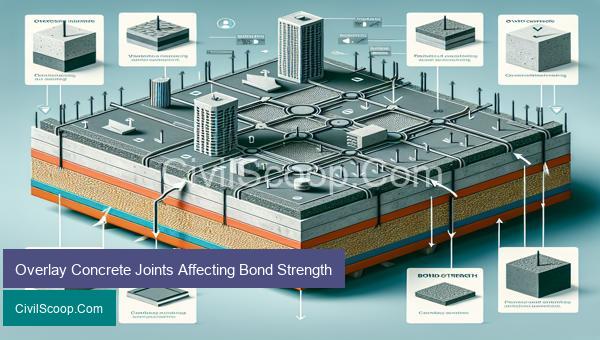
Overlay concrete joints are an essential part of any construction project that involves the use of multiple layers of concrete. These joints are used to connect the different layers of concrete together, providing strength and durability to the overall structure. However, these joints can also have a significant impact on the bond strength between the layers of concrete, which, if not properly addressed, can lead to structural problems and failures.
Bond strength is the resistance of a material to pull apart or rupture when subjected to a tensile force. In the case of concrete, bond strength refers to the ability of the different layers of concrete to hold together without separating or delaminating. This bond strength is crucial because it determines the overall structural integrity of the concrete.
There are several factors that can affect the bond strength of overlay concrete joints, including the quality and condition of the existing concrete surface, the type and quality of the overlay material, and the joint design and construction. Here are some of the ways overlay concrete joints can affect bond strength:
1. Joint Alignment: The alignment of the joints between the overlay and the existing concrete plays a significant role in the bond strength. If the joints are not properly aligned, it can create stress concentration points, leading to a weakened bond. It is essential to ensure that the joints are aligned correctly and do not overlap.
2. Joint Width: The width of the joint also affects the bond strength. A joint that is too wide can cause the overlay material to sag or slough off during placement, resulting in reduced bonding and potential failure. On the other hand, a joint that is too narrow can create internal stress between the two layers of concrete, resulting in delamination.
3. Surface Preparation: The surface of the existing concrete must be properly prepared before placing the overlay material. Any contaminants, such as oil, grease, or curing compounds, can hinder the bond strength and must be removed before placing the overlay. The surface should also be roughened to provide a better bond.
4. Type and Quality of Overlay Material: The type and quality of the overlay material used can greatly affect the bond strength. The material should have good adhesion properties, and it should be compatible with the existing concrete. Different types of overlays, such as polymer-modified concrete, epoxy, or cement-based overlays, will have different bond strengths and must be chosen carefully for each specific application.
5. Joint Construction: The construction of the joint itself can also influence the bond strength. The joint should be properly designed to allow for thermal expansion and contraction, and the edges should be properly sealed to prevent any water infiltration, which can weaken the bond between the layers of concrete.
To ensure adequate bond strength between layers of concrete, proper joint design, construction, and material selection are crucial. Regular inspection and maintenance of the overlay concrete joints are also necessary to detect and address any issues that may arise and prevent larger structural problems in the future. As a civil engineer, it is essential to pay close attention to these factors to ensure the overall strength and durability of the structure.
Minimal Full Depth Cracks Affecting Bond Strength of Overlay Concrete
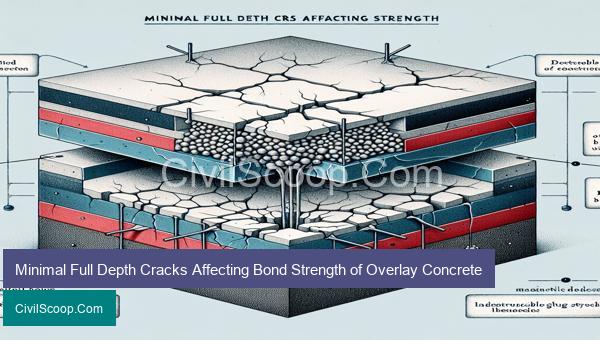
Minimal full depth cracks refer to small cracks that extend through the entire thickness of the concrete layer. These cracks can occur in both new and existing concrete structures and can have a significant impact on the bond strength of overlay concrete.
Bond strength is crucial for the performance and longevity of concrete structures, as it ensures that the overlay concrete adheres properly to the existing concrete layer. When minimal full depth cracks are present, they can weaken the bond between the two layers and compromise the overall structural integrity of the concrete.
One of the main causes of minimal full depth cracks is the inherent properties of the concrete material itself. Factors such as shrinkage, thermal changes, and moisture changes can all contribute to the development of these cracks. Additionally, improper construction techniques, inadequate reinforcement, and poor mix design can also lead to the formation of these cracks.
The presence of minimal full depth cracks can significantly reduce the effective contact area between the overlay and existing concrete, which can result in a lower bond strength. This reduced bond strength can cause a variety of problems such as delamination, premature cracking, and spalling. These issues can not only compromise the appearance of the structure but also lead to costly repairs and maintenance in the long run.
To prevent or minimize the occurrence of minimal full depth cracks, it is essential to take proactive measures during the design and construction stages. Proper mix design and adequate reinforcement can help reduce the potential for concrete shrinkage and cracking. Proper curing and jointing techniques can also help prevent the formation of cracks.
In case minimal full depth cracks have already formed in the existing concrete, it is essential to repair them before applying the overlay. This process usually involves filling the cracks with epoxy or other suitable materials to restore the structural integrity of the concrete. Additionally, the use of bonding agents can help improve the adhesion between the two concrete layers and increase the bond strength.
In conclusion, minimal full-depth cracks can have a significant impact on the bond strength of overlay concrete and compromise the performance and durability of concrete structures. It is crucial for civil engineers to understand the causes of these cracks and take necessary measures to prevent or repair them to ensure the structural integrity of the concrete.
Conclusion
In conclusion, understanding the bond strength of overlay concrete is crucial for ensuring the success and durability of any concrete overlay project. Factors such as surface preparation, adhesive selection, and application techniques all play a significant role in determining the bond strength. It is essential to carefully study and test the bond between the overlay and the existing concrete substrate to determine its suitability and compatibility. Additionally, regular maintenance and proper curing techniques can enhance the bond strength and prolong the lifespan of the overlay concrete. By understanding all aspects of bond strength, contractors and engineers can achieve high-quality and long-lasting concrete overlay projects. With the right knowledge and techniques, we can overcome potential bond strength issues and achieve successful results in overlay concrete applications.