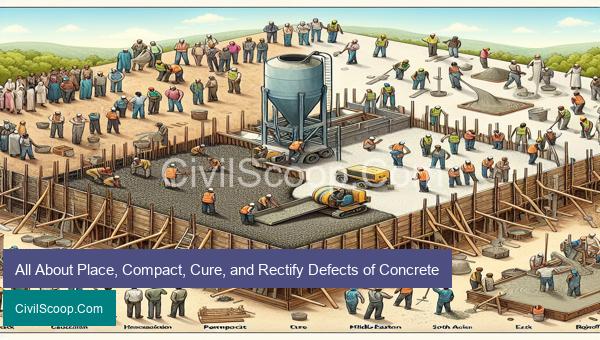
Concrete is one of the most commonly used building materials, known for its strength, durability, and versatility. However, like any other material, concrete is not immune to defects. These defects can greatly affect the structural integrity and aesthetics of concrete structures, leading to costly repairs and even potential safety hazards. In order to address and prevent these defects, there are four essential concepts that every concrete professional should know: All About Place, Compact, Cure, and Rectify. In this article, we will delve into the importance of understanding these four elements and how they can effectively improve the quality and longevity of concrete structures.
Table of Contents
How to Place, Compact, Cure, and Rectify Defects of Concrete?
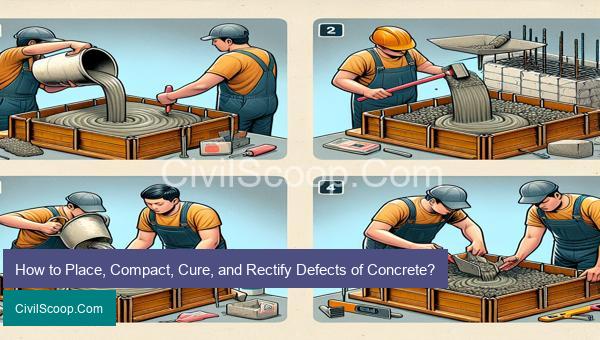
Placing, compacting, curing, and rectifying any defects in concrete are all crucial steps in the construction process to ensure a strong and durable structure. As a civil engineer, it is important to understand the proper techniques for handling concrete to achieve the desired results.
Placing:
First and foremost, the placement of concrete should be done in a timely manner to avoid any delays. It is important to closely monitor the weather conditions as extreme temperatures or moisture can affect the concrete’s setting time and strength.
The concrete should be placed in layers, also known as lifts, to ensure it is evenly distributed and compacted. Additionally, it is important to use the proper equipment, such as a chute, pump, or conveyor belt, to place the concrete in the desired location accurately.
Compacting:
Compaction is the process of removing excess air voids from the concrete mixture to increase its density and strength. Proper compaction helps to eliminate any potential weak spots in the concrete, resulting in a more durable structure.
There are several methods of compacting concrete, including manual compaction using hand tools, vibration using internal or external vibrators, and tamping using rod-shaped tools. The appropriate compaction method will depend on the type and size of the structure being constructed.
Curing:
Curing is the process of keeping the concrete in a wet or humid environment for a specific period to allow it to gain its intended strength. The curing process starts immediately after the concrete is placed and compacted.
Covering the concrete with plastic or wet blankets can help to keep the surface moist and prevent it from drying too quickly, which can lead to cracking. The duration of curing will depend on several factors, such as the type of cement used, moisture content, and ambient temperature.
Rectifying Defects:
Even with careful planning and execution, defects in concrete can still occur. Some common defects in concrete are cracks, honeycombing, and pop-outs. These defects can weaken the structure and compromise its integrity.
To rectify these defects, it is essential to identify the cause and take immediate action. For example, to fix cracks, a sealant or an epoxy resin can be used to fill the gap and restore the structural integrity. Honeycombing can be rectified by removing the affected area and properly placing and compacting new concrete.
In summary, proper placement, compaction, curing, and rectification of defects are crucial steps in ensuring strong and durable concrete structures. As a civil engineer, it is important to closely monitor and supervise these processes to achieve the desired results.
1. Placing of Concrete

Placing of Concrete is a critical process in constructing any structure, as it determines the overall strength and stability of the final product. It involves the careful and precise positioning and consolidation of concrete into formwork to create a solid and durable structure.
The following steps are involved in the placing of concrete:
1. Preparation of the Formwork: Before placing the concrete, the formwork needs to be prepared. This includes cleaning, leveling, and ensuring that all bolts, ties, and spacers are in place. The formwork also needs to be coated with a release agent to prevent the concrete from sticking.
2. Transportation and Pouring of Concrete: The concrete is transported to the construction site in specialized trucks known as “concrete mixers.” The concrete needs to be poured within 90 minutes of leaving the batching plant to prevent it from hardening. It is poured into the formwork in layers using a chute, pump, or crane as per the requirement of the construction site.
3. Compaction of Concrete: After the concrete is poured, it needs to be properly compacted to remove any air voids or pockets. The compaction process can be done using mechanical or manual methods. Mechanical methods such as vibrating screeds or tamping equipment are used for larger projects, while manual compaction can be done using hand trowels and shovels.
4. Finishing of Concrete: Once the concrete is compacted, finishing techniques are used to achieve the desired surface texture and appearance. This includes screeding, bull floating, and troweling. These techniques also help to remove any excess water from the surface and create a smooth and level surface.
5. Curing of Concrete: Curing is an essential step in the placing of concrete process, as it helps in the hydration process of the cement. Curing involves keeping the concrete moist and at a specified temperature for a period of 7-14 days. This allows the concrete to gain strength and durability.
6. Joints and Reinforcements: During the placing of concrete process, expansion and contraction joints need to be created to allow for any movement of the structure. Reinforcement steel, such as rebars, are also placed within the concrete to increase its strength and prevent cracking.
It is crucial to follow proper techniques and standards while placing concrete to ensure its strength and longevity. Any mistakes or negligence in the process can lead to structural failures and compromise the safety of the building.
To conclude, placing of concrete is a critical step in the construction process, and it requires careful planning, skilled labor, and proper equipment to achieve a strong and durable structure. By following all the necessary steps and techniques, the chances of flaws and defects in the concrete are minimized, resulting in a successful construction project.
2. Compaction of Concrete
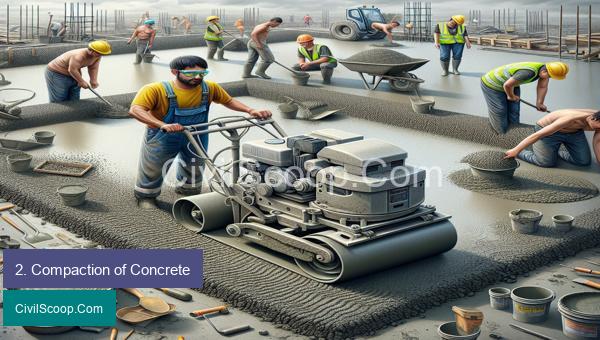
Compaction of concrete is an important process in the construction of structures. It involves reducing the volume of freshly placed concrete, in order to increase its density and remove any air voids. This process is essential to achieve maximum strength, durability, and impermeability of the concrete.
There are two main types of compaction methods used in concrete construction – hand compaction and mechanical compaction. Hand compaction involves using hand tools such as rammers and vibrators to achieve compaction, while mechanical compaction involves using machines such as plate compactors or rollers.
The selection of the compaction method is dependent on the type of project, the size of the area, and the type of concrete being used. In general, mechanical compaction is more efficient and produces better results, especially for large-scale projects.
The process of compaction starts right after the placement of concrete. The concrete is first placed in its designated location and then leveled and smoothed using shovels, rakes, or screeds. This is followed by the use of vibrators or compactors to remove any air voids and to ensure proper consolidation of the concrete.
The amount of compaction required depends on the slump of the concrete. A higher slump concrete requires more compaction effort compared to a lower slump concrete. Compaction is usually achieved by applying pressure, vibration or a combination of both.
Compaction is crucial in ensuring the strength and durability of concrete. It helps to remove any entrapped air or excess water that may weaken the concrete. It also ensures that the concrete completely fills the mold or formwork, leaving no gaps or voids.
Inadequate compaction can result in reduced strength, shrinkage, cracking, and poor surface finish of the concrete. Therefore, proper care and technique should be employed during the compaction process to avoid these issues.
In conclusion, compaction is a critical process in concrete construction that helps to achieve maximum strength and durability of the concrete. It is important that this process is carried out efficiently and effectively to ensure the success of any construction project.
3. Curing of Concrete
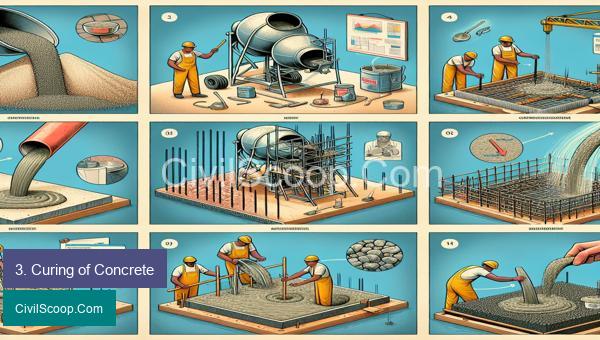
Curing is an essential process in the construction of concrete structures. It refers to the maintenance of adequate moisture and temperature conditions to allow the concrete to properly hydrate and gain strength. Curing is a critical aspect of concrete construction that significantly affects the durability and strength of the final product.
There are three main methods used for curing concrete: water curing, membrane curing, and curing compounds.
1. Water Curing
Water curing is the most common and traditional method of concrete curing. It involves keeping the concrete surface moist by constantly spraying or ponding it with water. This method is effective in retaining moisture in the concrete, which is necessary for the cement to hydrate and develop its full strength.
Water curing is usually done for a minimum of 7 days, but the duration may vary depending on factors such as the type of cement used, concrete mix design, and ambient temperature. In hot and dry weather conditions, curing may need to be extended to prevent the concrete from drying out too quickly.
2. Membrane Curing
Membrane curing involves covering the concrete surface with a waterproof or impermeable membrane, such as plastic sheets, to prevent moisture from evaporating. This method is effective in hot and dry weather conditions and is often used in large-scale concrete construction projects.
The membrane creates a sealed environment that allows the concrete to retain its moisture and hydrate adequately. It also helps to regulate the temperature, thus preventing rapid temperature changes that can lead to cracking or surface defects.
3. Curing Compounds
Curing compounds are liquid coatings that are applied to the concrete surface, forming a film that prevents moisture from escaping. This method is often used for small-scale projects or in areas with limited water supply.
Curing compounds are typically sprayed on the concrete surface after the initial setting has taken place, usually within 24 hours. They form a thin layer, which eventually dissipates, leaving a moisture-retaining film on the concrete surface.
Proper curing of concrete has several benefits, including:
1. Increased Strength
Curing allows the concrete to develop its full strength potential, resulting in a more durable and long-lasting structure. Properly cured concrete can have up to 50% more compressive strength than uncured concrete.
2. Reduced Cracking and Shrinkage
Curing helps to control the rate at which the concrete dries, reducing the likelihood of shrinkage and cracking. This is especially crucial in areas with hot and dry weather conditions where rapid water evaporation can weaken the concrete.
3. Improved Durability
Curing ensures that the concrete has a dense and strong surface, making it less susceptible to damage from external factors such as freeze-thaw cycles, chemical attacks, and abrasion.
In conclusion, proper curing is crucial for achieving high-quality and durable concrete structures. It should be given the same importance as other aspects of concrete construction, such as mix design and placement. Civil engineers must ensure that proper curing techniques are adopted and monitored to ensure the best possible outcome for any concrete construction project.
4. Rectification of Defects after Concreting

After concreting has been completed, it is important to conduct a thorough inspection to check for any defects in the finished structure. Defects can arise due to a variety of reasons such as poor workmanship, design flaws, or environmental factors. These defects can seriously compromise the structural integrity of the concrete and need to be rectified promptly to prevent further damage.
Here are some common defects that may be found after concreting and the methods used for their rectification:
1. Cracks: One of the most common defects in concrete structures is cracks. It can occur due to shrinkage, thermal stress, or overloading. The severity of the cracks can vary from minor surface cracks to deep cracks that affect the structural strength. To rectify cracks, the damaged area is first cleaned and all loose debris is removed. A bonding agent is then applied to improve the bond between the old and new concrete. Finally, the cracks are filled with an appropriate concrete mix and allowed to cure.
2. Honeycombing: This defect is characterized by pockets of voids or cavities on the surface and within the concrete. It is caused by poor compaction or inadequate vibration during the concreting process. To rectify honeycombing, the affected area is chipped away until a solid surface is reached. A bonding agent is then applied, and new concrete is poured and cured.
3. Discoloration: Another defect that may occur in concrete is discoloration, which can be caused by uneven curing, bleeding of aggregates, or use of poor-quality materials. It is important to identify the cause of discoloration before proceeding with rectification. If it is due to uneven curing, the concrete surface can be treated with a curing compound to even out the color. If it is caused by bleeding of aggregates, the surface can be grinded to remove the affected layer.
4. Spalling: Spalling is the chipping or breaking off of the concrete surface, exposing the aggregates underneath. It can be caused by freezing and thawing cycles, corrosion of reinforcing steel, or excessive loads. Spalled concrete needs to be removed and the underlying steel needs to be cleaned and treated for corrosion before new concrete is poured to replace it.
In addition to these, other defects such as delamination, cracks in foundation, uneven surfaces, etc. may also be identified after concreting. It is important for a civil engineer to have a thorough understanding of the different defects and the methods used to rectify them.
In conclusion, rectification of defects after concreting plays a crucial role in ensuring the structural integrity and durability of concrete structures. It requires proper assessment, identification of the underlying cause, and appropriate measures for rectification. Regular inspections and maintenance can also help in identifying and rectifying any defects in a timely manner, thereby ensuring the safety and longevity of the structure.
Conclusion
In conclusion, understanding and addressing the various defects in concrete is crucial for ensuring the durability and strength of structures. The use of advanced technologies like All About Place, Compact, Cure, and Rectify Defects of Concrete can help in identifying and rectifying these defects efficiently. By taking proactive measures such as proper placement, compaction, curing, and regular maintenance, we can prevent costly repairs and ensure the longevity of concrete structures. It is also essential to keep ourselves updated with the latest research and advancements in the field of concrete technology to continuously improve and enhance the quality of concrete. Let us all work towards creating durable and sustainable structures for a better future.