
Digital compression testing machines are an essential piece of equipment used in the construction industry to determine the compressive strength of various materials. These machines have become an integral part of quality control and assurance processes for construction projects, helping engineers and contractors ensure the durability and safety of structures. With advancements in technology, digital compression testing machines have evolved to provide precise and efficient results, making them a crucial tool in the construction industry. In this article, we will delve into the workings of digital compression testing machines, their importance in construction, and how they have revolutionized the way compressive strength is measured.
Table of Contents
DIGITAL COMPRESSION TESTING MACHINE
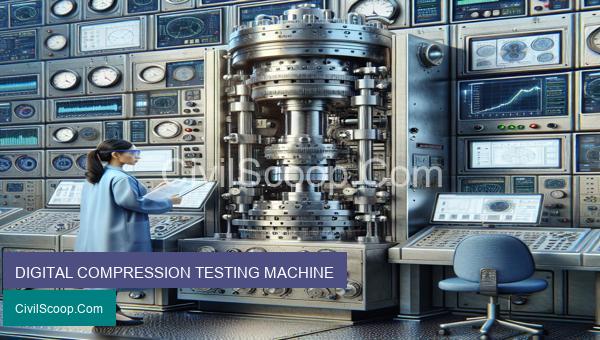
Digital compression testing machines are specialized equipment used in civil engineering to determine the compressive strength of various construction materials, such as concrete, bricks, and stone.
These machines apply a compressive force to a specimen, usually in the form of a cylindrical or cubic shape, until it reaches its maximum load-bearing capacity. The amount of force required to crush the specimen is then recorded, and the compressive strength is calculated.
Digital compression testing machines have replaced traditional mechanical testing machines due to their accuracy, efficiency, and ease of use. They utilize advanced technology to provide precise and reliable test results, making them an essential tool for civil engineers in the construction industry.
These machines consist of a load frame, hydraulic pump, pressure gauge, and a control panel with digital display. The load frame is the main component that applies the compressive force to the specimen, and it can range in capacity from a few kN (kilonewtons) to several thousand kN.
The hydraulic pump provides the necessary pressure to drive the piston inside the load frame, pushing against the specimen placed between two platens. The pressure gauge measures the force applied, and the control panel displays the results in a digital format.
Digital compression testing machines also come equipped with a variety of safety features, such as overload protection, emergency stop button, and automatic shut-off when the test is completed. This ensures the safety of the operator and prevents any damage to the machine.
One of the significant advantages of digital compression testing machines is their ability to perform multiple tests simultaneously. This is especially useful when conducting large-scale construction projects that require testing of numerous samples. This efficiency saves time and increases productivity.
Furthermore, these machines can be connected to a computer or data logger, allowing for automated data collection and analysis. This makes it easier for engineers to store, organize, and interpret the test results, providing valuable insights for future construction projects.
In addition to testing compressive strength, digital compression testing machines can also measure other parameters, such as elastic modulus, Poisson’s ratio, and modulus of elasticity. This makes them a versatile tool for conducting various types of tests on construction materials.
In conclusion, digital compression testing machines play a crucial role in the construction industry, providing accurate and reliable data on the strength and durability of construction materials. Their advanced technology, efficiency, and versatility make them an essential tool for civil engineers in designing safe and robust structures.
Conclusion
In conclusion, the digital compression testing machine is a crucial tool in the field of materials testing. It offers precise and accurate results, making it an essential component in various industries such as construction, manufacturing, and research. Its ability to compress different materials under varying conditions allows for efficient quality control and quality assurance processes. With the advancements in technology, the digital compression testing machine has evolved to become more advanced, user-friendly, and versatile, catering to the ever-growing demands of the industry. As we continue to develop and improve our understanding of materials, the digital compression testing machine will undoubtedly play a vital role in ensuring the safety, durability, and reliability of various products.