
Lime concrete, also known as whitewash or lime wash, has been used in construction for centuries. Its versatility, durability, and environmentally friendly composition have made it a popular choice for a wide range of applications. In recent years, there has been a renewed interest in lime concrete, particularly in the form of mix, compact, and cure lime concrete. This article will delve into the details of these different variations of lime concrete, explaining their properties, benefits, and best practices for use in various projects. Understanding the nuances of mix, compact, and cure lime concrete can not only enhance the quality of your construction but also contribute to sustainable and eco-friendly building practices.
Table of Contents
How to Mix, Compact, and Cure Lime Concrete?
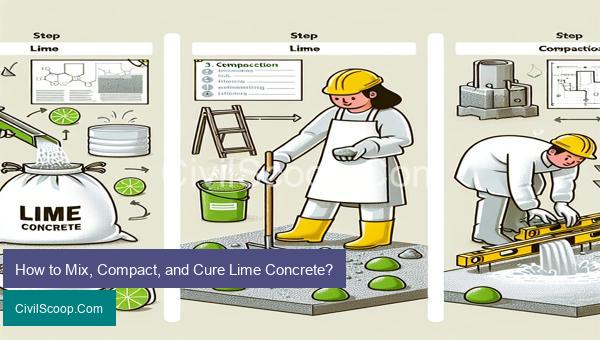
Lime concrete is a type of concrete that uses lime as a binding agent instead of more traditional Portland cement. It is often used in construction projects where traditional cement may not be available or suitable, such as historical restoration or in areas with high acid or sulfate content in the soil. Mixing, compacting, and curing lime concrete requires a slightly different process compared to regular concrete. In this article, we will discuss step-by-step how to mix, compact, and cure lime concrete to ensure a strong and durable final product.
Mixing Lime Concrete:
1. Gathering Materials: The materials needed for mixing lime concrete include hydrated lime, water, aggregates (gravel and sand), and any desired additives such as pozzolans or fly ash. Make sure all materials are clean, dry, and free from any contaminants that could affect the chemical reaction.
2. Proportions: Unlike traditional concrete, lime concrete does not require precise measurements for mixing. A general guideline is to use one part lime to three parts aggregate by volume. However, the proportions can vary based on the specific project requirements, so it is best to consult with a structural engineer or follow the manufacturer’s instructions.
3. Mixing: Lime concrete should be mixed slowly and thoroughly. Start by pre-wetting the aggregate with clean water to reduce the water demand of the lime. Then, add the lime and water in a rotating mixer in small batches, making sure it is evenly distributed. Continue mixing until a smooth and homogenous mixture is achieved.
Compacting Lime Concrete:
1. Preparing the Subbase: Lime concrete should be poured onto a well-compacted and leveled subbase made of natural soil or a granular material like gravel or crushed stone. The subbase should be moist but not too wet before placing the concrete on top.
2. Placing the Lime Concrete: Pour the mixed lime concrete onto the subbase in small batches, spreading it evenly with a shovel or a rake. Make sure to avoid segregation or air pockets during placement.
3. Compact the Concrete: Lime concrete is more sensitive to compaction than traditional concrete. A light to medium compaction using a hand tamper or a vibrating plate compactor is recommended. This process will remove any air pockets and ensure the concrete is evenly distributed and compacted.
Curing Lime Concrete:
1. Covering and Sprinkling: As lime concrete sets, it undergoes a process called carbonation, where it absorbs carbon dioxide from the atmosphere and hardens. To promote proper carbonation, cover the concrete with plastic sheeting or a damp burlap and sprinkle it with water regularly to maintain a moist environment.
2. Time Frame: The curing time for lime concrete can vary depending on the weather conditions, lime type, and aggregate used. Typically, it takes between 7-14 days to cure lime concrete. It is essential to monitor the concrete’s progress during this phase, making sure it remains damp but not too wet or dry.
3. Final Inspection: After the curing period, the plastic sheeting and burlap can be removed. The concrete should show a uniform color, and the surface should be free from any cracks or damage. If needed, a final coat of lime mortar or sealant can be applied to protect the surface from moisture and weathering.
In conclusion, mixing, compacting, and curing lime concrete requires attention to detail and proper care to ensure a quality end result. By following the steps outlined above, you can create a
Proportioning of Lime Concrete
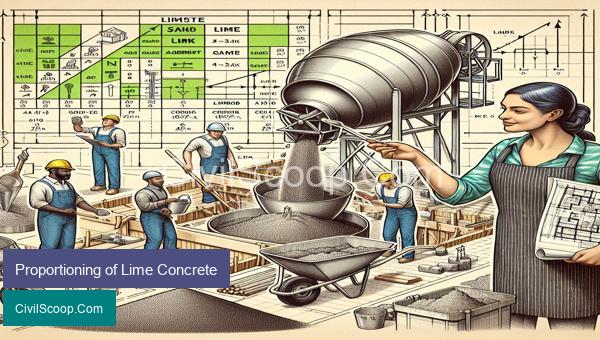
Proportioning of lime concrete is an important aspect in the design and construction of various civil engineering projects. Lime concrete is a type of concrete that is made by mixing aggregate, binder, and water with lime as the binder instead of cement. It has been used for hundreds of years in building construction due to its low cost, easy availability, and workability. The proportioning of lime concrete involves determining the right quantities of materials to be used to achieve the desired strength and durability.
The main components of lime concrete are lime, aggregate, and water. Different types of lime such as quicklime, hydrated lime, and hydraulic lime can be used in the production of lime concrete. Quicklime and hydrated lime are non-hydraulic limes, which means they do not set under water. On the other hand, hydraulic lime has the ability to set under water and can be used in damp or wet conditions.
The proportioning of lime concrete is done by volume or weight. The most commonly used method is the volume method, where a specified number of volume units for each material is used. The volume proportions usually range from 1:2:9 (1 part of lime, 2 parts of sand, and 9 parts of gravel) to 1:3:12 depending on the intended use and strength required. The proportions of the different materials used in lime concrete are determined by laboratory tests to achieve the desired strength and workability.
The factors that affect the proportioning of lime concrete include the type of lime used, the type and gradation of aggregates, the amount of water used, and the compaction factor. The quality and gradation of aggregates play a crucial role in the strength of lime concrete. Fine, well-graded aggregates improve the workability and strength of the concrete. A high water content makes the concrete more workable, but it also decreases its strength.
The proportioning of lime concrete should be done carefully as any variation in the proportions may lead to a significant difference in the quality of the concrete. The proper mixing of all the materials is crucial to ensure a homogeneous mixture. The water, lime, and aggregate are added in layers and mixed using mechanical or manual means until a uniform consistency is achieved.
In conclusion, the proportioning of lime concrete is an important step in the construction industry. It involves determining the right quantities of materials to achieve the desired strength and workability. The type of lime, aggregate, water content, and mixing method are essential factors to consider in the proportioning process. Properly proportioned lime concrete can provide a cost-effective and durable solution for various construction projects.
Mixing of Lime Concrete

Mixing of lime concrete is the process of combining lime, aggregate, and water in an appropriate ratio to produce a cohesive and strong mixture. Lime concrete, also known as mortar, is commonly used in construction projects due to its advantages such as durability, flexibility, and cost-effectiveness.
The process of mixing lime concrete starts with selecting the appropriate grade of lime, which can be quicklime or hydrated lime depending on the project requirements. Quicklime is also known as lump lime and is in the form of hard lumps, while hydrated lime is in the form of fine powder. Quicklime is preferred for large projects, whereas hydrated lime is suitable for small scale projects.
Next, the aggregate, which is a combination of coarse and fine materials such as sand, gravel, or crushed stone, is carefully measured and added to the lime in the desired ratio. The aggregate serves as a filler and provides strength and stability to the concrete. It should be free from any impurities such as clay, organic materials, and chemical substances to ensure the quality of the final product.
To mix the lime and aggregate, water is added gradually. The amount of water needed depends on the type of lime and aggregate being used. Generally, less water is required for quicklime, and more water is needed for hydrated lime. The water is evenly distributed throughout the mixture using shovels or mechanical mixing equipment.
The mixing process is crucial as it determines the consistency and strength of the lime concrete. The mixture should be uniform and homogeneous, with no lumps or dry spots. The mixing should be done until the desired consistency is achieved, which is usually a smooth and plastic mix that can be easily spread and molded.
After the mixing process, the lime concrete is ready for use. It is usually poured or placed using a trowel into the designated area and then compacted using a wooden float or a hand tamper. The surface is then smoothed using a finishing tool to achieve a level and flat surface.
It is essential to ensure proper curing of the lime concrete to achieve maximum strength and durability. The concrete should be kept moist for at least seven days by curing it with water or by covering it with damp cloth or plastic sheets.
In conclusion, mixing of lime concrete is a crucial step in the construction process. Proper mixing of lime, aggregate, and water is essential to produce a high-quality and durable mixture. With proper care and attention during the mixing process, lime concrete can provide excellent results and be a cost-effective option for various construction projects.
Placing and Compaction
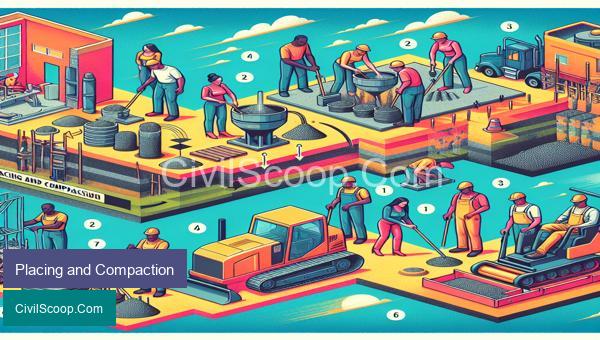
Placing and compaction are two essential processes in civil engineering that are crucial for the successful construction of any infrastructure project. They are typically carried out during the construction stage and involve the proper laying and compacting of construction materials such as soil, concrete, asphalt, and aggregates. These processes are important for achieving structural integrity, durability, and stability of the structure.
Placing refers to the proper placement and positioning of construction materials in their designated areas as per the project design. The success of the placing process directly impacts the quality of the final product. It involves the use of various techniques and equipment to ensure that the materials are evenly distributed and placed in the correct location. One of the main goals of placing is to achieve proper bonding between the layers of materials to create a strong and stable structure.
Compaction, on the other hand, is the process of densifying and consolidating the materials that have been placed. It involves the application of mechanical energy to reduce the voids between particles and increase the density of the material. Compaction is crucial for improving the load-bearing capacity of the material and reducing its susceptibility to settlement and deformation.
Both placing and compaction have importance in different types of construction projects. In road construction, for example, placing and compaction play a significant role in achieving a smooth and durable road surface. In this case, asphalt is placed and compacted to form layers, which results in a solid and stable road foundation. The same principle applies in the construction of buildings and bridges, where proper placing and compaction of concrete are essential for a strong and long-lasting structure.
Different methods are used for placing and compaction depending on the type of material and the location of the project. In general, the placing process involves the use of machines such as excavators, bulldozers, and graders to spread and level the materials. For compaction, specialized equipment such as vibratory rollers and plate compactors are used to apply the necessary force and achieve the desired density.
The success of placing and compaction also depends on several factors such as moisture content and temperature of the material, the type of equipment used, and the skill and experience of the workers. Improper placement or compaction can result in a weak and unstable structure, leading to structural failure and costly repairs.
In conclusion, placing and compaction are vital processes in civil engineering that are crucial for achieving the desired strength, stability, and durability of a structure. They require careful planning, skilled workforce, and proper equipment to ensure successful completion of the project. Adhering to proper placing and compaction techniques is essential for the safety and longevity of any infrastructure project.
Curing of Lime Concrete

Curing of lime concrete is an essential process in the construction industry to ensure the optimal strength and durability of structures. It refers to the maintenance of favorable moisture and temperature conditions in newly placed lime concrete to facilitate the chemical reactions and hydration process.
Lime concrete is a composite material made of lime, aggregate, and water. It is a popular building material for its versatility, strength, and durability. However, the curing process plays a critical role in achieving these properties.
There are several methods of curing lime concrete, and the most common ones include ponding, sprinkling, wet coverings, and steam curing. Each method has its own advantages and should be selected based on project specifications and requirements.
The primary objective of curing is to prevent the rapid loss of moisture from the lime concrete surface. In the absence of proper curing, the top layer of the concrete may dry out quickly, forming cracks, and compromising the strength of the structure. Curing also helps to reduce the temperature gradient within the concrete, which prevents thermal cracking and ensures uniform hydration.
The duration of the curing process is critical and varies depending on the type of lime used and the ambient conditions. Generally, curing should start as soon as possible after the initial setting of the concrete, and it should continue for a minimum of seven days. However, for lime-silica mixtures, curing should start immediately after application and continue for at least 14 days.
One of the essential factors affecting the curing process is the ambient temperature. High temperatures cause rapid evaporation of water, leading to shrinkage and cracking of the concrete. On the other hand, low temperatures slow down the hydration process, resulting in weak and porous concrete. Therefore, the temperature must be carefully monitored and maintained within the ideal range (15-27 degrees Celsius) during curing.
In addition to temperature, proper curing also requires adequate moisture in the concrete. Water is essential for the chemical reactions to take place and allowing the lime to fully hydrate. Inadequate moisture can cause a delay in the curing process and result in weak and porous concrete.
Proper curing is essential during the early curing stage, but it is equally critical to maintain it during the drying process. Premature removal of curing materials or exposure to harsh conditions can lead to cracking and weakening of the concrete.
In conclusion, curing of lime concrete is a crucial process in ensuring the optimal strength, durability, and aesthetic appeal of structures. It requires careful monitoring of temperature and moisture levels to facilitate proper hydration and prevent cracking. Civil engineers must pay close attention to curing methods and duration to ensure the success of construction projects.
Conclusion
In conclusion, incorporating lime into concrete mixes can bring numerous benefits such as improving workability, increasing durability, and providing a sustainable option. Compact and cure lime concrete is particularly useful in areas where freeze-thaw cycles are frequent, as it can withstand these conditions without cracking. However, proper mix design and curing techniques are crucial for achieving the desired properties and ensuring the practicality of these types of concrete. With the right knowledge and application, mix, compact, and cure lime concrete can be a valuable addition to the construction industry, providing a versatile and eco-friendly option for various projects. As further research and advancements continue to be made in this field, we can expect to see even more innovative uses and benefits of lime in concrete.