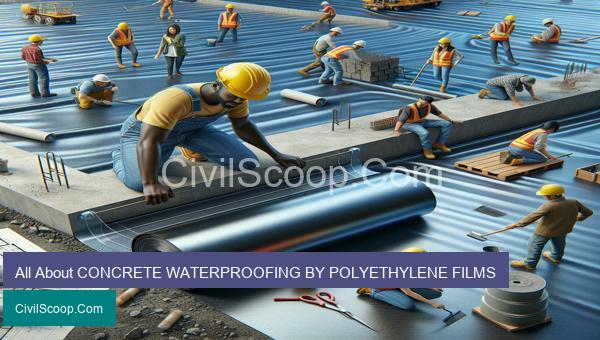
When it comes to construction, one of the most critical aspects is ensuring that the structure is protected from damaging elements such as water. Water can cause a myriad of problems, from structural damage to mold and mildew growth. That is why proper waterproofing measures are essential for any building project. In recent years, a revolutionary method of waterproofing using polyethylene films has gained significant attention. In this article, we will explore all about concrete waterproofing by polyethylene films, its advantages, and why it is becoming a preferred choice for construction projects.
Table of Contents
CONCRETE WATERPROOFING BY POLYETHYLENE FILMS

Concrete waterproofing by polyethylene films is a popular method used in construction to protect concrete structures from water damage. This technique involves the use of polyethylene, a plastic material known for its high water resistance, to create a barrier between the concrete and water.
The process of concrete waterproofing using polyethylene films involves the following steps:
1. Surface preparation: Before the application of the polyethylene film, the surface of the concrete must be cleaned and prepared. This includes removing any dirt, debris, or loose particles that may affect the adhesion of the film.
2. Primer application: A primer is then applied to the clean concrete surface to improve the adhesion of the polyethylene film. It also helps to fill in any small cracks or surface imperfections.
3. Polyethylene film installation: The polyethylene film is then rolled out over the surface of the concrete and secured in place using adhesive or mechanical fasteners. Care must be taken to ensure that the film is completely flat and free of wrinkles or air pockets.
4. Sealing joints and edges: Joints and edges are the most vulnerable areas for water seepage. Therefore, it is crucial to seal them properly using a special polyethylene tape or sealant.
5. Curing and testing: Once the film is in place, it is important to allow it to cure for the recommended time before conducting any water resistance testing. This will ensure that the film has properly adhered to the concrete surface and is functioning effectively.
Polyethylene films offer several advantages when used to waterproof concrete structures. Firstly, it provides an impermeable barrier that prevents water from penetrating the concrete. This is especially important in areas with high groundwater levels or heavy rainfall.
Secondly, polyethylene films are flexible and can conform to the shape of the concrete surfaces, including corners and curves. This makes them an ideal choice for waterproofing complex structures such as bridges and tunnels.
Another benefit of using polyethylene films for concrete waterproofing is that they are easy to install and do not require specialized equipment or skills. This makes it a cost-effective option compared to other methods such as membrane waterproofing.
Additionally, polyethylene films are resistant to chemicals and UV rays, making them a durable choice for long-term protection of concrete structures.
In conclusion, concrete waterproofing by polyethylene films is a reliable and efficient method to protect concrete structures from water damage. It offers a cost-effective, easy to install, and long-lasting solution that can be used in a variety of construction projects.
Conclusion
In conclusion, polyethylene films have proven to be a highly effective and durable method for waterproofing concrete structures. Through their impermeable and flexible nature, they create a strong barrier against moisture and can resist harsh weather conditions, ensuring the longevity of the concrete. Additionally, their ease of installation and cost-effectiveness make them a practical choice for construction projects. Whether used in new construction or for repairing existing structures, concrete waterproofing by polyethylene films offers a reliable solution for protecting concrete against water damage. It is clear that this method of waterproofing is here to stay and will continue to play a crucial role in maintaining the integrity of concrete structures for years to come.