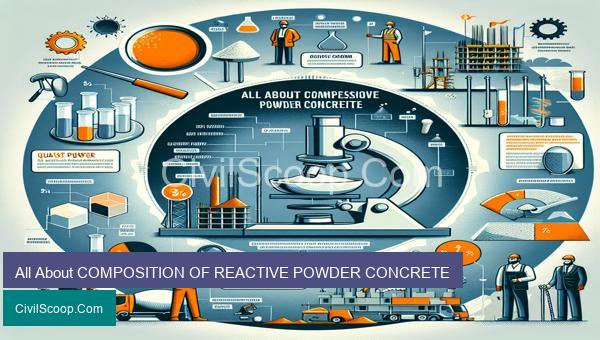
Reactive Powder Concrete (RPC) is a revolutionary material that has gained widespread attention and research interest in the field of construction. Compared to traditional concrete, RPC offers superior strength and durability with a unique composition that sets it apart from other construction materials. In this article, we will delve into the composition of reactive powder concrete, its properties, and applications in various construction projects. Understanding the components and production process of RPC can help us better comprehend its benefits and why it is considered the future of building materials. So, let us explore the exciting world of reactive powder concrete and discover what makes it an innovative and sought-after material in the construction industry.
Table of Contents
COMPOSITION OF REACTIVE POWDER CONCRETE (RPC)
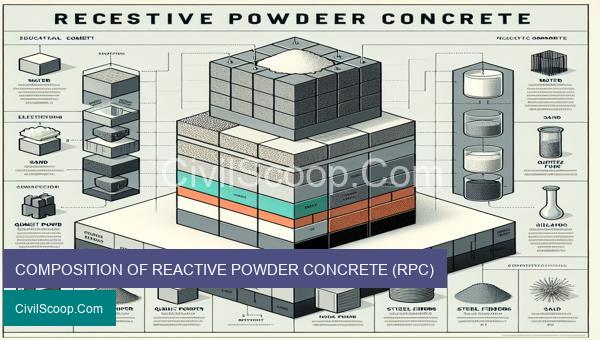
Reactive powder concrete (RPC) is a type of high-performance concrete that is composed of densely packed cement particles, fine quartz powder, silica fume, steel or polyvinyl alcohol (PVA) fibers, and a low water-to-cement ratio. Developed in the early 1990s by French researchers, RPC has a unique microstructure and composition that gives it superior strength, durability, and ductility compared to traditional concrete.
The composition of reactive powder concrete includes a high percentage (up to 25%) of cementitious material, which is a blend of Portland cement and fine mineral fillers such as silica fume or ground granulated blast furnace slag. This fine combination of materials results in a dense and compact paste that is key to the strength and durability of RPC.
The water-to-cement ratio in RPC is kept very low, typically around 0.2, to reduce the porosity and increase the strength of the concrete. This low water content also makes RPC less susceptible to shrinkage and cracking, which is a common issue in traditional concrete.
One of the most distinct features of RPC is the use of steel or PVA fibers. These fibers, typically less than 1 mm in length and randomly distributed in the mix, help to improve the tensile strength and ductility of the concrete. The fibers also act as a reinforcement, reducing the need for steel bars, making RPC more lightweight and easier to handle.
Another important component in RPC is the fine quartz powder, which is a by-product of metallurgical industries. This powder is used to fill the voids between cement particles, resulting in a more densely packed and stronger concrete matrix.
Silica fume is also a significant ingredient in RPC. It is a by-product of the production of silicon and is added to improve the compactness and strength of the concrete. It also decreases the permeability of the concrete, making it more resistant to chemicals and corrosion.
The optimal mix design of RPC is crucial to achieve its desired properties. The composition of RPC, along with precise proportioning and mixing, plays a critical role in determining its strength, durability, and other mechanical properties.
In conclusion, the composition of reactive powder concrete includes a high percentage of cement particles, fine quartz powder, silica fume, and steel or PVA fibers, with a low water-to-cement ratio. This unique mix results in a highly dense and durable concrete with exceptional strength and ductility. RPC is a significant advancement in concrete technology and has the potential to revolutionize the construction industry.
Manufacture of Reactive Powder Concrete:
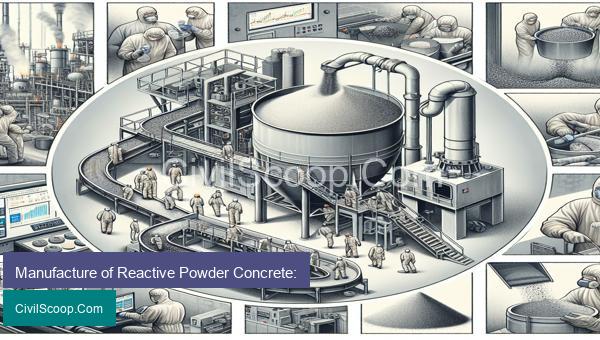
Reactive Powder Concrete (RPC) is an advanced cementitious material that has been developed in recent years and is considered to be the strongest concrete available. It is a type of ultra-high-strength concrete (UHSC) that is made by optimizing the particle packing and carefully controlling the composition of its constituents. RPC has a compressive strength of up to 200 MPa, making it about four times stronger than traditional concrete.
Manufacturing of RPC involves a complex process that requires specialized knowledge and equipment. The following are the steps involved in the production of RPC:
1. Raw materials selection: The ingredients used in RPC are similar to that of traditional concrete, but their proportion and properties are optimized to achieve the desired strength and characteristics. The main components of an RPC mix include cement, silica fume, quartz flour, superplasticizers, steel fibers, and water. These materials are carefully selected and tested to ensure they meet the specific requirements of the mix.
2. Mixing: The manufacturing process starts with the preparation of the mix. All the dry materials are first mixed in a specific ratio to form a homogenous powder. A high-speed mixer is used to ensure proper distribution and uniform consistency. Water is then added to the mix while controlling its temperature and quantity to prevent hydration and allow enough time for the mixing process.
3. Compaction: The prepared mix is then compacted inside molds under high pressure and in a vibration-free environment. This is necessary to eliminate any air pockets that may cause weak spots in the final product. High compaction pressure also helps to enhance the bond between the particles, resulting in a denser and stronger material.
4. Curing: After compaction, RPC is steam cured in a sealed environment to prevent moisture loss. The steam curing process accelerates the hydration process and helps to achieve optimal strength in a short period.
5. Cutting and polishing: Once cured, RPC is cut into desired sizes and then polished to enhance its aesthetic appeal. This step is optional and is dependent on the intended use of the material.
The major challenges in manufacturing RPC lie in the precise control of its constituents and production processes. The slightest deviation in the mix design or the compaction pressure can result in significant changes in the properties of the final product. Therefore, it is essential to have a strict quality control process in place to ensure consistency in the production of RPC.
One of the main advantages of RPC is its high strength-to-weight ratio, making it an ideal material for structures where high strength and lightweight are required. It also provides better durability, resistance to corrosion and chemical attack, and reduces the overall maintenance cost compared to traditional concrete.
In conclusion, the manufacture of RPC requires specialized knowledge, precise control, and advanced equipment. Its superior properties and performance make it a highly sought-after material in the construction industry. With ongoing research and development, we can expect to see further improvements in the production process, making RPC even stronger and more versatile in the future.
Conclusion
In conclusion, the composition of reactive powder concrete plays a crucial role in determining the strength, durability, and overall performance of this innovative material. Combining fine sand, cement, silica fume, steel fibers, and mineral admixtures in precise proportions results in a highly compact, dense and durable concrete that offers superior mechanical properties and resistance to environmental factors. Its unique composition also allows for customization to meet specific project requirements, making it a versatile and cost-effective option for a variety of construction applications. As scientists and engineers continue to research and improve the composition of reactive powder concrete, we can expect to see its use expand and potentially revolutionize the construction industry in the near future.