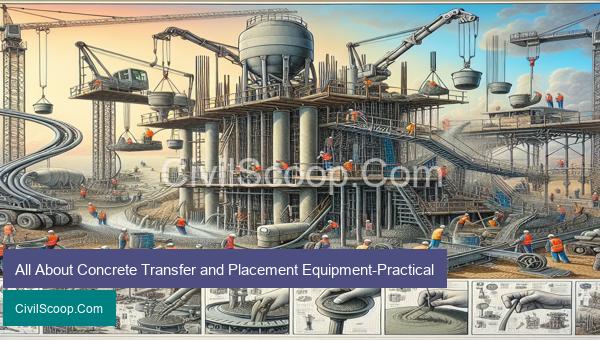
Concrete transfer and placement is a fundamental process in the construction industry. It involves the movement and accurate positioning of freshly-mixed concrete to its intended location, ensuring a successful and efficient project. To achieve this, contractors rely on various types of equipment to transfer and place concrete, known as concrete transfer and placement equipment. These practical tools have revolutionized the way concrete is handled on job sites, making the process safer, faster, and more precise. In this article, we will delve into the world of concrete transfer and placement equipment, discussing the different types, their functions, and their importance in the construction industry. Whether you are a contractor, engineer, or simply interested in the field, this article will provide a comprehensive guide to all you need to know
Table of Contents
Concrete Transfer and Placement Equipment-Practical Consideration
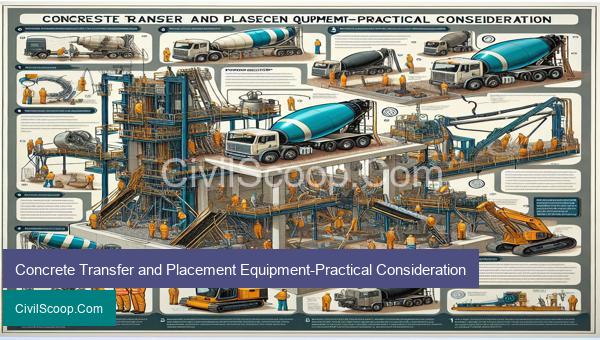
Concrete transfer and placement equipment is an essential part of any concrete construction project. It includes a variety of tools and machinery that are used to transport, distribute, and place concrete in various locations on a job site. Proper use of this equipment is crucial for achieving quality and efficient concrete placement, and it requires careful planning and consideration.
There are several practical factors that must be taken into account when selecting and using concrete transfer and placement equipment. These considerations include the type of project, site conditions, and the properties of the concrete being used.
Type of project:
The type of project being constructed will determine the most suitable equipment for concrete transfer and placement. For large-scale projects such as bridges, high-rise buildings, and dams, heavy-duty equipment such as cranes and tower booms are necessary to move and place concrete at high elevations. For smaller projects like sidewalks or residential buildings, smaller and more versatile equipment such as pumps and chutes may be more appropriate.
Site conditions:
The layout and topography of the site can also dictate the type of equipment needed for concrete transfer and placement. For instance, a site with tight spaces and limited access may require the use of a pump or conveyor belt system to move concrete to the desired location. On the other hand, a flat and open site may allow for the use of larger equipment, such as a concrete buggy or wheelbarrow.
Properties of concrete:
The properties of the concrete being used for a project also play a significant role in selecting the appropriate transfer and placement equipment. The workability, consistency, and flowability of the concrete must be considered to ensure proper distribution and placement. For example, highly workable concrete may be better suited for pump delivery, while stiffer and less workable concrete may require the use of a conveyor belt.
In addition to the practical considerations mentioned above, a few other factors should be kept in mind when using concrete transfer and placement equipment.
Safety:
Safety should always be a top priority when using this equipment. Proper training and certification are essential for operators, and all safety protocols must be followed to prevent accidents or injuries.
Maintenance:
Regular maintenance and inspection of the equipment is crucial to ensure its proper functioning and longevity. Any malfunction or defect should be addressed immediately to avoid project delays and safety hazards.
Environmental impact:
The use of certain equipment, particularly large machinery, can have a significant environmental impact. Steps should be taken to minimize noise, dust, and emissions from the equipment to comply with local regulations and reduce the project’s environmental footprint.
In conclusion, concrete transfer and placement equipment plays a vital role in achieving efficient and quality concrete placement in any construction project. Careful consideration of the type of project, site conditions, concrete properties, and safety and maintenance measures will help in selecting the most suitable equipment and ensuring its successful use.
Conclusion
In conclusion, concrete transfer and placement equipment plays a crucial role in the construction industry by providing practical solutions for moving and pouring concrete efficiently. From conveyors and pumps to buckets and chutes, there are various types of equipment available to meet the specific needs of a project. It is important to carefully consider the type and size of equipment needed, as well as the location and access limitations, to ensure smooth and successful concrete placement. By utilizing the right equipment and proper techniques, construction professionals can save time, money, and labor while ensuring high-quality and consistent results. With advancements in technology and continuous improvements in design, concrete transfer and placement equipment are becoming even more practical, versatile, and reliable.