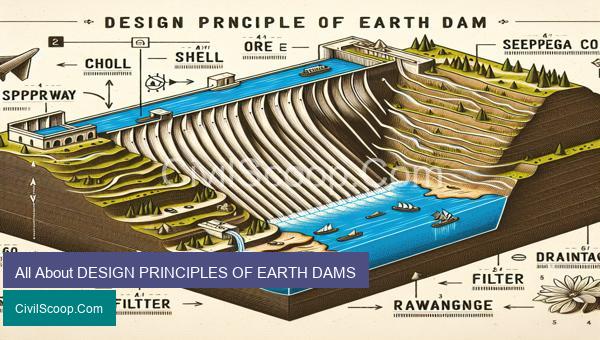
Earth dams are man-made structures designed to store water and control its flow for various purposes such as irrigation, flood control, and hydroelectric power generation. They serve as vital infrastructure for human development and have been around for centuries, with the earliest known earth dam being constructed in China around 2300 BC. Throughout history, engineers and designers have used various principles to ensure the safety, stability, and efficiency of these structures. In this article, we will delve into the key design principles of earth dams and how they play a crucial role in the construction and maintenance of these essential infrastructure systems.
Table of Contents
DESIGN PRINCIPLES OF EARTH DAMS
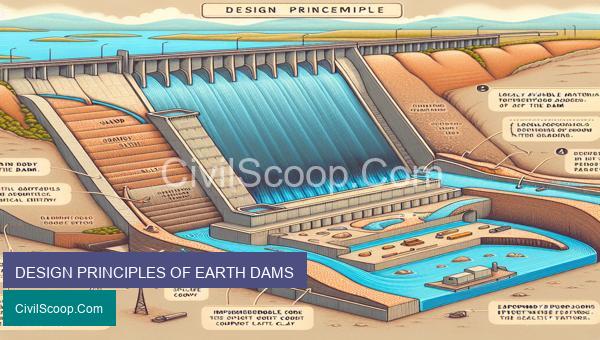
Designing earth dams, also known as embankment dams, is an essential aspect of civil engineering. These structures are built to store water for various purposes such as irrigation, drinking water supply, flood control, and hydropower generation. The design of an earth dam requires careful consideration of several principles to ensure the stability, durability, and safety of the structure. In this article, we will discuss the design principles of earth dams.
1. Site Selection:
The first and foremost principle of designing an earth dam is selecting the right site. The site should have suitable geological conditions, including the presence of impervious foundation materials such as clay or rock, to support the weight of the dam and prevent water seepage. The site should also be free from any natural hazards such as landslides, earthquakes, and floods.
2. Hydraulic Design:
Hydraulic design involves determining the volume of water that the dam needs to store, the peak inflow and outflow rates, and the spillway capacity to release excess water safely. The design should also consider the potential impact of extreme weather events such as floods, which can result in an influx of large volumes of water.
3. Structural Design:
The structural design of an earth dam includes the selection of the type of dam, such as concrete-faced, rock-filled, or homogenous, based on the dam’s intended purpose, site conditions, and the materials available. The design should also consider factors such as the height and length of the dam, the slope of the embankment, and the stability of the foundation.
4. Stability Analysis:
Ensuring the stability of an earth dam is crucial to prevent failure, which can result in catastrophic consequences. Stability analysis involves evaluating the forces acting on the dam, such as the weight of the dam, water pressure, and seismic forces, and designing the structure to withstand these forces. The designer may also incorporate safety measures such as slope protection and drainage systems to enhance the dam’s stability.
5. Construction Materials:
The materials used in the construction of an earth dam play a vital role in its design. The materials should be of good quality, easily available, and able to withstand the forces acting on the dam. Typical materials used include compacted earth, rock, concrete, and geosynthetics.
6. Monitoring and Maintenance:
Monitoring and maintenance are essential components of the design principles of earth dams. Regular monitoring and inspections are necessary, especially during and after construction, to ensure that the dam is functioning correctly and identify any potential issues early on. Maintenance activities such as repairing erosion, improving drainage systems, and vegetation management are critical to the long-term stability and safety of the dam.
In conclusion, designing an earth dam requires a thorough understanding of the site conditions, hydraulic and structural design principles, stability analysis, suitable construction materials, and maintenance practices. Adhering to these principles is crucial to ensure the safety, stability, and longevity of the structure and its effective functioning in storing and managing water resources. It is essential to follow these principles and guidelines to design and construct a successful and sustainable earth dam.
The design principles of earth dams:
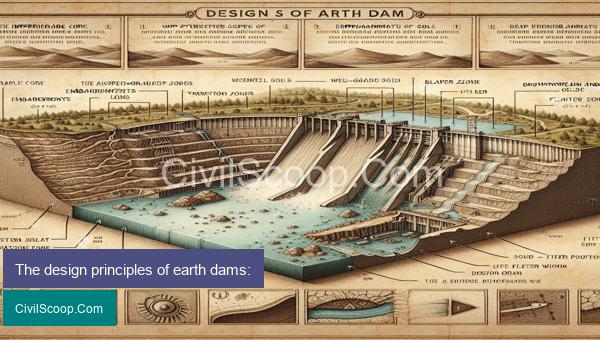
Earth dams, also known as embankment dams, are man-made structures constructed using natural materials such as compacted earth, rock, and clay. They are designed to impound water and create a reservoir for different purposes such as irrigation, drinking water supply, flood control, and hydroelectric power generation. The design of these dams follows specific principles to ensure their stability and durability over time. Let’s take a closer look at the design principles of earth dams.
1. Site Selection and Investigation:
The first step in designing an earth dam is to carefully select the site where it will be built. The site selection should consider factors such as the type of soil and its properties, topography, geological conditions, and the proximity to potential sources of water. A thorough investigation of the site is crucial to determine the soil’s characteristics and the potential risks that could affect the dam’s stability.
2. Determination of Dam Type:
There are different types of earth dams, namely, homogeneous, zoned, and fill with core dams. The type of dam selected depends on the site conditions and the required height of the dam. A homogeneous dam is constructed using one type of material, while a zoned dam has different materials in distinct layers. A fill with core dam has a central core made of impervious material, surrounded by compacted fill material.
3. Design of the Dam Cross-Section:
The cross-section of an earth dam refers to the shape and dimensions of the dam when viewed from the top or the front. The design of the cross-section is critical as it affects the stability and safety of the dam. The dimensions of the dam are based on factors such as the height of the dam, the slope of the surrounding terrain, and the type of soil.
4. Foundation Design:
The foundation of an earth dam is the material beneath the dam structure that supports its weight and impounds the water. The design of the foundation is crucial, especially for tall dams, to ensure the dam’s stability and prevent seepage. The design of the foundation includes evaluating the properties of the soil and the bedrock, choosing the most suitable type of foundation, and designing measures to prevent seepage.
5. Seepage Control:
Seepage refers to the flow of water through the embankment and foundation of the dam. Seepage can cause erosion and instability of the dam, leading to failure. The design of earth dams includes measures to control seepage, such as adding cutoff walls, constructing a plastic concrete core, or using an impervious membrane in the core of the dam.
6. Stability Analysis:
Earth dams must be able to resist various forces, including the weight of the embankment, the weight of the impounded water, earthquakes, and wind loads. A stability analysis is conducted during the design process to ensure that the dam can withstand these forces without failure.
7. Spillway Design:
Spillways are structures that safely discharge water from the dam in case of heavy rain or floods to prevent overtopping. The design of the spillway is crucial in ensuring the safety of the dam and its surroundings. The size and shape of the spillway, as well as the materials used, are determined based on the dam’s capacity and the expected flood scenario.
8. Construction Materials and Techniques:
The materials used in constructing an earth dam should be carefully selected and properly compacted to ensure stability and prevent seepage. The compaction process involves
Conclusion
In conclusion, the design principles of earth dams play a crucial role in ensuring the safety and effectiveness of these structures. By considering factors such as site selection, materials used, and geotechnical aspects, engineers are able to create earth dams that are not only structurally sound but also environmentally sustainable. These principles are constantly evolving, and new technologies and techniques are continuously being implemented to improve the design and construction of earth dams. It is important for engineers and stakeholders to stay informed and updated on these principles in order to build and maintain reliable and efficient earth dams for a variety of purposes. Overall, understanding and applying these design principles is essential in effectively harnessing the power of water and protecting communities and the environment.