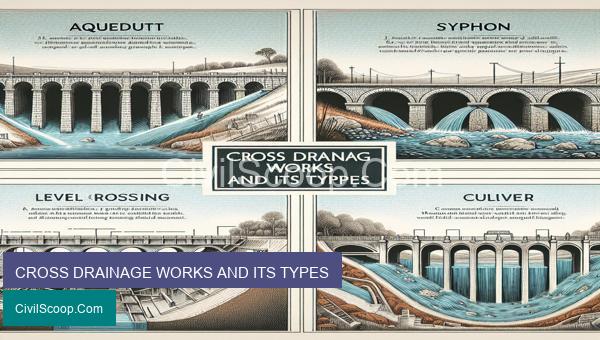
Cross drainage works are an essential component of any modern irrigation or drainage system. They are structures designed to facilitate the flow of water across natural or artificial barriers such as rivers, canals, and highways. These structures play a crucial role in managing water resources and maintaining the balance between irrigation and drainage needs. In this article, we will delve into the concept of cross drainage works, its importance in agriculture and urban development, and the different types of structures used for this purpose.
Table of Contents
What is cross drainage works?
Cross drainage works, also known as cross drainage structures or culverts, are structures that are designed and constructed to allow the passage of water from one side of a road, railway, canal, or other man-made structure to the other. They are essential elements of any transportation or irrigation project, as they prevent disruptions to the flow of water caused by the crossing of these structures.
Cross drainage works are typically constructed at places where natural watercourses intersect with the embankment of a road or railway, or where man-made channels need to pass beneath these structures. They can also be used to provide drainage for catchment areas adjacent to these constructions.
These structures are designed to be hydraulically efficient, meaning they should allow for the passage of water with minimal obstruction or interference. At the same time, they also need to be strong enough to withstand the forces of the water and the weight of the traffic passing over them.
There are various types of cross drainage works, each designed to suit specific site and project requirements. Common types include culverts, aqueducts, syphons, bridges, and weirs. Culverts are generally used for smaller flows and allow water to pass under a road or railway through a closed conduit, while larger structures like aqueducts or bridges are used for larger flows and span a watercourse or channel. Syphons are similar to culverts, but they use gravity or pressure to convey water through a pipe or conduit. Weirs are used to control the flow of water, and often incorporate a gate or valve to regulate the water level.
The design of cross drainage works requires careful consideration of various factors such as the topography of the site, the volume and velocity of water, the type of soil and geology, and the materials available for construction. Civil engineers play a crucial role in the design, planning, and construction of these structures, ensuring they are safe, functional, and cost-effective.
Proper maintenance of cross drainage works is essential to ensure their longevity and functionality. Regular inspections and repairs are necessary to detect any potential issues and prevent failures, which can cause disruptions to transportation networks and irrigation systems.
In conclusion, cross drainage works are crucial components of infrastructure projects, providing a means for water to pass safely and efficiently around or beneath man-made structures. Careful planning, design, and maintenance are key to their successful and sustainable implementation.
Types of Cross Drainage works:
Cross drainage works are structures that are constructed to allow the free flow of water from one side of an embankment or obstruction to the other. These works play a vital role in the efficient functioning of drainage systems, irrigation projects, and transportation networks. They are an essential part of civil engineering projects, especially in areas with uneven terrain. There are various types of cross drainage works that are used in different situations based on the topography, soil conditions, and hydraulic requirements.
1. Aqueducts:
Aqueducts are long and elevated cross drainage structures that are constructed to carry water over obstacles such as rivers, valleys, or roads. They are usually built of masonry, reinforced concrete, or steel and are supported by piers or arches. Aqueducts are commonly used to carry canal water over rivers or to transport water from one reservoir to another.
2. Siphons:
A siphon is a closed conduit that is used to convey water over an obstacle by creating a vacuum to siphon water from one side to the other. It consists of two sections, a supply line, and a discharge line. The supply line is connected to a reservoir or a canal, and the discharge line conveys the water to the other side of the obstacle. Siphons are commonly used in irrigation, drainage, and sewage systems.
3. Culverts:
Culverts are small cross drainage structures that are used to carry water under embankments, roads, or railways. They are typically made of reinforced concrete, masonry, or steel pipes. Culverts can be either box or arch-shaped and are designed based on the amount of flow and location. They are widely used in rural and urban areas for drainage purposes.
4. Bridges:
Bridges are structures that are constructed over water bodies to carry roads, railway lines, or pedestrian walkways. They are designed to support the weight of the vehicles or pedestrians and withstand the hydraulic forces of the water flow. Different types of bridges such as beam, arch, and suspension bridges are used as cross drainage works, depending on the span and terrain.
5. Drop Structures:
Drop structures are constructed to control the steep slope of a channel, allowing water to drop from a higher level to a lower level. They are usually built of concrete with steps or slope structures to reduce the energy of the flowing water. These are commonly used in drainage systems to prevent erosion and maintain the grade of the channel.
6. Inverted Syphons:
Inverted siphons are structures that are used in situations where it is not feasible to construct an open channel to transport water. They are built of pipes or conduits and are buried underground. Inverted siphons are employed to carry water over low-lying areas, roads, and highways.
7. Spillways:
Spillways are structures that are used to release excess water from a dam or a reservoir safely. They are designed to handle high flows and maintain the desired water level in the reservoir. Spillways can be cut into the natural terrain or constructed using concrete, and they prevent the overtopping of dams, which can lead to catastrophic failures.
In conclusion, cross drainage works are vital for the proper functioning of various engineering projects and play a crucial role in facilitating the flow of water from one side of an obstruction to the other. The type of cross drainage structure used depends on various factors such as the location, terrain, and volume of water to be transported. As
Conclusion
In conclusion, cross drainage works play a crucial role in ensuring proper functioning of irrigation systems and transportation networks. These structures allow for the passage of water from one side to the other, overcoming natural obstacles such as rivers, canals and roads. Through the years, various types of cross drainage works, such as aqueducts, siphons, culverts and bridges, have been developed to suit different landscapes and water flow conditions. As our society continues to grow and expand, the need for efficient and safe cross drainage works will only increase. Therefore, it is important to understand the various types and their functions in order to plan and implement effective drainage solutions for our infrastructure. Only with proper cross drainage works can we ensure the uninterrupted flow of water and