
Polyurethane waterproofing is a popular and effective method for protecting concrete roof slabs from water damage. By forming a seamless, flexible barrier, it prevents water from seeping into the concrete and causing structural issues. This method has gained popularity in recent years due to its durability and long-lasting protection. In this article, we will dive into the basics of polyurethane waterproofing of concrete roof slabs, including its benefits, application process, and maintenance tips. Whether you are a homeowner or a building contractor, understanding this method can help you make informed decisions regarding your roof’s waterproofing needs.
Table of Contents
Polyurethane Waterproofing of Concrete Roof Slab:

Polyurethane waterproofing is a widely used method for protecting concrete roof slabs from water damage. It is a type of liquid applied membrane that forms a seamless barrier on the surface of the roof, preventing water from seeping through and causing structural damage.
The application of polyurethane waterproofing starts with preparing the roof surface by removing any existing coatings, debris, and loose materials. The concrete surface is then cleaned, repaired, and primed to ensure proper adhesion of the waterproofing material.
Next, a two-component polyurethane mixture is sprayed or brushed onto the surface of the roof. The first layer acts as a base coat, filling any cracks or voids in the concrete. The second layer is a topcoat that provides the waterproofing properties.
Polyurethane waterproofing has several advantages over other traditional methods. One of the biggest advantages is its flexibility. Concrete roof slabs are constantly exposed to different weather conditions, and they tend to expand and contract due to temperature changes. Polyurethane is an elastic material that can accommodate such movements without causing any cracks or damage.
Moreover, polyurethane is UV resistant, meaning it can withstand prolonged exposure to sunlight without degrading. This makes it an ideal choice for roofs that are exposed to direct sunlight. It also has excellent adhesion properties, which ensure long-term protection for the roof.
Another advantage of polyurethane waterproofing is its ability to be applied to different shapes and surfaces. It can be used on flat, sloped, and even irregularly shaped roofs. This makes it a versatile choice for any type of concrete roof slab.
In addition to its waterproofing properties, polyurethane also acts as a thermal insulator. It helps in reducing the heat absorption of the roof, thereby making the building more energy efficient.
The application of polyurethane waterproofing requires skilled professionals to ensure a proper and effective installation. It is crucial to follow the manufacturer’s guidelines and use high-quality materials to achieve the desired results.
In conclusion, polyurethane waterproofing is a highly effective and durable method for protecting concrete roof slabs. It provides a seamless, flexible, and UV resistant barrier that can withstand different weather conditions. Its ability to be used on various surfaces and its thermal insulation properties make it a popular choice for many civil engineers. Proper application and maintenance of this method can ensure the longevity and structural integrity of concrete roof slabs.
Concrete Polyurethane Waterproofing Procedure:
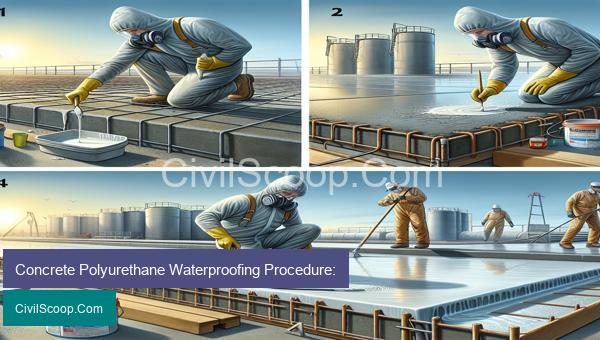
Concrete polyurethane waterproofing is a widely used technique in civil engineering for protecting concrete structures from water damage. It involves the application of a polyurethane coating on concrete surfaces, which forms a seamless and durable barrier against water and other liquids.
The following are the steps involved in the concrete polyurethane waterproofing procedure:
1. Surface Preparation: The first step in the waterproofing procedure is to prepare the concrete surface. This includes removing any surface contaminants like dirt, oil, and grease. The surface should be clean and free of any loose particles or debris. Any cracks or gaps in the concrete should also be repaired prior to the application of the polyurethane coating.
2. Primer Application: A primer is applied to the concrete surface to improve the adhesion of the polyurethane coating. The primer penetrates into the pores of the concrete and forms a bond with the coating, ensuring a strong and long-lasting waterproofing system.
3. Polyurethane Coating Application: The polyurethane coating is then applied using a brush, roller, or spray. It is important to ensure that the coating is applied evenly and without any gaps or voids. The thickness of the coating may vary depending on the specific requirements of the project.
4. Curing Time: Once the coating is applied, it needs to cure for a specific period of time before any foot traffic or other activities can resume on the surface. This curing time may vary depending on the type of polyurethane used.
5. Inspection: After the curing period, the surface is inspected for any imperfections or defects. Any gaps or pinholes are filled with an additional coat of polyurethane to ensure complete waterproofing.
6. Protection: Once the waterproofing is complete, the surface is protected from external factors like UV rays, temperature changes, and physical damage. This can be achieved by applying a topcoat on the polyurethane layer.
7. Maintenance: To ensure the longevity of the waterproofing system, regular maintenance and inspection should be carried out. Any signs of wear and tear should be addressed immediately to prevent water from penetrating the concrete surface.
In conclusion, the concrete polyurethane waterproofing procedure is a crucial step in protecting concrete structures from water damage. It is a cost-effective and efficient method of waterproofing that provides long-lasting protection. By following these steps and using high-quality materials, the risk of water damage to concrete structures can be greatly reduced.
Conclusion
In conclusion, polyurethane waterproofing is a highly effective and durable solution for protecting concrete roof slabs from water damage. Its versatility, ease of application, and long-lasting results make it a preferred choice among contractors and building owners. With its ability to withstand extreme weather conditions and provide seamless protection, it ensures the longevity and structural integrity of concrete roof slabs. Whether it is a new construction project or repairing an old roof, polyurethane waterproofing is a reliable and cost-effective option to prevent water intrusion and maintain the overall quality of the building. It is clear that choosing polyurethane as the waterproofing solution for concrete roof slabs is a smart and wise investment for any building project.