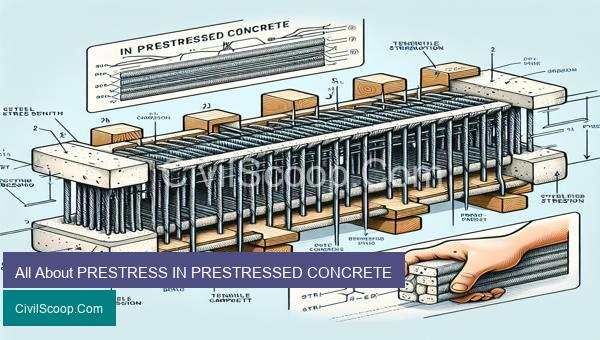
Prestressed concrete is a structural material that has revolutionized the construction industry, allowing for stronger and more efficient buildings and infrastructure. By using prestressing techniques, concrete can withstand higher loading capacities and resist cracking, making it an ideal choice for a variety of applications. In this article, we will delve into the world of prestressed concrete, exploring its principles, methods, and advantages. Whether you are a construction professional or simply curious about this remarkable material, read on to discover all about prestress in prestressed concrete.
Table of Contents
MEASURING LOSS OF PRESTRESS IN PRESTRESSED CONCRETE
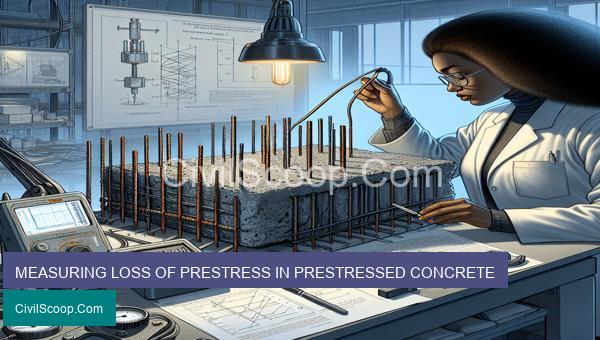
Prestressed concrete is a widely used construction material in structural engineering, known for its high strength and durability. It utilizes the concept of pre-tensioning or post-tensioning to introduce compressive stresses into the concrete, making it resistant to tensile forces and enhancing its load-bearing capacity.
However, over time, the prestressing force in the concrete may decrease due to various reasons, such as creep, shrinkage, and relaxation. This can result in a loss of prestress, which can affect the structural integrity and performance of the prestressed concrete element. Therefore, it is crucial to measure and monitor the loss of prestress in prestressed concrete to ensure its safety and longevity.
There are several methods for measuring the loss of prestress in prestressed concrete, such as load and deflection analysis, direct and indirect deflection measurements, and ultrasonic testing. The choice of method depends on the type of structure, its accessibility, and the accuracy required.
One of the most commonly used methods for measuring the loss of prestress is load and deflection analysis. It involves applying a known load on the prestressed concrete element and measuring the corresponding deflection. The initial deflection of the element, when no load is applied, is subtracted from the measured deflection to determine the change in length of the element. This change in length is then used to calculate the loss of prestress using the concept of equivalent stress block.
Direct deflection measurements involve placing sensors, such as strain gauges or displacement transducers, on the prestressed concrete element to monitor its deflection under load. The data collected from these sensors can be used to determine the change in length of the element and, subsequently, the loss of prestress.
Indirect deflection measurements, on the other hand, do not involve placing sensors on the element. Instead, the deflection of the element is measured indirectly by monitoring the position of specific points on the structure using theodolites or laser interferometers. This method can be particularly useful for measuring the loss of prestress in bridges or other large-scale structures.
Ultrasonic testing is a non-destructive testing method that uses high-frequency sound waves to detect changes in the properties of the prestressed concrete. The time taken for the ultrasonic waves to travel through the concrete is an indication of its stiffness, and any changes in stiffness can be linked to the loss of prestress.
In addition to these methods, visual inspections, crack mappings, and concrete coring can also provide valuable information about the loss of prestress in prestressed concrete. It is important to note that no single method can provide an accurate measurement of the loss of prestress, and a combination of different techniques should be used to obtain a more comprehensive understanding.
In conclusion, measuring the loss of prestress in prestressed concrete is crucial for maintaining the safety and structural integrity of the element. By regularly monitoring and addressing any decrease in prestress, the long-term performance and durability of prestressed concrete structures can be ensured.
Conclusion
Prestressed concrete has become an essential material in the construction industry due to its unique properties and numerous benefits. The process of prestressing involves the application of compressive forces to the concrete before it is placed, resulting in improved strength and durability. This article has highlighted some of the key aspects of prestressing, including its history, methods, advantages, and applications. From bridges and buildings to underground structures and nuclear containment vessels, prestressed concrete has proven to be a reliable and versatile construction material. With ongoing research and advancements in technology, the use of prestressed concrete is expected to increase in the coming years, further solidifying its position as a crucial component of modern construction. As we continue to seek innovative solutions for our infrastructure and building needs,