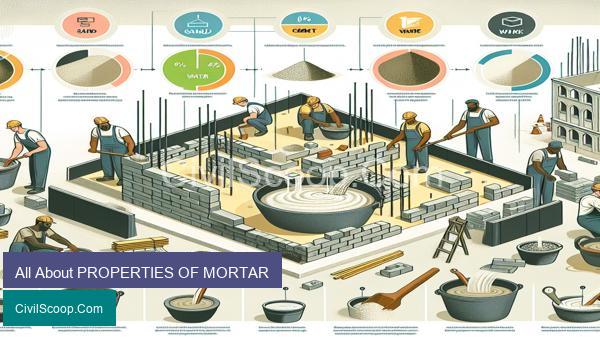
Mortar is a crucial component in the construction industry, serving as the binding material between bricks, stones, and other building materials. It is a mixture of cement, water, and sand that creates a strong, durable, and adhesive substance essential for building structures. However, the properties of mortar can vary depending on its composition and application. In this article, we will delve into the various properties of mortar and how they contribute to its function in construction. Understanding these properties can help builders and contractors choose the most suitable type of mortar for their specific project needs. So, join us as we explore all about the properties of mortar and their impact on the construction process.
Table of Contents
FACTORS AFFECTING PROPERTIES OF MORTAR

Mortar is a mixture of cement, sand, and water that is used to bind together bricks or other masonry units to form a strong and cohesive structure. It plays a crucial role in the construction industry and its properties greatly affect the overall strength and durability of a structure. Various factors can affect the properties of mortar, and understanding them is essential for producing high-quality and long-lasting constructions. Here are the key factors that can affect the properties of mortar:
1. Water-Cement Ratio: The water-cement ratio is the ratio of water to cement used in a mortar mix. This is a critical factor in determining the strength and workability of the mortar. The ideal water-cement ratio should be around 0.6 to 0.7, as excess water can weaken the mortar and make it more susceptible to cracking.
2. Type of Cement: The type of cement used in the mortar mix greatly affects its properties. OPC (Ordinary Portland Cement) is most commonly used in construction, but other types such as PPC (Portland Pozzolana Cement) and white cement can also be used. The type of cement can influence the setting time, strength, and durability of the mortar.
3. Sand Quality: The quality of sand used in the mortar mix is also a crucial factor. Sand with a high percentage of silt or clay can affect the workability and strength of the mortar. Ideally, clean and well-graded sand should be used in the mortar mix.
4. Aggregate Size: The size and gradation of aggregate used in the mortar mix can have a significant impact on its properties. Coarse aggregate particles can affect the workability of the mortar, while fine aggregates can improve its strength. The ideal aggregate size for mortar is between 0.15mm to 4.75mm.
5. Curing: Proper curing is essential for the development of strength and durability of mortar. If not cured adequately, the mortar can become weak and prone to cracking. The curing process should be started immediately after the mortar is placed and should continue for a minimum of 7 days.
6. Mixing: The method and duration of mixing can influence the properties of mortar. Over-mixing can lead to excess air trapped in the mix, affecting its strength and durability. Under-mixing can cause the mortar to be inconsistent and weaken its bond.
7. Temperature and Humidity: Extreme temperatures and high humidity can affect the setting and hardening of the mortar. High temperatures can cause the mortar to dry too quickly, resulting in a weaker structure, while low temperatures can delay the setting time. Similarly, high humidity can hinder the evaporation of excess water, leading to lower strength and durability.
8. Chemical Admixtures: Chemical admixtures can be added to the mortar mix to alter its properties. They are used to improve workability, reduce water-cement ratio, and enhance strength and durability. However, improper dosage or use of the wrong admixture can adversely affect the properties of mortar.
In conclusion, several factors can affect the properties of mortar, and it is essential to understand and control them to produce high-quality and durable masonry structures. A proper mix design and careful consideration of these factors are crucial for achieving the desired properties in mortar.
Conclusion
In conclusion, understanding the properties of mortar is essential for ensuring the success of any construction project. From its composition to its setting time and strength, each property plays a crucial role in determining the performance and durability of mortar. By selecting the right type of mortar and understanding how to use it effectively, builders can achieve strong and long-lasting structures. Additionally, regular maintenance and proper handling of mortar can help extend its lifespan and prevent any structural issues. As construction continues to evolve, it is important to stay up-to-date with the latest advancements and techniques in mortar properties. By doing so, we can continue to build reliable and resilient structures for generations to come.