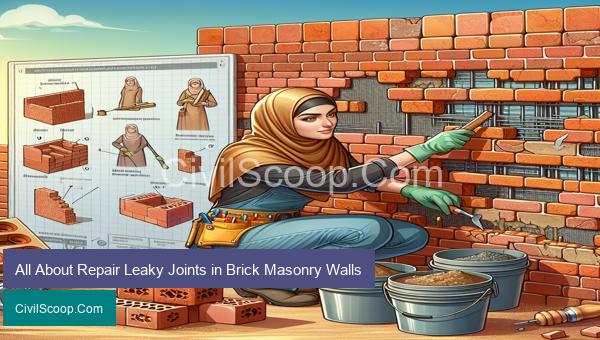
Do you have a leaky joint in your brick masonry wall? As a common issue in older buildings and homes, leaky joints can cause water damage and compromise the structural integrity of the wall. But don’t panic, in this article, we will dive into the essential tips and techniques for repairing leaky joints in brick masonry walls. From understanding the causes of leakage to step-by-step repair methods, you will have all the information you need to successfully fix this common problem. So, let’s get started and say goodbye to leaky joints in your brick masonry walls.
Table of Contents
How to Repair Leaky Joints in Masonry Walls

Masonry walls are commonly used in construction for their durability and strength. However, over time, these walls can develop leaks at joints due to settlement, expansion and contraction, weathering, and other factors. Leaks in masonry walls can lead to water infiltration, which can cause damage and compromise the structural integrity of the building. Therefore, it is important to repair leaky joints in masonry walls to maintain the functionality and longevity of the structure.
Here are the steps to repair leaky joints in masonry walls:
1. Identify the source of the leak: The first step in repairing leaky joints is to identify the source of the leak. Sometimes, the leak may not be visible on the interior of the wall. In such cases, look for signs of water stains or dampness on the exterior of the wall, as this can help in locating the source of the leak.
2. Prepare the work area: Before starting any repair work, it is essential to prepare the work area. Clear the area around the leak and remove any loose or damaged bricks or mortar. It is also important to ensure proper ventilation and wear protective gear, such as gloves and safety glasses, to prevent any injuries.
3. Clean the joints: Use a wire brush to clean the joints and remove any debris, dust, or old mortar. This will ensure that the new mortar bonds well with the existing masonry.
4. Mix new mortar: Prepare a new batch of mortar according to the manufacturer’s instructions. It is recommended to use a mortar mix that matches the composition of the existing mortar to ensure compatibility and avoid any future leaks.
5. Wet the joints: Before applying the new mortar, wet the joints with clean water. This will prevent the existing bricks from absorbing moisture from the new mortar and will help in achieving a stronger bond.
6. Fill the joints: Using a trowel, fill the joints with the new mortar. Make sure to work the mortar into the joints thoroughly and remove any air pockets by pressing the mortar firmly into the joints.
7. Tool the joints: After filling the joints, use a jointing tool to create a concave shape on the surface of the mortar. This will help in channeling water away from the joint and prevent future leaks.
8. Clean the excess mortar: Once the joints are tooled, use a trowel to scrape off any excess mortar from the bricks. It is important to clean the joints while the mortar is still wet to avoid damaging the bricks or leaving any stains.
9. Let the mortar dry: Allow the mortar to dry for at least 24 hours before exposing it to water. This will ensure that the mortar has cured properly and will provide a strong and watertight seal.
10. Seal the joints: To provide extra protection against future leaks, consider using a water repellent sealer on the joints. This will prevent water from seeping into the joints and causing damage to the masonry.
In conclusion, repairing leaky joints in masonry walls is a crucial maintenance task that should not be ignored. If left unattended, a small leak can turn into a major problem and compromise the structural integrity of the building. It is recommended to address any leaks as soon as they are identified to prevent further damage and ensure the stability and longevity of the masonry walls.
Conclusion
In conclusion, it is important to address and repair leaky joints in brick masonry walls to prevent further damage and maintain the structural integrity of the building. By understanding the potential causes of leaky joints and using the appropriate repair methods, property owners can save time and money in the long run. Regular maintenance and inspection of brick masonry walls can also help identify and fix leaky joints before they escalate into larger issues. With the right knowledge and techniques, the repair of leaky joints in brick masonry walls can be done effectively, ensuring the longevity and stability of the building.