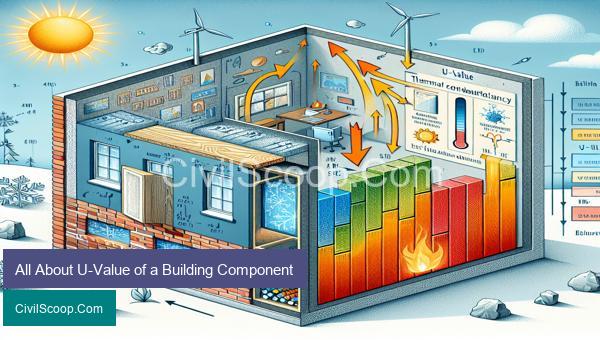
When it comes to building or renovating a home or any structure, one of the most important aspects to consider is the energy efficiency of the building components. This is where the concept of U-value comes into play. U-value, also known as thermal transmittance, is a measure of how much heat is transferred through a material. It is crucial in determining the energy efficiency of a building and plays a significant role in the overall comfort, cost, and environmental impact of a structure. In this article, we will dive deeper into the concept of U-value, its importance, and how it affects the overall energy efficiency of a building.
Table of Contents
What is U-Value of a Building Component
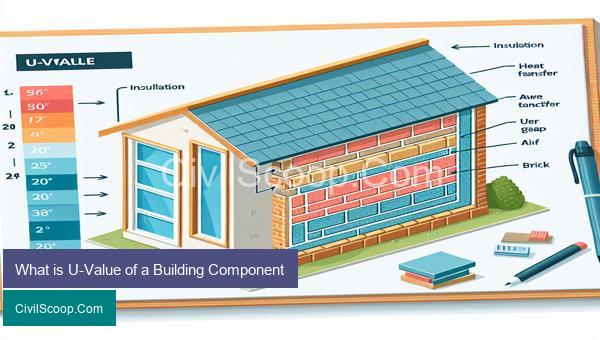
U-Value, also known as thermal transmittance, is a measure of the amount of heat that can pass through a building component, such as walls, windows, and doors. It is an essential factor in determining the energy efficiency of a building. U-Value is expressed in units of watts per square meter per Kelvin (W/m²K) and is the inverse of R-Value, which measures the thermal resistance.
The lower the U-Value, the higher the thermal resistance of the building component, and the better its insulation properties. It means that less heat can escape through the component and result in lower heating and cooling costs for the building. On the other hand, a high U-Value indicates poor insulation, leading to higher energy consumption and costs.
U-Value considers the three modes of heat transfer - conduction, convection, and radiation. The contributing factors to U-Value are the material type, thickness, and thermal conductivity. For example, a wall made of solid brick will have a lower U-Value compared to a wall made of timber framing and insulation material. This is because brick has a higher thermal mass and lower thermal conductivity than timber.
The climate conditions and orientation of the building also play a role in determining the U-Value of a component. For instance, buildings in colder climates will require components with lower U-Values to prevent heat loss, while those in warmer climates will need higher U-Values to reduce heat gain.
U-Value is an important consideration in building design. It helps designers and engineers to select the most suitable building materials and construction methods to achieve energy efficiency and comply with building regulations. It is also useful in predicting the performance of a building and determining the size and type of HVAC systems needed to maintain a comfortable indoor environment.
In summary, U-Value is a significant factor in assessing the energy efficiency of a building. It measures the amount of heat that can pass through a component and helps in selecting appropriate materials and construction methods. With the growing emphasis on sustainable and energy-efficient buildings, understanding and improving U-Value is crucial in modern building design.
Features of U-value
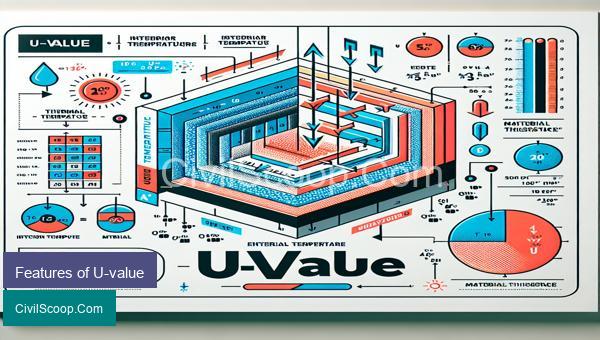
U-value, also known as thermal transmittance, is an important measure of the thermal efficiency of a building material or component. It is a key factor in determining the energy efficiency and thermal comfort of a building. In simple terms, U-value is a measure of how well a material or component can prevent heat transfer, with a lower U-value indicating better insulation.
Some of the key features of U-value include:
1. Quantifies thermal efficiency: U-value is a unit of measurement that indicates the amount of heat energy that can pass through a material or component. It quantifies the thermal efficiency of a building element, such as walls, roofs, and windows.
2. Influenced by material properties: The U-value of a material is determined by its thermal conductivity, thickness, and density. Materials with lower thermal conductivity, thicker layers, and higher density have lower U-value, indicating better insulation.
3. Dependent on construction: The U-value of a building element is also affected by its construction, such as the type of insulation used, the presence of air gaps, and the sealing of joints and edges.
4. Essential for energy efficiency: U-value is a critical parameter for energy-efficient buildings. A lower U-value means less heat loss, which translates into lower energy consumption for heating and cooling, leading to reduced energy costs and carbon footprint.
5. Allows for comparison: U-value is a standardized measure, making it easy to compare the thermal performance of different materials or components. This allows engineers to select the most efficient building elements for a specific project.
6. Influences thermal comfort: The U-value of a building element also affects the overall thermal comfort of a building. Better insulation results in more stable indoor temperatures, reducing heat loss in cold weather and heat gain in hot weather.
7. Important for building regulations: Many countries have building regulations that require a minimum U-value to be met for new construction projects. This ensures that buildings are energy-efficient and have sufficient thermal comfort for occupants.
In conclusion, U-value is a crucial feature for assessing the thermal efficiency and energy performance of buildings. It allows for informed decision-making in building design and construction, leading to sustainable and comfortable built environments.
Calculation of Thermal Transmittance or U-Value
Thermal transmittance, also known as U-value, is a measure of the rate at which heat transfers through a structure or building component. It is an important factor in determining the energy efficiency of a building and is used in the design and construction of buildings to ensure proper insulation.
The calculation of U-value involves considering the thermal conductivity, thickness, and surface area of the building component. The thermal conductivity is a measure of how easily heat is transferred through a material. It is expressed in units of W/(m·K), which represents the amount of heat in watts that can pass through a one-meter thick material with a one-degree temperature difference.
The thickness of the building component is also an important factor in the U-value calculation. Generally, thicker materials have a lower U-value as they offer more resistance to heat transfer. However, the geometry of the building component can also affect the heat flow, and therefore, impact the U-value.
The surface area of the building component is the area that is exposed to the surrounding environment. This includes the interior and exterior surfaces, as well as any joints or penetrations. The larger the surface area, the higher the U-value will be as it allows for more heat to be transferred.
To calculate the U-value, the following formula is used:
U-value = 1 / (Rsi + Rso + ∑Rlayers)
Where:
U-value: Thermal transmittance in W/(m²K)
Rsi: Thermal resistance of the interior surface in m²K/W
Rso: Thermal resistance of the exterior surface in m²K/W
∑Rlayers: Sum of the thermal resistances of all layers in m²K/W
The thermal resistance of each layer (R) is calculated by dividing the thickness (d) by the thermal conductivity (λ) of the material:
R = d / λ
Once the R-values are calculated for each layer, they can be added together to determine the total thermal resistance of the building component.
It is important to note that U-value calculations can vary based on the type of building component being analyzed. For example, for walls or roofs, the insulation properties play a significant role in the U-value calculation. However, for windows or doors, the thermal transmittance of the glazing and frame material is more critical.
In conclusion, calculating the thermal transmittance or U-value is a crucial step in the design and construction of energy-efficient buildings. It takes into account the thermal properties of materials, the geometry of the building component, and the surface area to determine the overall rate of heat transfer.
Conclusion
In conclusion, understanding the U-value of a building component is crucial in designing and constructing energy-efficient buildings. It is a measure of the amount of heat that can pass through a material, and a lower U-value indicates better insulation and reduced energy consumption. By considering the U-value of each component, such as walls, windows, and doors, architects and engineers can optimize the thermal performance of a building and reduce its carbon footprint. As the demand for sustainable and energy-efficient buildings continues to grow, having a thorough understanding of U-value will be essential in creating a more environmentally friendly and cost-effective built environment. So, it is imperative to prioritize minimizing the U-value of a building’s components to ensure a comfortable and sustainable living or working space.