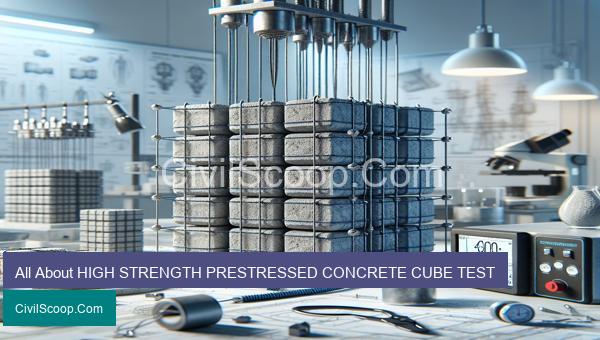
High strength prestressed concrete is a widely used construction material known for its exceptional durability, strength, and sustainability. It has been widely adopted in various construction projects, from high-rise buildings to bridges and even nuclear power plants. To ensure the quality and reliability of this material, various tests are conducted, with one of the most significant being the high strength prestressed concrete cube test. In this article, we will delve into the various aspects of this test, its purpose, procedure, and significance in the construction industry. So, let’s explore all there is to know about the high strength prestressed concrete cube test.
Table of Contents
HIGH STRENGTH PRESTRESSED CONCRETE CUBE TEST RESULTS
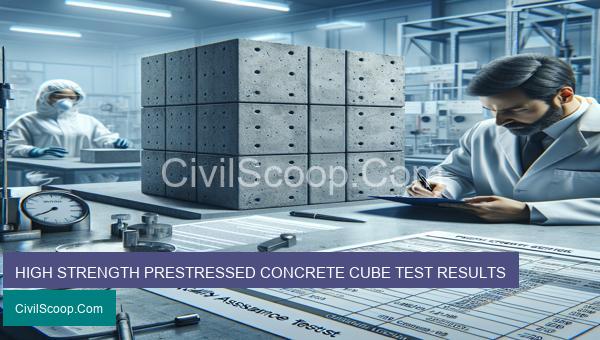
High Strength Prestressed Concrete (HSPC) is a type of concrete that has been reinforced with prestressed strands or bars, allowing it to withstand higher loads and stresses. It is commonly used in the construction of bridges, high-rise buildings, and other critical structures.
One of the most important aspects of ensuring the quality of HSPC is conducting cube tests. This is a standardized compression test that determines the compressive strength of concrete cubes of a specified size and age. In the case of HSPC, the test is usually carried out on cubes with a dimension of 150mm x 150mm x 150mm after 28 days of curing.
The results of the cube test provide valuable information about the quality and durability of the HSPC. It is essential to monitor these results during the construction process to ensure that the concrete is meeting the required standards and specifications. The testing process is relatively simple, and the results are highly reliable.
The test involves placing the concrete cubes in a compression testing machine and subjecting them to gradually increasing loads until they fail. The maximum load at which the cube fails is recorded, and the compressive strength is calculated using the formula: Compressive strength = Maximum load/ Cross-sectional area. The results are expressed in megapascals (MPa) or pounds per square inch (psi).
For HSPC, the expected compressive strength should be at least 80 MPa or 11,600 psi. However, in recent years, technology has advanced, allowing HSPC to have compressive strengths ranging from 100 to 120 MPa or 14,500 to 17,400 psi.
The test results can be affected by various factors such as the quality of materials used, the curing process, and the mixing and placement techniques. Therefore, it is crucial to conduct the test on multiple concrete cubes to minimize discrepancies and obtain a more accurate representation of the compressive strength.
The results of the cube test allow engineers to assess the strength of the HSPC and make necessary adjustments to the mix design if required. It also helps in determining whether the concrete can be used for its intended purpose and assures the structural integrity and safety of the construction project.
In conclusion, the cube test results of High Strength Prestressed Concrete are essential in determining its quality and suitability for use in critical structures. It is a crucial step in the construction process, and strict adherence to standards and procedures is necessary to ensure optimal results.
Conclusion
In conclusion, the high strength prestressed concrete cube test is a critical aspect of quality control in the construction industry. This test allows for the evaluation of the compressive strength and durability of prestressed concrete, making it an essential step in ensuring the structural integrity of buildings, bridges, and other constructions. Through accurate and reliable testing methods, engineers and contractors can determine the performance and behavior of prestressed concrete cubes, making informed decisions on design and construction techniques. With the fast-paced development and increasing demand for stronger and more resilient structures, the high strength prestressed concrete cube test remains a crucial tool in maintaining and improving the safety and quality standards in the construction industry.