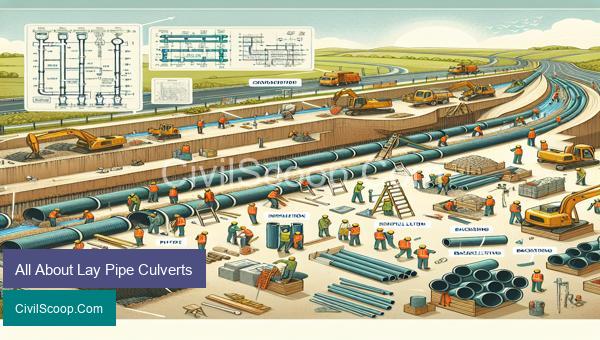
Lay pipe culverts play a crucial role in modern infrastructure, providing a safe and efficient way to manage stormwater and drainage systems. These structures, made up of pipes or tubes that allow for the flow of water under roadways or other obstacles, have been used for centuries, evolving from basic wooden structures to highly advanced designs. In this article, we will delve into the history, construction process, and benefits of lay pipe culverts, providing a comprehensive guide to understanding and appreciating this essential part of our transportation and water management systems.
Table of Contents
How to Lay Pipe Culverts?

Laying pipe culverts is an essential task in civil engineering projects that involve the construction of roads, highways, or railways. Culverts are structures that allow water to flow under a road or other types of infrastructure. They are usually made of reinforced concrete, but other materials such as steel, plastic, or aluminum may also be used. Here are the steps to follow when laying pipe culverts:
1. Site Preparation
The first step in laying pipe culverts is to prepare the site for construction. This includes obtaining all the necessary permits and drawings from the relevant authorities and conducting a site investigation to determine the soil type, groundwater level, and other conditions that may affect the construction.
2. Excavation
The next step is to excavate the site to the required depth and width. The size of the excavation will depend on the dimensions of the culvert and the type of soil. The excavation should have stable side slopes and a compacted bottom to support the weight of the culvert.
3. Foundation Preparation
Once the excavation is complete, the foundation for the culvert needs to be prepared. This involves leveling the bottom of the excavation and compacting it to provide a stable base. In some cases, a layer of gravel or crushed stone may also be placed at the bottom of the excavation to improve the stability of the foundation.
4. Placing the Culvert
The culvert is then placed in the prepared foundation. It is essential to ensure that the culvert is correctly positioned and aligned with the direction of the water flow. In addition, the joints between sections of the culvert should be carefully sealed to prevent leakage.
5. Backfilling
Once the culvert is in place, the space around it needs to be backfilled. The backfill material should be carefully selected to provide good drainage and support for the culvert. It is essential to compact the backfill in layers to prevent settlement that could damage the culvert.
6. Headwall Construction
After backfilling, headwalls need to be constructed at both ends of the culvert. A headwall is a structure that retains the soil at the entrance and exit of the culvert. It helps to prevent erosion and stabilize the slope.
7. Finishing and Grading
The final step in laying pipe culverts is to finish the surface and grade the area around the culvert. This includes restoring any disturbed areas and ensuring that the grade around the culvert is sloped away from the structure to prevent water from collecting around it.
In conclusion, laying pipe culverts is a crucial aspect of civil engineering projects. It requires careful planning, proper site preparation, and precise execution to ensure the culvert is safely and effectively installed. By following these steps, engineers can ensure that the culvert will function properly and withstand the test of time.
1. Excavation for Pipe Culvert

Excavation for a pipe culvert is a crucial step in the construction process of a culvert. A culvert is a structure that provides an opening or passageway under a road, railway, or embankment for the flow of water or other fluids. Pipe culverts are commonly used when the water flow is not very significant, and the culvert is required to be small and cost-effective.
Excavation refers to the process of removing earth or other materials from a construction site in preparation for building. In the case of a pipe culvert, excavation is done to create a trench or channel in which the pipe will be placed. The size and shape of the excavation will depend on the type of culvert being constructed and the size of the pipe.
The first step in excavation for a pipe culvert is to mark the location and dimensions of the culvert on the ground. This is usually done using stakes and strings to ensure accurate and precise excavation. It is important to follow the design plans and specifications to avoid any errors in the construction process.
The excavation process then begins with the removal of topsoil and any obstructions such as trees, rocks, or debris. This is done using heavy machinery such as excavators, bulldozers, or backhoes. The depth of the excavation will depend on the depth of the culvert and the type of soil.
As the excavation progresses, the sides and bottom of the trench must be sloped to provide stability and prevent the trench from collapsing. This slope, known as the “benching,” is usually at a 1:1 ratio. In some cases, shoring may be required to support the sides of the trench during excavation.
Once the excavation is completed, it is essential to ensure that the trench is clean and free of any loose material or debris. It is also necessary to verify the alignment and grade of the trench to ensure that the pipe will sit level and allow for proper water flow.
After the excavation is completed, the pipe can be installed. The pipe is carefully placed into the trench and inspected to ensure that there are no damages or deformities. Once the pipe is in place, the trench is backfilled with compacted soil, taking care not to damage the pipe.
In conclusion, excavation for a pipe culvert is a critical step in the construction process that requires precision and attention to detail. It is essential to follow the design plans and specifications and to ensure proper alignment and compaction of the trench to ensure a successful culvert installation. Proper excavation will result in a durable and efficient pipe culvert that will serve its purpose for many years to come.
2. Bedding for Pipe Culvert

Bedding for pipe culverts is a crucial aspect of civil engineering that involves the proper placement and support of pipes within the ground. This process of providing a suitable foundation for pipe culverts ensures their longevity and structural integrity. In this article, we will discuss the importance of bedding for pipe culverts and the different types of bedding materials used in construction.
Pipe culverts are underground structures that allow the flow of water or other fluids underneath roads, railways, or embankments. They are designed to withstand varying loads and soil conditions while providing a smooth and efficient passage for the flow of fluids. However, if these culverts are not supported adequately, they can become susceptible to damage or failure, which can result in costly repairs and disruptions to traffic flow.
The primary purpose of bedding for pipe culverts is to distribute the weight of the culvert and any potential loads uniformly to the surrounding soil. This helps to prevent excessive stress on the pipe, which can lead to cracking or collapse. Additionally, the bedding material provides a stable base for the pipe, preventing it from shifting or settling under heavy loads.
There are various types of bedding materials commonly used in pipe culvert construction, including natural soils, granular materials, and geotextile fabrics. The choice of bedding material depends on the type of culvert, soil conditions, and the required load-bearing capacity.
Natural soils, such as sand, gravel, or clay, can be used as a bedding material for pipe culverts. These soils should be free of rocks, debris, and organic matter and must be placed and compacted in layers to achieve the desired density. The use of natural soils is cost-effective and readily available, but they may not provide the necessary support for heavier culverts or in areas with soft or unstable soils.
Granular materials, such as crushed stone, gravel, or sand, are another common type of bedding used for pipe culverts. These materials offer better compaction and load-bearing capacity compared to natural soils. They are also more stable and less susceptible to settling or shifting, making them suitable for areas with poor soil conditions. However, using granular materials can increase construction costs due to the need for transportation and compaction equipment.
Geotextile fabrics are synthetic materials designed to separate, filter, reinforce, or drain soil. These fabrics are commonly used in conjunction with other bedding materials to provide additional support and stability to pipe culverts. They can also prevent fines from migrating into the bedding material and clogging the pipe, enhancing its longevity.
In conclusion, proper bedding for pipe culverts is essential for the success of any civil engineering project. It promotes the structural integrity of the pipe, reduces the risk of failure, and ensures the smooth flow of fluids. The choice of bedding material should be based on the specific requirements of the site, taking into account soil conditions, culvert type, and expected loads. Proper construction techniques, including proper compaction and layering, should also be followed to achieve the desired results.
3. Laying of Pipes in Culvert

The laying of pipes in a culvert is a critical step in the construction of any culvert, which is a structure that allows water to flow under a road, railway, or other obstruction. Pipes are used to create a passage for the water to flow through the culvert, and it is important that they are properly laid to ensure the integrity and functionality of the culvert.
The following are the key steps involved in the laying of pipes in a culvert:
1. Excavation of the Culvert Channel: The first step in the laying of pipes is to excavate the channel in which the culvert will be placed. This involves digging a trench that is wide enough to accommodate the pipes and deep enough to allow for proper drainage. The bottom of the trench must also be leveled to ensure that the pipes are laid on a flat surface.
2. Preparation of the Pipe Bed: Once the channel has been excavated, the next step is to prepare the pipe bed, which is the surface upon which the pipes will be placed. The pipe bed should be well compacted and free of any debris or sharp objects that could damage the pipes. The bed should also be leveled and have a slight slope to allow for proper drainage.
3. Laying of the Pipes: After the pipe bed has been prepared, the pipes can be laid in the trench. The pipes are placed end to end, with a small gap left between each pipe to allow for expansion and contraction. The joints between the pipes must be properly aligned and sealed to prevent any leakage of water.
4. Backfilling and Compaction: After the pipes have been laid, the trench is backfilled with soil. Care must be taken to ensure that the backfill is properly compacted in layers to prevent settling, which could lead to the pipes shifting or cracking. The final layer of backfill should also be sloped away from the culvert to prevent water from pooling around it.
5. Installation of Headwalls and Endwalls: Headwalls and endwalls are structures that are built at the entrance and exit points of the culvert to provide support and prevent erosion. These structures are typically made of concrete and are designed to direct the flow of water into and out of the pipes.
In conclusion, the laying of pipes in a culvert requires careful planning and precise execution. It is important to follow engineering standards and guidelines to ensure that the culvert functions effectively and remains structurally sound for many years to come.
4. Jointing of Pipes in Culvert

Jointing of pipes in culverts is a crucial aspect of the construction process, as it ensures the structural integrity and functionality of the culvert. Culverts are structures typically used to allow water to pass under roads, railways, or other types of infrastructure. These pipes are used to transfer water from one side of the road to the other, preventing flooding and maintaining the stability of the surrounding land.
There are various types of joints used in culvert pipes, each with its own unique advantages and uses. Here are the four most commonly used jointing methods in culverts:
1. Concrete Pipe Joints:
Concrete pipes are joined together using a sealant and rubber gasket. The ends of the pipes are usually bell-shaped, which allows for easy insertion of the gasket. A sealant is then applied to the gasket to ensure a watertight joint. This jointing method is commonly used in precast concrete pipes and is ideal for large-diameter pipes.
2. Flexible Joints:
Flexible joints are typically used in corrugated metal pipes. As the name suggests, this type of joint allows for flexibility, accommodating small movements in the pipes due to ground settlement or thermal expansion. Flexible joints consist of a rubber ring and a steel band that wraps around the pipe, providing a watertight seal.
3. Flange Joints:
Flange joints are commonly used in steel or ductile iron pipes. This type of joint is formed by bolting flanges at the end of each pipe to create a connection. The flanges are then sealed using either a rubber gasket or a compressed jointing material. Flange joints provide a robust connection, making it ideal for high-pressure and large-diameter pipes.
4. Butt Joints:
Butt joints are used to join pipes that have similar diameters and thickness. In this jointing method, the pipes are pushed together and welded to create a seamless connection. This type of joint is commonly used in concrete and steel pipes and provides a smooth flow of water through the pipes.
Proper jointing of pipes in culverts is essential to ensure a durable and long-lasting structure. Factors such as the type of material, pipe diameter, and the surrounding environment should be considered when selecting the appropriate jointing method. It is crucial to follow the manufacturer’s guidelines and ensure proper installation to prevent any leaks and failures in the joints.
In conclusion, jointing of pipes in culverts is a critical aspect of the construction process that requires careful consideration and proper implementation. The right jointing method should be selected based on various factors to ensure a watertight and stable culvert system.
5. Backfilling of Pipe Culvert

Backfilling is the process of filling an excavated area with soil or other materials after the installation of pipes, culverts, or other underground structures. In the case of pipe culverts, backfilling is a crucial step that ensures the structural integrity and stability of the culvert.
The process of backfilling for pipe culverts involves carefully placing and compacting the soil back into the trenches on both sides of the installed pipe. This is done to provide proper support and prevent any damage to the culvert. Here are the five essential steps involved in the backfilling of pipe culverts:
1. Selecting the Backfill Material
The first step in backfilling a pipe culvert is to select the appropriate material to use. The backfill material should be free from any organic materials, such as roots or debris, to prevent any future settlement. It should also be well-graded, meaning it has a good mix of different sized particles, which will promote good compaction.
2. Placing the Backfill Material
After selecting the backfill material, it is then placed in layers on both sides of the culvert. The thickness of each layer should not exceed six inches, and the backfill should be placed evenly on all sides of the culvert.
3. Compaction
Once the backfill material is placed, it is then compacted to ensure stability and prevent any future settlement. Different methods can be used for compaction, such as vibrating plates or rollers. The compaction should be evenly distributed on both sides of the culvert to avoid creating any voids.
4. Sloping the Backfill Material
The backfill material should be sloped away from the culvert and towards the surface. This slope, also known as the natural slope, allows for proper drainage and helps prevent any water from pooling near the culvert, which could cause erosion and damage.
5. Final Grading
After the backfill material has been compacted, and the natural slope has been established, the final step is to grade the surface. This means ensuring that the surrounding area has a smooth and even finish. The surface should also be sloped away from the culvert to prevent water from pooling near the structure.
In conclusion, backfilling is a crucial step in the construction of pipe culverts. It provides support and stability to the culvert and helps prevent any future problems such as settling, erosion, or damage. A well-executed backfilling process is essential to ensure the longevity and functionality of the pipe culvert.
Conclusion
In conclusion, lay pipe culverts are essential structures in the construction of roadways, highways, and other infrastructure projects. They serve as conduits for water flow, allowing for proper drainage and preventing damage caused by flooding. Understanding the various types of lay pipe culverts, their uses, and the installation process is crucial in ensuring safe and efficient construction. It is also important to follow proper maintenance and inspection procedures to ensure the longevity and functionality of these structures. Additionally, advancements in technology and design are continuously improving the effectiveness and efficiency of lay pipe culverts. As infrastructure projects continue to expand, the demand for lay pipe culverts will only continue to increase. With this knowledge, proper planning and implementation of lay pipe culverts can greatly contribute to successful