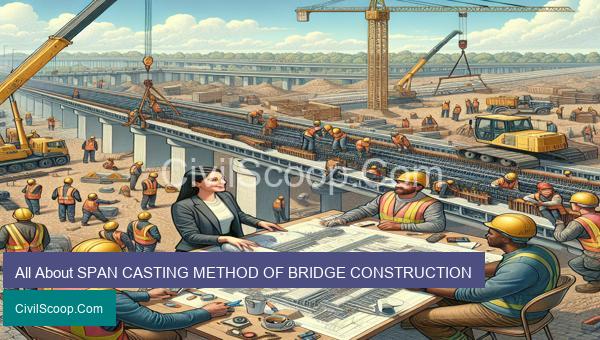
The construction of large bridges has been a cornerstone of modern infrastructure, connecting communities and facilitating economic growth. Among the many methods used in building bridges, one stands out for its efficiency, flexibility, and cost-effectiveness – Span Casting Method. This innovative bridge construction technique has been gaining popularity worldwide due to its ability to reduce construction time and minimize disruption to traffic flow. In this article, we will delve into the intricacies of Span Casting Method, exploring its history, advantages, and applications in modern bridge construction. Whether you are a civil engineer, a construction enthusiast, or simply curious about the inner workings of bridges, read on to discover all you need to know about this fascinating method.
Table of Contents
SPAN BY SPAN CASTING METHOD OF BRIDGE CONSTRUCTION
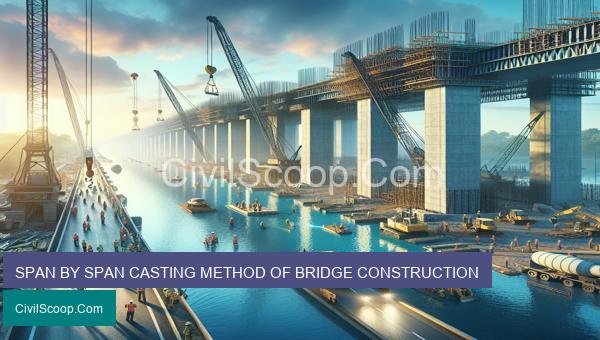
The span by span casting method is a popular technique used in the construction of bridges. It involves the construction of individual spans or segments of the bridge in a sequential manner, starting from one end of the bridge and progressively moving towards the other end. This method is commonly used for constructing medium to long span bridges, typically 50 meters or more.
The process of span by span casting can be divided into three main stages: pre-casting, launching, and joining.
Pre-casting:
The first stage of this method involves the pre-casting of individual segments or spans of the bridge. The segments are usually cast horizontally on a temporary support structure or casting bed. This pre-casting method allows for controlled construction conditions, ensuring high-quality and consistent segments.
Launching:
Once the pre-casting is complete, the segments are lifted and placed onto a launching truss or gantry using hydraulic jacks. The launching truss serves as a temporary support structure and is designed to move along the bridge axis, allowing for the placement of multiple segments at a time.
Joining:
After the segments have been placed on the launching truss, they are pushed out over the span using hydraulic jacks. This allows for the individual segments to join and form a continuous bridge deck. Specialized connectors, such as post-tensioning cables, are used to connect each segment to ensure structural integrity and uniform load distribution.
Advantages of span by span casting method:
1. Cost-effective: This method is relatively cost-effective compared to other bridge construction techniques, as it requires less formwork and temporary structures.
2. Faster construction time: The span by span method allows for parallel construction of different segments of the bridge, resulting in faster completion time compared to other methods.
3. Suitability for challenging terrains: This method is highly suitable for building bridges in difficult terrains such as deep valleys, steep slopes, or water bodies.
4. Minimum disruption: The construction process using this method causes minimal impact on the surrounding environment and traffic, as it involves the building of spans in a sequential manner.
5. High-quality segments: The pre-casting method ensures that the segments are of high quality and consistency, resulting in a better overall finished product.
In conclusion, the span by span casting method is a reliable and efficient technique for constructing medium to long span bridges. With its cost-effectiveness, faster construction time, and minimal environmental disruption, it remains a preferred choice for bridge construction projects around the world.
Conclusion
In conclusion, the Span Casting Method of bridge construction offers numerous advantages over traditional methods, including increased efficiency, reduced costs, improved safety, and better quality control. By utilizing precast segments and innovative casting techniques, this method allows for the construction of longer and stronger bridges with minimal disruption to traffic and the environment. It has become a popular choice for constructing modern bridges all over the world and continues to evolve and innovate with advances in technology. As we continue to build and expand our infrastructure, the Span Casting Method will no doubt play a vital role in shaping the future of bridge construction. With its many benefits, it is clear that this method has revolutionized the way we build bridges and will continue to do so for years to come.