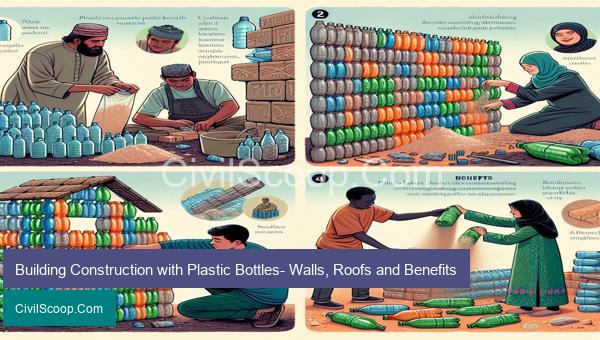
Plastic waste is a major environmental concern, with over 8 million tons of plastic ending up in our oceans every year. However, what if we told you that these discarded plastic bottles can be repurposed and used in building construction? Yes, you read that right. Building with plastic bottles is a sustainable and cost-effective solution that not only reduces plastic pollution but also addresses the increasing demand for affordable and eco-friendly building materials. In this article, we will explore the concept of using plastic bottles in building construction, specifically for walls and roofs, and uncover the various benefits of this innovative building technique.
Table of Contents
Why Plastic Bottles for Building Construction
Plastic bottles have traditionally been used for storing and packaging liquids such as water and soda. However, in recent years, they have also been gaining recognition as a sustainable and cost-effective building material in the construction industry. Here are a few reasons why plastic bottles are being used for building construction:
1. Eco-friendliness: One of the main advantages of using plastic bottles for building construction is their eco-friendliness. These bottles are lightweight, easily available, and can be recycled multiple times. By using them in construction, we reduce the amount of waste that goes to landfills, promoting a more sustainable environment.
2. Lower cost: Plastic bottles are a low-cost construction material, making them an attractive option for building projects. Compared to traditional building materials such as bricks and concrete, plastic bottles are significantly cheaper. This makes it an ideal choice for affordable housing projects, especially in developing countries.
3. Good insulating material: The air trapped between the layers of plastic bottles acts as a good insulating material, making buildings constructed with plastic bottles more energy-efficient. This means that they require less energy for heating and cooling, resulting in lower utility bills.
4. Lightweight and durable: Plastic bottles are incredibly lightweight, which makes it easier and faster to transport and construct buildings with them. They are also highly durable and can withstand various types of weather conditions, making them suitable for use in different locations.
5. Excellent structural integrity: When plastic bottles are filled with sand or gravel and stacked together, they create a structure with excellent structural integrity. They can be used as building blocks or in conjunction with traditional building materials such as concrete or mortar to create strong and durable structures.
6. Versatility: Plastic bottles can be used in various ways in building construction. They can be used as bricks, roof insulation, or even as a form of reinforcement for concrete structures. This versatility makes them a valuable building material that can be used in different parts of a building.
7. Sustainable solution for plastic waste: The production and disposal of plastic bottles contribute to environmental pollution. By using these bottles for building construction, we not only reduce the amount of plastic waste in landfills but also repurpose them into a useful and sustainable construction material.
In conclusion, plastic bottles provide an eco-friendly, cost-effective, and versatile solution for building construction. As civil engineers, we have a responsibility to promote sustainable practices in construction, and the use of plastic bottles is an excellent way to achieve that. By utilizing this innovative construction material, we can build structures that are not only environmentally friendly but also aesthetically pleasing and functional.
Benefits of Building Construction with Plastic Bottles
Building construction with plastic bottles, also known as bottle bricks, is a cost-effective, eco-friendly and innovative alternative to traditional construction methods. In recent years, it has gained popularity as a sustainable solution for affordable housing and infrastructure projects in developing countries. Here are some of the benefits of using plastic bottles in building construction:
1. Low cost: One of the major advantages of building with plastic bottles is its low cost. Plastic bottles are easily accessible and can be collected for free from landfills, recycling centers, or even from the streets. This makes it an ideal material for low-income communities or areas with limited resources.
2. Environmentally friendly: Building with plastic bottles helps to reduce the amount of plastic waste in landfills, which is a major environmental concern. By repurposing these bottles in construction, it not only decreases pollution but also reduces the demand for new building materials such as bricks and concrete, which has a significant impact on the environment in terms of production and transportation.
3. Thermal insulation: Plastic bottles have insulating properties, which help to regulate the temperature inside the building. This can lead to energy savings and a more comfortable living environment, especially in hot or cold climates.
4. Durable and weather-resistant: Contrary to popular belief, plastic bottles are actually very strong and can withstand harsh weather conditions such as rain, wind, and even earthquakes. When filled with sand or other materials, they can form a strong and stable structure that can last for decades.
5. Lightweight: Plastic bottles are much lighter than traditional building materials such as bricks and concrete, making it easier to transport and handle on construction sites. This can also save time and labor costs in the construction process.
6. Versatile design options: Plastic bottles come in various shapes and sizes, making it possible to create unique and creative designs in building construction. They can be cut and molded to fit specific shapes and can be combined with other building materials to create aesthetically pleasing structures.
7. Easy construction: Bottle bricks are easy to make and can be assembled by unskilled laborers, reducing the need for expensive and specialized construction workers. This makes it a suitable solution for communities to build their own homes and community buildings, promoting empowerment and self-sustainability.
In conclusion, building construction with plastic bottles offers numerous benefits that make it an attractive option for sustainable and affordable housing. It not only tackles the issue of plastic waste but also provides an opportunity for communities to build their own homes and improve their living conditions. As a civil engineer, it is essential to explore and promote innovative and eco-friendly solutions like using plastic bottles in building construction.
Plastic or Glass Bottles for Construction
In the world of construction, materials play a vital role in the success and durability of any project. While traditional building materials such as wood, concrete, and steel have long been used, there has been a growing interest in incorporating plastic and glass bottles into construction. These materials, although unconventional, offer several benefits that make them attractive for use in various construction applications.
Plastic and glass bottles have been used in construction for many years, often as a cost-effective alternative to traditional materials. One of their main advantages is their lightweight nature, making them easy to transport and install in building structures. This lightweight characteristic not only reduces transportation costs but also simplifies the construction process, allowing for quicker completion times.
Moreover, the use of plastic and glass bottles in construction offers environmental benefits. These materials are often made from recycled plastics and glass, diverting them from landfills and reducing the need for new raw materials. In turn, this helps to reduce the carbon footprint of construction projects and promotes sustainability.
Plastic bottles have been used extensively in eco-construction for building walls, roofs, and even entire structures. In countries where resources are scarce, this practice has been embraced, helping to provide affordable housing solutions. The bottles are filled with sand or other lightweight materials and stacked or arranged into a desired shape. The bottles’ durability and strength provide a solid and stable structure that can withstand heavy loads.
Glass bottles, on the other hand, have been used as an alternative to traditional brick or stone masonry. These bottles can be crushed and combined with construction adhesives to create a lightweight and durable building material known as “glass masonry.” This material is not only aesthetically pleasing but also offers excellent thermal insulation properties, making it suitable for use in both hot and cold climates.
Apart from their use in building structures, plastic and glass bottles also have various applications in infrastructure development. In road construction, plastic bottles have been used to create plastic roads, where the bottles are shredded and mixed with bitumen to form a durable and cost-effective paving material. Glass bottles, on the other hand, have been used in the production of glass fiber reinforced concrete (GFRC) for bridge decks, pavements, and other structural elements.
Furthermore, both plastic and glass bottles have excellent resistance to corrosion, making them ideal for use in coastal and humid environments. They are also less prone to damage from pests and termites, reducing the need for expensive maintenance and repairs.
In conclusion, plastic and glass bottles may not be traditional building materials, but their use in construction has proven to be a viable and sustainable option. With their lightweight, durable, and eco-friendly properties, these materials offer many benefits that make them valuable additions to the construction industry. As technology continues to advance, we can expect to see more innovative uses for plastic and glass bottles in construction projects.
Building Construction with Plastic Bottles and Community Management
Building Construction with Plastic Bottles and Community Management is a concept that combines sustainable construction practices with community involvement in various stages of the building process. This innovative approach not only addresses the growing problem of plastic waste, but also provides affordable housing solutions for underprivileged communities.
The idea of using plastic bottles for building construction first emerged in the early 2000s in developing countries where poverty and lack of resources were prevalent. These countries were facing severe environmental and health hazards due to the improper disposal of plastic bottles. Instead of burning or dumping them, some communities started using plastic bottles as building blocks for constructing homes, schools, and other community structures.
The technique involves filling plastic bottles with sand, soil, or other locally available materials to create a strong and durable structure. These bottles are then stacked in a row and secured with cement or a mud mixture, creating walls that are not only strong but also provide good insulation. Depending on the design and size of the structure, the bottles can be arranged horizontally or vertically, and different patterns can be created by varying the bottle orientation.
One of the major advantages of building with plastic bottles is its cost-effectiveness. Plastic bottles are easily available and often collected for free from local landfills or recycling centers. The locally available materials such as sand and soil further reduce the overall cost of construction. This makes it an ideal building solution for low-income communities that cannot afford traditional construction materials.
Apart from providing affordable housing, Building Construction with Plastic Bottles also has a positive impact on the environment. It helps in reducing the amount of plastic waste that ends up in landfills, water bodies, and other natural habitats. By using plastic bottles as building blocks, we can also reduce the carbon footprint associated with the production and transportation of traditional building materials.
However, the success and sustainability of this construction technique depend on the involvement of the local community. Community management plays a crucial role in the entire process, from collecting and storing plastic bottles to actively participating in the construction process. Involving community members in building their own homes not only empowers them but also ensures their ownership and responsibility towards their living space.
Community involvement is also essential in the maintenance and upkeep of the structures. With proper education and training, community members can easily repair and maintain their homes, reducing the need for external intervention and saving costs in the long run.
In conclusion, Building Construction with Plastic Bottles and Community Management is a sustainable and practical solution for providing affordable housing and managing plastic waste. It not only benefits the community but also has a positive impact on the environment. With proper planning, implementation, and community involvement, this technique can be used as a tool for promoting sustainable development in various communities around the world. As a civil engineer, I believe this approach has the potential to make a significant impact in the construction industry and contribute towards creating a cleaner and greener environment.
Vertical Bottle Wall Construction
Vertical bottle wall construction is a sustainable and eco-friendly building technique that involves using empty plastic bottles filled with compacted soil to create a load-bearing wall structure. This construction method not only provides a cost-effective way of building, but it also helps in reducing plastic waste and promoting a greener environment.
The concept of using plastic bottles for construction was first introduced by Brazilian engineer Alfredo Moser in 2002. It gained popularity in developing countries due to its low-cost and easy-to-learn technique. However, with the increasing awareness of sustainable building practices, this method is now being adopted in many other parts of the world.
The process of building a vertical bottle wall starts with collecting empty plastic bottles of the same size and shape. These bottles are then filled with compacted soil or sand, ensuring that they are tightly packed to provide strength and stability to the wall. The bottles are then stacked vertically, one next to the other, creating a strong interlocking pattern.
To further strengthen the wall, metal bars or bamboo skewers can be inserted through the bottles and tied together with wire mesh. The bottles can also be reinforced with mortar or cement plaster on both sides to provide additional strength and durability. The final surface of the wall can be plastered with a finishing coat of cement or clay.
The height and thickness of the wall can be easily adjusted according to the required structural strength and load-bearing capacity. Windows and doors can also be incorporated into the wall by leaving empty spaces in between the bottles while construction.
Vertical bottle walls have numerous advantages over traditional construction methods. They make use of discarded plastic bottles, which would otherwise be sent to landfills, thus reducing environmental pollution. The use of compacted soil as a filling provides good thermal insulation, making the building energy-efficient. Moreover, the thermal mass of the wall helps in regulating the indoor temperature, reducing the need for air conditioning. This construction method is also earthquake-resistant and can withstand heavy wind loads.
In addition to its environmental benefits, vertical bottle wall construction also offers a cost-effective solution for building homes and other structures. The materials used are easily available and inexpensive, making it an ideal choice for low-income communities. It also requires minimal expertise and skills, making it easier to train and employ local workers for construction.
However, there are also some limitations to this construction technique. It requires a lot of plastic bottles, which may be difficult to collect in certain areas. The quality and durability of the wall can also be affected if the bottles are not laid properly or if there are gaps between the bottles. Therefore, proper planning and supervision are necessary for a successful vertical bottle wall construction.
In conclusion, vertical bottle wall construction is a sustainable, affordable, and eco-friendly method of building that has gained popularity over the years. It not only reduces plastic waste but also provides a strong, durable, and energy-efficient structure. As a civil engineer, adopting this technique can help in promoting sustainable construction practices and creating a greener future.
Horizontal Bottle Wall Construction
Horizontal bottle wall construction is a technique used in building construction that utilizes recycled plastic bottles to create a sustainable and eco-friendly structure. It involves stacking empty bottles horizontally and filling them with a mixture of sand, soil, and cement, creating a sturdy and durable wall.
This construction method is gaining popularity due to its environmental and cost-saving benefits. Plastic bottles, which are typically considered as waste, are repurposed into building materials, reducing the amount of plastic in landfills and decreasing the need for traditional construction materials.
The process of building a horizontal bottle wall starts with collecting a large quantity of plastic bottles of the same size and shape. The bottles are then cleaned and filled with dry and compacted soil, sand or a mixture of both. The bottles are then compressed to make them more stable and to prevent them from shifting.
Once the bottles are compressed, they are lined up horizontally on a compacted surface, such as a concrete slab or a compacted layer of soil. The bottles are stacked tightly together and secured in place with chicken wire or metal mesh, which is attached to the bottom and top of the wall.
Next, a mixture of cement, sand, and water is poured over the wall and allowed to set and harden. This creates a solid and stable foundation for the wall. Once the foundation is set, additional layers of bottles are stacked and secured in place, and the process of pouring the cement mixture is repeated until the desired wall height is achieved.
Horizontal bottle walls offer a variety of benefits. They have excellent thermal properties, providing insulation to the building and reducing energy consumption for heating and cooling. They are also fire-resistant and resistant to pests, making them a practical choice for building walls.
This construction method also has minimal environmental impact, as it reduces the amount of plastic waste and uses natural and locally available materials. It is an affordable option for building walls, as the materials used are inexpensive, and the labor involved is minimal.
Additionally, horizontal bottle walls can be an aesthetically pleasing addition to a building, especially if the bottles are painted or decorated, adding a unique and colorful design element.
In conclusion, horizontal bottle wall construction is an innovative and sustainable building technique that has gained popularity in recent years. It offers numerous benefits, from environmental sustainability and cost savings to excellent thermal properties and visual appeal. As the world continues to look for ways to reduce waste and create more environmentally friendly structures, horizontal bottle walls present a promising solution for building construction.
Significance of Bottle Building Construction
Bottle building construction is a unique and innovative method of building construction that utilizes discarded plastic bottles, usually filled with sand or any other non-biodegradable waste material, to create a sturdy and energy-efficient structure. This method of construction has gained popularity in recent years due to its many advantages and benefits. Here are some of the significances of bottle building construction:
1. Eco-friendly: One of the significant benefits of bottle building construction is its eco-friendliness. It helps in reducing the amount of plastic waste that usually ends up in landfills, thus contributing to environmental preservation. By using plastic bottles in construction, we can reduce the carbon footprint and promote sustainable living.
2. Cost-effective: Bottle building construction is a cost-effective technique, making it an ideal choice for low-income communities. The materials used in this method are readily available and affordable, making it accessible to people with limited financial resources. Moreover, the construction process is relatively simple, reducing labor costs.
3. Insulation: The air trapped within the bottles acts as an insulating layer, making the structure energy efficient. This helps in maintaining a comfortable temperature inside the building, reducing the need for heating or cooling, and thus saving on energy bills.
4. Durable: The bottles used in construction are extremely strong and durable, making the structure sturdy and long-lasting. In addition, the bottles are resistant to water, fire, and pests, making the building more resilient. This makes bottle building construction a suitable option for areas prone to natural disasters.
5. Design flexibility: Bottle building construction allows for creative and flexible designs. The bottles can be arranged in different patterns and shapes, allowing for unique and visually appealing structures. It also provides an opportunity for community involvement and encourages creativity and innovation.
6. Versatility: Bottle building construction can be used for various types of structures, including houses, schools, community centers, and even commercial buildings. It can also be combined with other construction methods, such as cob or earthbag building, to create more substantial and robust structures.
7. Job opportunities: Since bottle building construction is a relatively simple technique, it can be easily taught to local communities, providing them with new skills and job opportunities. This can help in alleviating poverty and promoting economic growth in the area.
In conclusion, bottle building construction is a sustainable and cost-effective method of construction that offers several benefits to the environment, the community, and the economy. It is an excellent example of how we can repurpose waste materials to create useful and functional structures while promoting eco-friendliness and sustainability. As a civil engineer, it is essential to consider this method of construction and its significance in promoting sustainable development.
Roof Construction with Plastic Bottles
Roof construction with plastic bottles is a sustainable and environmentally friendly solution that is gaining popularity in the construction industry. This innovative method involves using plastic bottles as building blocks to create a strong and durable roof structure.
The concept of using plastic bottles for construction originated in India, where a company called ‘Plastic Bottle Homes’ started building houses and shelters using this technique. It has since spread to other parts of the world, including South America, Africa, and Asia.
The process of building a roof with plastic bottles is relatively simple and can be carried out by both skilled and unskilled laborers. The first step is collecting and cleaning the plastic bottles. The bottles are then filled with sand or other waste materials to give them weight and shape. These filled bottles are then attached to a frame made of bamboo, wood, or metal, forming a series of columns and beams.
The bottles are tightly packed together, creating a solid structure that can support the weight of the roof. To ensure stability and strength, the bottles are attached to each other using wire or plastic ties. The tops of the bottles can also be cut off and filled with cement to add additional weight and stability.
Once the structure is completed, a layer of waterproofing material, such as plastic sheeting or tarpaulin, is placed over the bottles to prevent leaks. Then, a traditional roofing material, such as metal sheets or tiles, is installed over the waterproofing layer. This provides the necessary protection from the elements and completes the roof construction.
One of the main advantages of using plastic bottles for roof construction is its cost-effectiveness. Plastic bottles are readily available and can be collected for free, reducing the cost of construction materials significantly. Additionally, this method utilizes waste materials that would have otherwise ended up in landfills, promoting sustainable and eco-friendly practices.
Moreover, roofs constructed with plastic bottles have excellent thermal insulation properties. The air trapped inside the bottles acts as an insulator, keeping the interior of the building cool during hot weather and warm during colder months. This can result in significant energy savings on heating and cooling costs.
Furthermore, plastic bottle roof constructions are also earthquake-resistant due to their lightweight and flexible nature. This makes them ideal for areas prone to seismic activity.
However, there are some limitations to using plastic bottles for roof construction. The biggest concern is the potential for UV degradation of the bottles over time. To mitigate this issue, the bottles can be painted or covered with a layer of cement or other protective materials.
In conclusion, roof construction with plastic bottles is a sustainable and cost-effective method that has several advantages over traditional construction techniques. It is not only an innovative solution to addressing waste management but also provides a durable and stable roofing system. With increasing environmental concerns and the need for sustainable construction practices, the use of plastic bottles in roofing is expected to become more widespread in the future.
Bottle Houses Have Good Insulation
Bottle houses are a unique type of construction that has been gaining popularity in recent years. These houses are made entirely out of glass bottles, used in place of traditional building materials like bricks or concrete. While they may seem unconventional, bottle houses have proven to possess many benefits, including good insulation.
Insulation is a crucial aspect of any building, as it helps to regulate the temperature inside the structure and reduce energy costs. In traditional forms of construction, insulation is achieved through the use of materials like fiberglass, polystyrene, or rock wool. However, in bottle houses, the glass bottles themselves serve as natural insulators.
The design of a bottle house allows for a layer of air to be trapped between the bottles, providing a barrier against heat transfer. This is known as the “dead air space” principle, where pockets of air act as an insulating medium. The thicker the walls of the bottle house, the more dead air space is created, resulting in better insulation.
Moreover, glass is a poor conductor of heat, making it an excellent insulator. The glass bottles used in bottle houses have an insulating factor of about R-2, which is comparable to traditional insulation materials. This means that bottle houses can effectively regulate the temperature inside, keeping it warm during cold weather and cool during hot weather.
Bottle houses also have a unique advantage in terms of insulation due to their construction method. The bottles are stacked together in a pattern, leaving very few gaps in between. This results in minimal air leakage and, consequently, higher energy efficiency. In contrast, traditional building materials like bricks tend to leave more gaps and require additional insulation to achieve the same level of energy efficiency as bottle houses.
In addition to providing good insulation, bottle houses also have other benefits, such as being environmentally friendly and cost-effective. They make use of recycled materials, reducing waste and having a lower carbon footprint. Bottle houses are also relatively affordable to build, making them an attractive option for those looking for affordable housing solutions.
In conclusion, bottle houses have excellent insulation due to the properties of glass, the design of the structure, and their construction method. This makes them a viable option for sustainable and energy-efficient housing. As the world continues to prioritize environmentally friendly and cost-effective solutions, bottle houses are expected to gain even more popularity in the future.
Conclusion
In conclusion, building construction with plastic bottles offers a sustainable and innovative solution for constructing walls and roofs. Not only does it reduce the amount of plastic in our landfills, but it also provides a cost-effective and durable building material. The benefits of using plastic bottles in construction are numerous, including their ability to withstand extreme weather conditions, reduce energy consumption, and promote a circular economy. With proper planning and implementation, this method of construction has the potential to transform the building industry and promote a more environmentally friendly approach to construction. As we continue to find ways to reduce our impact on the environment, building with plastic bottles proves to be a promising and sustainable solution. Let us embrace this innovative technique and incorporate it into our building practices.