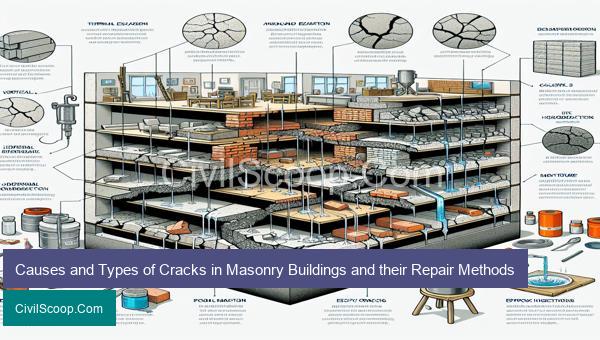
Masonry buildings have been widely used for centuries due to their durability and aesthetic appeal. However, they are not immune to cracks, which can appear for various reasons and significantly affect the structure’s stability and safety. In this article, we will discuss the causes and types of cracks that can occur in masonry buildings and the repair methods used to address them. By understanding the underlying issues and implementing proper repair techniques, we can ensure the longevity and structural integrity of masonry buildings.
Table of Contents
Causes and Types of Cracks in Masonry Buildings and their Repair Methods
Masonry buildings have been used throughout history due to their strength and durability. However, like any other type of construction, masonry buildings can also develop cracks over time. These cracks not only affect the aesthetics of the building but also compromise its structural integrity. The causes of cracks in masonry buildings can vary from poor construction practices to environmental factors. In this article, we will discuss the common causes and types of cracks in masonry buildings and different methods for repairing them.
Causes of Cracks in Masonry Buildings:
1. Settlement: Settlement is one of the most common causes of cracks in masonry buildings. It occurs when the foundation of the building is unable to support the weight of the structure. As a result, the building settles and creates cracks in the masonry walls.
2. Uneven settlement: Uneven settlement happens when the foundation of the building is not properly compacted or has varying soil conditions. This results in some areas of the building sinking more than others, causing cracks in the masonry walls.
3. Thermal expansion and contraction: Masonry materials expand and contract with temperature changes. If the building is not designed to accommodate these movements, it can result in cracks.
4. Earthquakes: Masonry buildings are prone to damage during earthquakes due to their rigid and heavy construction. The seismic waves cause the building to vibrate, leading to cracks in the walls.
5. Moisture: Moisture can enter the masonry walls through cracks and cause damage. Water can freeze and expand in the cracks, leading to further cracking and deterioration of the masonry material.
Types of Cracks in Masonry Buildings:
1. Vertical cracks: These are the most common type of cracks in masonry walls and usually occur due to settlement or uneven settlement.
2. Horizontal cracks: These cracks are a serious concern as they can indicate structural issues. They are usually caused by inadequate reinforcement or joists in the building and can compromise the stability of the walls.
3. Diagonal cracks: Diagonal cracks can occur due to a combination of factors such as settlement, thermal expansion, or earth movements. They are also a sign of structural issues and require immediate attention.
4. Stair-step cracks: These cracks are found in brick or stone masonry walls and resemble a set of stairs. They are usually caused by moisture damage and are common in older masonry buildings.
Repair Methods for Cracks in Masonry Buildings:
The repair method for cracks in masonry buildings will depend on the severity and cause of the crack. The following are some common repair methods:
1. Repointing: This method involves removing the old, damaged mortar and replacing it with new, fresh mortar. It is an effective way to repair small cracks and prevent further damage.
2. Grouting: Grouting is used to fill voids or cracks in masonry walls. It involves injecting a cement-based or epoxy-based mixture into the cracks to fill and stabilize them.
3. Stitching: This method is used for repairing horizontal cracks in masonry walls. It involves drilling holes on either side of the crack and inserting steel rods or plates to stabilize the wall.
4. Reinforcement: This method is used for repairing structural cracks. It involves adding additional supports, such as steel angles or plates, to strengthen and stabilize the building.
5. Waterproofing: For cracks caused by moisture, waterproofing is the most effective repair method. It involves applying a waterproof membrane or coating to the exterior of the m
Repair Methods for Cracks in Masonry Building Structural Members
Cracks in masonry building structural members can occur due to various reasons such as structural loads, settlement, thermal expansion and contraction, or poor construction practices. These cracks not only affect the aesthetic appearance but also compromise the structural integrity of the building. Therefore, it is important to repair these cracks to prevent further damage and ensure the safety of the building.
Here are some of the repair methods for cracks in masonry building structural members:
1. Epoxy Injection:
Epoxy injection is a common method used for repairing cracks in masonry buildings. In this method, a low-viscosity epoxy resin is injected into the cracks using a specialized pump. The epoxy fills the voids in the masonry and creates a strong bond, thereby sealing the cracks and restoring the structural integrity of the building.
2. Crack Stitching:
Crack stitching is used to repair wide and severe cracks in masonry walls. This method involves drilling holes on either side of the crack and inserting stainless steel bars or helical ties. The bars are then grouted into the masonry using a high-strength mortar, which helps in bridging the crack and preventing further movement.
3. Grouting:
Grouting is another commonly used method for repairing cracks in masonry. It involves injecting a cement-based grout into the cracks using a grout pump. The grout fills the voids in the masonry, strengthens the wall, and prevents water intrusion. It is suitable for hairline cracks and minor cracks that do not compromise the structural integrity of the building.
4. Stitch Bonding:
Stitch bonding is a variation of grouting, where the injected grout is reinforced with steel reinforcement. This method is more effective in repairing cracks that are wider than 5mm and have a higher probability of re-opening. The reinforcement provides additional strength and stability to the masonry.
5. Carbon Fiber Reinforcement:
Carbon fiber reinforcement is used to repair cracks in masonry buildings that are caused by structural loads. In this method, carbon fiber strips or sheets are bonded to the cracked masonry using an epoxy adhesive. The carbon fiber provides additional strength and prevents further cracking by distributing the load evenly.
6. Repointing:
Repointing is a traditional method of repairing cracked masonry walls. It involves removing the old and damaged mortar joints and replacing them with new mortar. Repointing is suitable for minor cracks and can improve the appearance of the wall.
In conclusion, cracks in masonry building structural members should not be ignored as they can lead to serious structural issues. Therefore, it is important to identify the cause of the cracks and choose the appropriate repair method. Consulting a structural engineer can help in determining the most suitable repair method for the specific type of crack. Regular maintenance and inspection of masonry buildings can also help in identifying and addressing cracks at an early stage, thus preventing costly repairs in the future.
Conclusion
In conclusion, masonry buildings are susceptible to different types of cracks, which can pose serious structural and safety issues if left unattended. The main causes of these cracks can be attributed to external factors such as shrinkage, settlement, and weathering, as well as internal factors such as poor construction practices and foundation issues. It is important to identify and address these cracks as soon as possible to prevent further damage and potential hazards. Several repair methods, such as repointing, grouting, and reinforcement, can be used depending on the type and severity of the cracks. However, it is crucial to seek professional guidance and assistance from experienced masons to ensure the proper and long-lasting repair of cracks in masonry buildings. With thorough inspection, timely