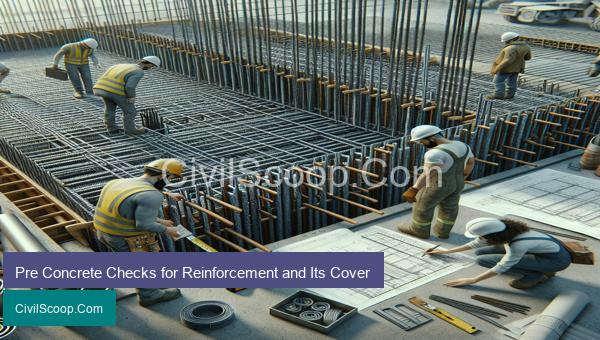
Reinforced concrete is one of the most widely used construction materials, known for its strength and durability. However, to ensure the structural integrity and long-term performance of concrete structures, proper reinforcement and cover are crucial. Pre-concrete checks are therefore essential to ensure the correct placement and installation of reinforcement and its cover to meet design specifications. This article will discuss the importance of pre-concrete checks for reinforcement and its cover, and provide guidelines on how to conduct them effectively. By understanding the significance of these pre-concrete checks, construction professionals can ensure the quality and safety of concrete structures.
Table of Contents
What is Reinforcement Cover? How to Provide Cover to Reinforcement?
Reinforcement cover is an essential aspect of reinforcing concrete structures. It is the distance between the outer surface of the reinforced concrete and the reinforcing bars within. The purpose of providing reinforcement cover is to protect the reinforcement bars from external elements such as corrosion, fire, and mechanical damage. It also helps in providing the desired strength and stability to the concrete structure.
The amount of reinforcement cover required depends on various factors such as the type of structure, the type of environment it is exposed to, and the size and type of reinforcement used. The minimum required cover is specified in the design codes or standards and must be followed to ensure the durability, strength, and safety of the structure.
There are generally two types of reinforcement covers - nominal cover and effective cover. Nominal cover is the minimum thickness of concrete surrounding the reinforcement, and it is used for ease of construction and to ensure an adequate space for placing and compacting concrete around the bars. Effective cover, on the other hand, is the actual distance between the surface of the concrete and the reinforcement bars. It takes into consideration the size of the bars and provides the necessary protection to the reinforcement.
Providing adequate reinforcement cover is crucial as it directly affects the performance and longevity of the structure. Here are the factors to consider when providing cover to reinforcement:
1. Environmental Conditions: The level of reinforcement cover required varies with the type of environment the structure will be exposed to. In harsh environments such as coastal areas or areas with a high concentration of chemicals, a thicker cover is required to protect the reinforcement from corrosion.
2. Type of Structure: Different types of structures have different requirements for reinforcement cover. For example, the cover for a high-rise building will be different from that of a bridge or a water tank. It is essential to consider the type and function of the structure while determining the amount of cover required.
3. Type and Size of Reinforcement: The size and type of reinforcement used also play a significant role in determining the required cover. For instance, larger bars will require a thicker cover than smaller bars to provide adequate protection.
4. Structural Design: The reinforcement cover is also determined based on the design of the structure. The design considers factors such as load-bearing capacity, the thickness of the concrete, and the expected stresses on the structure. These factors help in determining the appropriate cover thickness.
5. Quality of Construction: The quality of construction plays a crucial role in providing the required cover. Proper placement and compaction of concrete around the reinforcement are essential to ensure that the required cover is achieved.
Failure to provide adequate cover to reinforcement can result in severe consequences such as corrosion of reinforcement, reduced strength and durability of the structure, and even structural failure. It is, therefore, essential to follow the design requirements and give due consideration to the factors mentioned above to provide proper reinforcement cover.
In conclusion, reinforcement cover is a critical aspect of reinforced concrete structures. It serves to protect the reinforcement from external elements and provides the necessary strength and stability to the structure. It is essential to carefully consider all the factors mentioned above while determining the required cover to ensure the longevity and safety of the structure.
Pre Concrete Checks for Reinforcement and its Cover
Pre-concrete checks for reinforcement and its cover are crucial steps in the construction process of any reinforced concrete structure. These checks ensure the proper placement and cover of reinforcement within the concrete, which ultimately affects the strength and durability of the structure. In this article, we will discuss the importance of pre-concrete checks and cover for reinforcement and the procedures involved in conducting them.
Importance of Pre-Concrete Checks for Reinforcement:
Pre-concrete checks for reinforcement are essential to ensure the quality and safety of the concrete structure. These checks confirm that the reinforcement is correctly placed as per the design drawings and specifications. They also help in identifying any potential issues or defects in the reinforcement before the concrete is poured, allowing for timely remedial actions.
Proper placement of reinforcement is critical for the load-carrying capacity of the structure. It ensures that the reinforcement will be able to resist the anticipated stresses and forces, keeping the structure stable and safe. Pre-concrete checks help in verifying if the reinforcement is correctly placed in terms of spacing, alignment, and size. Any issues with the reinforcement can be rectified before the concrete is poured, avoiding costly rework and delays.
Importance of Cover for Reinforcement:
The cover refers to the distance between the surface of the reinforcement and the outer surface of the concrete. It is a crucial factor in determining the durability and longevity of the structure. The appropriate cover for reinforcement protects it from corrosion, fire, and other environmental factors that can compromise its strength.
The cover also ensures proper bond between the concrete and the reinforcement, which is necessary for transferring the tensile stresses from the concrete to the reinforcement. Inadequate cover can lead to bond failure and reduce the load-carrying capacity of the structure.
Pre-Concrete Checks Procedure:
The following are the primary steps involved in conducting pre-concrete checks for reinforcement:
1. Check Reinforcement Placement:
The first step is to verify the placement of reinforcement by checking its location, spacing, and alignment in accordance with the design drawings. This can be done by comparing the actual placement with the reinforcement schedule or by using a mechanical reinforcement detector.
2. Measure Concrete Cover:
The next step is to measure the concrete cover over the reinforcement. This can be done using a cover meter, which is a non-destructive testing tool that measures the depth of concrete cover. The measured cover should be compared with the design requirements, and any deviations should be noted.
3. Check Reinforcement Quality:
The quality of reinforcement is equally important as its placement and cover. Pre-concrete checks involve visually inspecting the reinforcement for any defects or damages such as rust, lamination, or inadequate lap length. Any defective reinforcement should be rejected, and replacements should be made.
4. Record and Document:
It is essential to document the results of pre-concrete checks for future reference. A detailed record of the reinforcement placement, cover, and quality should be maintained for inspection and quality control purposes.
Conclusion:
In conclusion, pre-concrete checks for reinforcement and its cover are essential to ensure the proper placement and protection of reinforcement within the concrete. These checks help in verifying the quality of reinforcement, ensuring its proper placement and cover, and ultimately contribute to the overall strength and durability of the structure. Hence, it is crucial to conduct these checks diligently before pouring concrete to avoid any potential issues that could compromise the safety and stability of the structure.
Conclusion
In conclusion, performing pre-concrete checks for reinforcement and its cover is crucial in ensuring the structural integrity and durability of a concrete structure. By thoroughly inspecting the reinforcement placement, size, and spacing, as well as the quality and thickness of the cover, potential issues such as corrosion, inadequate strength, and cracking can be identified and addressed before the concrete is poured. This not only saves time and money in potential repairs but also helps to prevent potential safety hazards. By following these pre-concrete checks, construction professionals can ensure that their concrete structures will stand the test of time and meet the required standards for structural stability and safety.