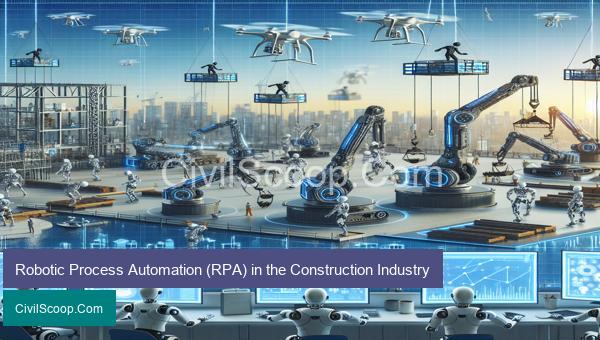
With continuous advancements in technology, the construction industry is constantly seeking ways to improve efficiency and productivity. Among the latest innovations, Robotic Process Automation (RPA) has gained significant attention for its potential to revolutionize various processes within the construction industry. This emerging technology involves the use of software robots to automate repetitive tasks, allowing construction companies to streamline operations, reduce costs, and improve overall performance. In this article, we will explore the capabilities of RPA and its impact on the construction industry.
Table of Contents
Applications of RPA
Robotic Process Automation (RPA) is a rapidly emerging technology that has wide-ranging applications across various industries. As a civil engineer, I have seen firsthand how RPA can revolutionize the way we work and improve efficiency in our projects. Here are some of the key applications of RPA in the field of civil engineering:
1. Data Processing and Management:
Civil engineering projects involve a large amount of data, including survey data, design data, construction data, and maintenance data. RPA can help automate the processing and management of this data, reducing the potential for human error and saving valuable time and effort. RPA tools can extract data from various documents, such as drawings, contracts, and specifications, and automatically populate it into relevant databases or systems.
2. Design and Engineering:
RPA can also assist with the design and engineering process by automating repetitive tasks such as geometry optimization, quantity estimation, and 3D modeling. This can speed up the design process and allow engineers to focus on more critical tasks, leading to higher-quality designs.
3. Asset Management and Maintenance:
RPA can play a crucial role in asset management and maintenance by automating routine inspections and data collection tasks. For example, RPA can be used to collect data from sensors installed on bridges or roads and generate alerts when maintenance is required. This can help ensure that infrastructure assets are monitored continuously, leading to more effective and timely maintenance.
4. Project Management and Control:
RPA can also be applied in project management and control, where it can assist with scheduling, tracking progress, and generating reports. It can automate routine tasks such as updating project schedules, tracking budgets and costs, and identifying potential risks, freeing up time for project managers to focus on strategic decision-making.
5. Environmental Monitoring:
Environmental monitoring is a critical aspect of civil engineering projects, and RPA can help with data collection and analysis. RPA tools can collect data from various sources, such as weather sensors, water quality sensors, and air pollution sensors, and provide real-time information on the environmental impacts of a project.
6. Quality Control and Inspections:
RPA can also be applied in quality control and inspections by performing automated checks and audits of construction materials, ensuring that they meet the required standards. This can help prevent defects and ensure that construction projects are completed to the desired quality.
In conclusion, RPA has numerous applications in the field of civil engineering and can greatly improve efficiency, accuracy, and productivity. By freeing up engineers’ time from mundane tasks, RPA allows them to focus on more critical and creative work, leading to better project outcomes. As the technology continues to evolve, we can expect to see even more innovative applications of RPA in the civil engineering industry.
Challenges of RPA
Robotic Process Automation (RPA) is the use of software robots to automate repetitive and monotonous tasks in businesses. While RPA has become increasingly popular in various industries, it also presents some challenges that civil engineers must consider when implementing it in their work. Some of these challenges are as follows:
1. Resistance to Change: Implementing RPA requires a significant shift in work culture and processes. This can often lead to resistance from employees who may see RPA as a threat to their job security. Civil engineers may face challenges in convincing their teams to adopt RPA and assuring them that it will enhance their work rather than replace them.
2. Integration with Legacy Systems: Most civil engineering companies have legacy systems in place, and integrating them with RPA can be a complex and time-consuming process. These legacy systems may not have the necessary interfaces or compatibility with the RPA software, making it challenging to automate processes.
3. High Initial Investment: Implementing RPA can involve significant initial costs, including licensing fees, training, and infrastructure upgrades. Civil engineering firms, especially small and medium-sized ones, may find it challenging to allocate such high budgets for automation, making it a barrier for RPA adoption.
4. Maintenance and Scalability: Like any other software, RPA systems require regular maintenance and updates to keep them functioning optimally. This can add to the overall cost of RPA implementation. Additionally, as business processes evolve and change, RPA systems may need to be reconfigured, which can be a time-consuming and costly process.
5. Security and Compliance Issues: As RPA involves automation of critical processes, it is crucial to ensure the security and privacy of the data being processed. Failure to comply with data protection laws and regulations can result in severe consequences, making security and compliance a significant concern for civil engineers using RPA.
6. Unforeseen Errors and Operational Risks: While RPA may reduce the risk of human errors, it is not entirely foolproof. As with any software, unforeseen errors can occur, leading to disruptions in operations. This risk must be carefully evaluated and mitigated before implementing RPA in critical processes.
7. Need for Regular Monitoring and Oversight: RPA systems require continuous monitoring and oversight to ensure that they are functioning correctly. Civil engineers must allocate resources to oversee the RPA processes and address any issues that may arise promptly.
In conclusion, RPA offers many benefits to civil engineering firms, such as increased efficiency, productivity, and cost savings. However, it is essential to carefully consider and address the challenges mentioned above to ensure a successful and smooth implementation of RPA in the industry.
Conclusion
In conclusion, the future of construction is rapidly changing with the advancement of technology, particularly with the introduction of Robotic Process Automation (RPA). This innovative technology has already shown immense potential in streamlining processes, reducing costs and increasing productivity in the construction industry. With its ability to automate repetitive and time-consuming tasks, RPA has the potential to revolutionize the way projects are planned, managed and executed. It will also free up valuable time for construction professionals to focus on more critical aspects of a project. Although there may be initial resistance and challenges to implementing RPA, the benefits it offers in terms of efficiency, accuracy and cost-savings are undeniable. Therefore, it is safe to say that RPA will continue to play a significant role in