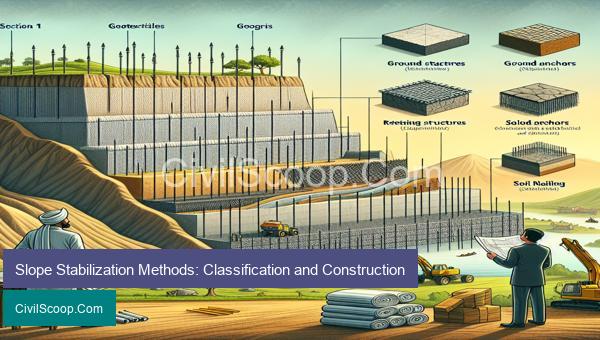
Slope stabilization is an important aspect of civil engineering that involves the application of techniques and methods to prevent slope failures, erosion, and landslides. With the increase in construction activities and land development, the need for effective slope stabilization methods has become crucial. This article will delve into the various slope stabilization methods, their classification, and construction process, providing a comprehensive understanding of this important aspect of civil engineering. By exploring the different techniques and their construction process, we aim to highlight the significance of slope stabilization in ensuring the safety and durability of our built environment.
Table of Contents
1. Slope Stabilization Methods and Classification
Slope stabilization is the process of controlling and mitigating the potential risks associated with soil or rock slopes. With the increase in urbanization and development, slope stabilization has become an essential aspect of civil engineering to prevent landslides, erosion, and other hazards in hillside areas.
There are various methods used for slope stabilization, and they can be broadly classified into three categories: drainage control, slope reinforcement, and retaining structures.
1. Drainage Control:
This method involves controlling and managing the water content within the soil, which is one of the leading causes of slope instability. When water accumulates in the soil, it increases its weight, causing the slope to become unstable. There are two common techniques used for drainage control:
- Surface Drainage: This method involves creating channels or drains on the slope surface to direct water away from the slope. It helps to reduce the water pressure on the slope, making it more stable.
- Subsurface Drainage: This method involves installing pipes or drains deep within the soil to collect and redirect the water to a suitable outlet. This method is more effective for soils with low permeability, such as clay.
2. Slope Reinforcement:
This method involves improving the strength and stability of the slope by introducing additional support elements. There are various techniques used for slope reinforcement, including:
- Soil Nailing: This method involves drilling long steel bars or rods into the slope to provide reinforcement. The spaces between the nails are then filled with grout, which helps to strengthen the slope.
- Anchoring: This method involves installing cables or rods into the slope at an angle and anchoring them to a stable area, such as a rock or structure. This technique provides both passive and active support to the slope.
- Terracing: This method involves cutting the slope into a series of flat steps to reduce its gradient and provide a stable platform. It is commonly used in areas with steep slopes and softer soils.
3. Retaining Structures:
Retaining structures are vertical structures constructed at the base of the slope to provide support and prevent soil movement. They are typically made of steel, concrete, or timber and can be classified into four types:
- Gravity Retaining Walls: These walls rely on their weight to provide stability. They are useful for low slopes and do not require extensive excavation.
- Cantilever Retaining Walls: These walls act as cantilevers and use the weight of the soil above to provide stability. They are suitable for medium to high slopes and are commonly used in road construction.
- Anchored Retaining Walls: These walls use anchors and cables to provide additional support to the wall. They are ideal for tall slopes and can withstand high lateral forces.
- Gabion Walls: These walls are made of wire baskets filled with rocks. They are suitable for low to medium slopes and are used to control erosion and stabilize the slope.
In conclusion, slope stabilization methods are essential in minimizing the risks associated with unstable slopes. The choice of a suitable method depends on various factors, including the slope gradient, soil type, and budget. Civil engineers play a crucial role in analyzing these factors and implementing the most effective stabilization method to ensure safety and stability in slope areas.
2. Construction Techniques of Slope Stabilization
Slope stabilization is a crucial aspect of civil engineering and construction projects, especially in hilly and mountainous regions. It is the process of stabilizing a slope or a steep surface to prevent it from collapsing or eroding. There are various techniques used for slope stabilization, depending on the site conditions, slope gradient, and soil characteristics. In this article, we will discuss two common construction techniques for slope stabilization.
1. Retaining Walls:
Retaining walls are one of the most commonly used techniques for stabilizing slopes. They are structures that are designed to retain soil on one side and support the weight of the soil on the other side. Retaining walls are typically made of concrete, stone, brick, or other materials and can be either gravity walls or reinforced walls.
Gravity retaining walls rely on their own weight to hold the soil, while reinforced walls use materials such as geogrids, metal strips, or concrete strips to reinforce the structure. This reinforcement provides additional strength and stability to the wall, allowing it to retain steeper slopes.
Retaining walls work by dividing a slope into a series of smaller terraces, reducing the overall slope angle and minimizing the risk of erosion. They also help to redirect water flow, preventing it from eroding the slope. The construction of retaining walls requires careful planning and design to ensure their effectiveness and longevity.
2. Soil Nailing:
Soil nailing is another popular technique for slope stabilization. It involves the insertion of slender, steel reinforcement bars into the soil mass at an angle. These bars, also known as nails, are then grouted or injected with cement to form a stable mass known as a “nail beam.” The nail beam provides additional support to the soil, preventing it from sliding down the slope.
Soil nailing is ideal for stabilizing steep slopes and is cost-effective compared to other techniques. It also does not require heavy machinery, making it a suitable option for remote or difficult-to-access sites.
The installation process for soil nailing involves several steps, such as drilling, grouting, and installing the reinforcement bars. The spacing and inclination of the nails are critical factors that need to be considered during the design phase. Proper construction and installation of the nails are also essential to ensure the overall stability of the slope.
In conclusion, slope stabilization is crucial for the safety and longevity of construction projects. Apart from retaining walls and soil nailing, other techniques such as gabion walls, geotextile reinforcement, and vegetative slope stabilization can also be used depending on the site conditions. It is essential to consult a professional engineer to determine the most suitable technique for a specific site and ensure its successful implementation.
3. Stabilization Strategies to Reduce Slope Failure
Slope failure is a common issue in civil engineering and can cause damage to infrastructure, property, and even human lives. One of the main causes of slope failure is a lack of stability, which can be caused by various factors such as natural erosion, poor construction techniques, or changes in the environment. To prevent or reduce the risk of slope failure, engineers typically employ stabilization strategies. Here are three commonly used methods for stabilizing slopes:
1. Grouting
Grouting is a technique that involves injecting a stabilizing material, such as cement or chemical grout, into the soil or rock mass of the slope. This method is effective in improving the strength and stability of the ground and preventing water seepage that can weaken the slope. Grouting can also be used to fill voids in the soil, which provides support and prevents soil movement. The type and amount of grout used depend on the type of soil, slope angle, and the level of stabilization needed.
2. Drainage
Poor drainage is one of the main causes of slope failure. When water collects in the slope, it increases the weight of the soil and reduces its strength, making it more prone to failure. Therefore, installing proper drainage systems is crucial for stabilizing slopes. This can be achieved by constructing surface drainage channels or using subsurface drains such as perforated pipes or French drains to redirect water away from the slope. It is essential to consider the slope’s overall design and topography to determine the most effective drainage system.
3. Reinforcement
Another effective method for slope stabilization is reinforcement. This technique involves adding structural elements, such as retaining walls, to the slope to provide support and strengthen the soil mass. Retaining walls can be made of various materials, including concrete, gabion baskets, or geosynthetics, depending on the slope’s characteristics and the level of reinforcement required. Additionally, slope reinforcement can also be achieved through the use of soil nails, rock bolts, and mesh systems that anchor the slope and prevent soil movement.
In conclusion, slope stabilization is a crucial aspect of civil engineering to prevent slope failure. The three strategies discussed above, grouting, drainage, and reinforcement, are effective methods for improving the stability of slopes. When designing stabilization measures, it is essential to conduct a thorough analysis of the slope’s conditions and choose the most suitable method to ensure long-term stability.
Conclusion
In conclusion, slope stabilization is a crucial aspect of engineering and construction that aims to prevent dangerous and costly slope failures. There are various methods of slope stabilization that are classified based on their mechanism of action, such as soil reinforcement, soil drainage, and retaining walls. Each method has its own advantages and limitations, and the choice of method should be based on the specific characteristics of the slope and project requirements. The construction of slope stabilization structures requires careful planning, design, and implementation to ensure their effectiveness and long-term stability. By understanding the different methods and their construction techniques, engineers can successfully stabilize slopes and ensure the safety and stability of infrastructure and surrounding areas. Continued research and advancements in slope stabilization methods will further enhance their efficiency and effectiveness in mitigating slope