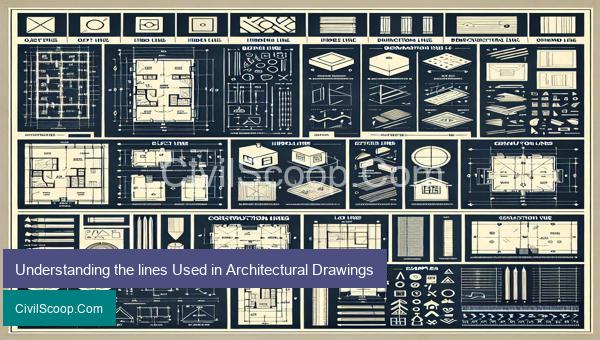
Architectural drawings are essential tools for architects and building professionals to communicate their design ideas and plans to clients, contractors, and other stakeholders involved in the construction process. These drawings not only showcase the aesthetic qualities of a building, but they also serve as a detailed set of instructions for the construction of a structure. However, to fully understand and interpret these drawings, one must have a solid grasp of the different types of lines used in architectural drawings. In this article, we will explore the various types of lines used in architectural drawings and their significance in conveying crucial information about a building’s design and construction. By understanding these lines, one can gain a deeper appreciation for the technical aspects of architecture and effectively communicate and execute the intended design.
Table of Contents
Outlines Used in Architectural Drawings
Architectural drawings are essential for the successful implementation of a construction project. They communicate the design intent and technical details of a building to contractors, engineers, and other involved parties. Outlines are an integral part of architectural drawings and play a crucial role in conveying the building’s form and structure. In this article, we will discuss the various types of outlines used in architectural drawings.
1. Overall Outline:
The overall outline, also known as the external outline, is the most prominent outline in architectural drawings. It represents the overall shape and size of the building when viewed from above. This outline is usually drawn using thick lines and shows the external walls, roof, and any projecting elements such as balconies or chimneys.
2. Functional Outlines:
Functional outlines indicate the various functions and spaces within a building. For example, in a residential building, the functional outline may show the location of bedrooms, living rooms, and kitchens. These outlines are usually drawn using thinner lines compared to the overall outline to differentiate them.
3. Construction Outlines:
Construction outlines, also known as structural outlines, show the structural elements of the building, such as columns, beams, and load-bearing walls. These outlines are crucial for the construction process as they provide information on the placement and size of structural components.
4. Detail Outlines:
Detail outlines are used to show specific elements and features of a building in more detail. These can include architectural details like window frames, door handles, or interior elements like lighting fixtures, appliances, and furniture. Detail outlines are usually drawn using a different color or line type to differentiate them from the other outlines.
5. Section Outlines:
Section outlines are used to show the vertical cut through the building to illustrate the different levels and layers of construction. These outlines are drawn perpendicular to the horizontal outlines and are crucial for understanding the layout and design of the building.
6. Elevation Outlines:
Elevation outlines are used to show the building’s external facades from different perspectives, such as front, back, or side views. These outlines are drawn parallel to the construction outlines and show the building’s vertical dimensions and architectural details.
7. Site Outlines:
Site outlines are used to show the building’s location in relation to the surrounding landscape or other buildings. These outlines include information on the site’s topography, water bodies, roads, and other natural or man-made features.
8. Boundary Outlines:
Boundary outlines are used to indicate the legal boundaries of the property on which the building is constructed. These outlines are essential for zoning and planning regulations and to ensure the building is constructed within its designated area.
In conclusion, outlines are an essential element of architectural drawings. They provide detailed information on the design, structure, and location of the building. Different types of outlines are used to communicate specific details, and they work together to create a comprehensive understanding of the building’s form and function. As a civil engineer, it is crucial to have a good understanding of these outlines to effectively communicate and collaborate with architects and other professionals involved in the construction process.
Extension and Dimension Lines in Architectural Drawings
Extension and dimension lines are key elements in architectural drawings that help to accurately convey the size, shape, and layout of a building or structure. As a civil engineer, it is important to have a thorough understanding of these lines and how they are used in drawings.
Extension lines are lines drawn perpendicular to the object or feature being dimensioned in a drawing. They are typically thin, continuous lines that extend from the edges of the object to the dimension line. These lines help to define the precise location and extent of the feature being measured.
Dimension lines, on the other hand, are thin, continuous lines that are used to indicate the size or dimension of an object or feature in a drawing. They are typically marked with an arrowhead at each end to show the direction and extent of the measurement. These lines are usually accompanied by a numerical value or a text label indicating the dimension being represented.
Together, extension and dimension lines work together to provide important information about the size, location, and layout of objects and features in architectural drawings.
One of the most essential functions of extension and dimension lines is to accurately convey the scale of a drawing. By clearly showing the size of features in relation to one another, these lines enable viewers to understand the proportions and dimensions of a building or structure.
Another important function of these lines is to facilitate accurate construction and measurement. By providing clear visual references, extension and dimension lines can help contractors and builders to accurately interpret and carry out the design shown in the drawings.
In addition, extension and dimension lines play a crucial role in ensuring consistency and accuracy in architectural drawings. By following accepted standards and conventions for these lines, architects and engineers can ensure that their drawings are easily understood by other professionals in the field.
There are a few important rules to keep in mind when working with extension and dimension lines. First, extension lines are typically drawn beyond the visible edges of an object, while dimension lines are generally drawn between these extension lines. This creates a clear separation between the dimensioned feature and other elements in the drawing.
In addition, extension lines should never cross over one another, as this can lead to confusion or mistakes in construction. Similarly, dimension lines should not cross over other lines, as they should be easily distinguishable from other elements in the drawing.
In conclusion, as a civil engineer, it is essential to have a thorough understanding of extension and dimension lines in architectural drawings. These lines play a critical role in accurately communicating the size, location, and layout of buildings and structures, and following proper conventions for these lines is crucial for producing clear and precise drawings.
Conclusion
Understanding the lines used in architectural drawings is essential for anyone interested in the field of architecture. These lines communicate important information about the design and construction of a building, and without a proper understanding, it can be challenging to interpret the drawing accurately. By familiarizing yourself with the different types of lines and their meanings, you can gain a deeper understanding of the architectural design process. It is also necessary for effective communication between architects, engineers, and other professionals involved in the construction process. With a thorough understanding of these lines, you can appreciate the beauty and complexity of architectural drawings and gain a new perspective on the built environment around you. Whether you are an aspiring architect or simply curious about this fascinating field, taking the time to comprehensively understand the lines used