Table of Contents
All About Domes in Architecture
Domes, with their unique spherical shape and impressive size, have been a defining element of architectural design for centuries. From ancient temples to modern civic buildings, these iconic structures have captured the imagination and sparked innovation in architects around the world. Domes have not only been used for their striking visual impact, but also for their functional properties, providing strength, stability, and acoustics. In this article, we will delve into the fascinating world of domes in architecture, exploring their history, construction, and varied uses throughout the ages. Join us as we uncover the secrets and beauty of these magnificent architectural feats – all about domes.
What is Domes in Architecture

Domes are architectural structures with a curved, rounded or spherical shape, resembling the upper half of a sphere. They have been used in various forms since ancient times and can be found in different architectural styles, from classical and Gothic to contemporary designs.
The most distinctive feature of domes is their ability to span wide open spaces, without the need for any intermediate supports. This is due to the inherent structural strength of their curved shape, which evenly distributes weight and forces throughout the entire structure.
Historically, domes have been used in religious and civic buildings, such as temples, mosques, churches, and government buildings. The most famous example is the Pantheon in Rome, which has a massive concrete dome that still stands today, despite being over 2,000 years old.
In terms of construction, there are two main types of domes – masonry and structural. Masonry domes are made of stone, brick, or concrete blocks, and rely on the compressive strength of the materials to support the structure. These domes are typically built from the ground up, with workers laying each row of blocks in a circular pattern until they reach the top.
On the other hand, structural domes use a framework of steel or timber to create the curved shape, with cladding materials such as glass or metal panels attached to the framework. This technique allows for more flexibility in design and can span larger distances. The iconic geodesic dome designed by R. Buckminster Fuller is a famous example of a structural dome.
Domes can also vary in shape, from hemispherical and elliptical to onion-shaped and octagonal. Each shape has its own structural advantages and can create different visual effects.
Aside from their structural significance, domes also have symbolic and aesthetic significance in architecture. In religious buildings, the rounded shape is often associated with the heavens and the divine. In secular buildings, the shape is seen as a symbol of grandeur and power.
In modern architecture, the use of domes has evolved. With advances in technology and material science, architects have been able to create larger, more complex and futuristic domes. These structures are not only visually striking but also serve as functional and sustainable solutions for various purposes such as event centers, greenhouses, and even residential homes.
In conclusion, domes are architectural marvels that have stood the test of time, both in terms of their structural integrity and aesthetic appeal. They are versatile and have been used in various forms and styles throughout history. From ancient temples to modern-day buildings, domes continue to be an iconic feature of architectural design and will likely be a prominent element in the future of architecture.
13 Types of Domes in Architecture
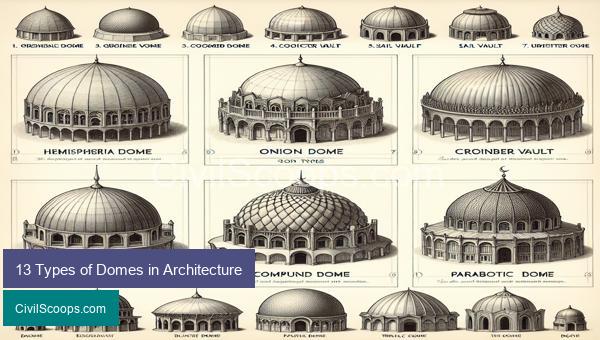
A dome is a structural element that resembles an upside-down bowl and is used to cover a large space, such as a building or a room. Domes have been used in various forms of architecture since ancient times, as they provide a sense of grandeur and elegance to a structure. Here are 13 types of domes commonly found in architecture:
1. Classical or Byzantine Dome: This type of dome is characterized by its hemispherical shape and is commonly found in ancient Greek and Roman architecture. It is made of stone or brick and often covered with colorful mosaics.
2. Onion Dome: This type of dome has a bulbous shape and is commonly found in Russian and Eastern European architecture. It is made of wood or metal and is often adorned with intricate patterns and designs.
3. Cloistered or Monastic Dome: This type of dome is seen in monasteries and religious buildings. It has a hemispherical shape and is supported by a series of arches and columns.
4. Geodesic Dome: This type of dome was developed by American architect Buckminster Fuller and is made of a network of interconnected triangles. It is lightweight and can cover large spans, making it suitable for recreational and exhibition spaces.
5. Ribbed or Gothic Dome: This type of dome is common in Gothic architecture and is characterized by its pointed arches and rib-like structures. It is made of stone or brick and is often adorned with intricate details.
6. Baroque Dome: This type of dome is seen in the Baroque style of architecture, characterized by its elaborate decorations and curved surfaces. It is usually made of stone, plaster, or wood.
7. Modern or Thin-shell Dome: This type of dome is made of thin concrete shell and is commonly used in modern architecture. It is supported by a central pillar or a series of columns.
8. Neoclassical Dome: This type of dome is seen in Neoclassical architecture, which is inspired by ancient Greek and Roman styles. It has a semicircular shape and is often made of stone or concrete.
9. Semi-dome or Half-dome: This type of dome covers half the space of a full dome and is typically seen in churches and religious buildings. It is often supported by a large arch or a series of smaller arches.
10. Double -layered Dome: This type of dome consists of two layers – an inner and an outer layer – with a void in between. It is commonly used in modern architecture and allows for natural light and ventilation inside the building.
11. Hyperbolic Paraboloid Dome: This type of dome is often found in sports stadiums and exhibition halls. It is a curved structure made of concrete or steel and is supported by a grid of beams.
12. Tented Dome: This type of dome has a conical shape and resembles a tent. It is often made of fabric or metal and is lightweight, making it easy to construct and dismantle.
13. Membrane Dome: This type of dome is a modern and lightweight structure made of a membrane or fabric stretched over a frame. It is commonly used in temporary structures such as event tents and pavilions.
In conclusion, domes have been an integral part of architectural design for centuries, with each type serving a different purpose and adding character to a building. From ancient classical domes to modern-day membrane domes, they continue to be a popular choice in architecture for their functionality and aesthetic
Advantages of Domes in Architecture

Domes have been used in architecture for centuries and are still a popular choice in modern building design. They are a curved structural element that forms a roof or ceiling and can be found in various sizes and shapes. From ancient civilizations to modern skyscrapers, domes have stood the test of time and continue to offer numerous advantages in architecture. In this article, we will discuss some of the main advantages of using domes in building design.
1. Structural Stability: Domes are one of the strongest architectural forms, thanks to their curved shape. The curved design evenly distributes the load of the structure, making it ideal for withstanding extreme weather conditions like hurricanes, earthquakes, and heavy snowfall. Domes also have excellent load-bearing capabilities, making them suitable for large open spaces without the need for internal columns or supports.
2. Versatility in Design: Domes come in a variety of shapes and sizes, giving architects and designers the freedom to create unique and innovative designs. From simple hemispherical domes to more complex onion or geodesic domes, the possibilities are endless. With the advancement in construction technology, domes can now be built in a variety of materials like concrete, steel, glass, and even fabric, providing endless design options.
3. Energy Efficiency: Due to their curved shape, domes offer better insulation than traditional flat roofs. This helps in reducing energy consumption and maintaining a comfortable indoor temperature. Additionally, the seamless construction of domes eliminates the need for joints and seams, reducing the chances of air leakage and heat loss.
4. Natural Light and Ventilation: The design of domes allows for ample natural light to enter the building through the oculus or windows at the top. This helps in reducing the need for artificial lighting during the day, making it an eco-friendly option. The shape of domes also allows for natural ventilation as hot air rises and escapes through the top, creating a natural cooling effect.
5. Acoustic Performance: Domes have excellent acoustic properties due to their curved shape, making them ideal for auditoriums, concert halls, and other performance spaces. The curved design of the dome helps in reflecting sound waves, reducing echo, and providing better sound quality.
6. Aesthetically Pleasing: Domes are visually appealing and can add a unique and grandeur touch to any building. They have been used in many iconic structures worldwide, such as the Pantheon in Rome, St. Basil’s Cathedral in Russia, and the Dome of the Rock in Jerusalem. The versatility in design and materials allows for endless possibilities in creating breathtaking architectural masterpieces.
In conclusion, domes offer numerous advantages in architecture, making them a popular choice for builders and designers. From structural stability to energy efficiency, domes have proven to be a reliable and aesthetically pleasing option in building design. With advancements in technology, domes are now easier and more cost-effective to construct, making them a viable option for both large and small-scale projects.
Disadvantages of Domes in Architecture

Domes are one of the oldest and most iconic architectural structures, dating back to ancient civilizations such as the Greeks and Romans. They are formed by a curved roof or ceiling with a circular or polygonal base, creating a visually stunning and unique appearance. However, while domes have their advantages in terms of aesthetics and structural stability, there are also several disadvantages that should be considered in architecture.
1. Expensive Construction: Domes require a complex and specialized construction process, which can be time-consuming and expensive. The materials used for building a dome, such as reinforced concrete, steel, or masonry, can be costly and increase the overall construction budget.
2. Limited Interior Space: The shape of a dome limits the usable interior space compared to traditional rectangular or square structures. This can be a disadvantage for practical use, especially in large buildings such as offices, shopping malls, or sports arenas. Designing and utilizing the interior space of a dome-shaped building can be challenging and may require more effort and creativity.
3. Difficult Structural Design: The curved shape of a dome creates unique structural challenges, making it more complicated to design and construct compared to traditional architectural forms. This complexity can result in flaws in the structural design, leading to increased maintenance costs and safety concerns.
4. Maintenance and Repairs: Domes require regular maintenance and repairs due to their complex architecture. Surface coatings, waterproofing, and ventilation systems are needed to prevent water leaks, cracking, and moisture buildup. These maintenance tasks can be costly and time-consuming, especially for larger domes.
5. Limited Natural Light: The curved shape of a dome limits the amount of natural light that can enter the interior space. This can result in a dimly lit and gloomy atmosphere, which may not be suitable for certain types of buildings, such as schools, hospitals, or offices.
6. Challenging to Retrofit: Retrofitting a dome-shaped building can be a complicated and costly process. Changes or additions to the original structure may affect its structural stability, as the dome is a self-supporting structure. Therefore, any modifications must be carefully planned and executed to avoid compromising the integrity of the building.
7. Difficult to Install Utilities: The curved shape of a dome can make installing utilities, such as plumbing, electrical wiring, and HVAC systems, more challenging. The limited space between the inner and outer surfaces of the dome makes it more difficult and expensive to install and maintain these systems.
In conclusion, while domes have their aesthetic appeal and structural benefits, they also come with several disadvantages in architecture. The construction process is complex and expensive, and designing and utilizing the interior space can be challenging. Regular maintenance and repairs are needed, and retrofitting or modifications can be difficult and costly. These factors must be carefully considered before incorporating domes into architectural designs.
Applicatio of Domes in Architecture

Domes have been used in architecture for centuries, with the earliest examples dating back to ancient civilizations such as the Roman and Byzantine empires. They are a versatile and iconic architectural feature that can be found in various forms, shapes, and sizes in buildings all over the world. As a civil engineer, I have worked on numerous projects involving the application of domes in architecture, and I have seen firsthand their aesthetic and functional benefits.
One of the main applications of domes in architecture is their use as a roof structure. Domes offer a visually striking and efficient way to cover large spans without the need for supporting columns or walls. This makes them ideal for designing open and airy spaces such as auditoriums, sports arenas, and religious buildings. The curvature of the dome also allows for natural ventilation and the entry of natural light, creating a comfortable and well-lit interior environment.
In addition to their functional benefits, domes also add to the overall architectural appeal of a building. Their graceful and symmetrical form can enhance the visual impact of a structure, making it stand out from its surroundings. This is especially true in the case of landmark buildings like the Taj Mahal in India or the Dome of the Rock in Jerusalem, where the dome serves as the building’s defining feature.
Domes also have applications in sustainable architecture. Their spherical shape minimizes the surface area exposed to the sun, reducing the building’s heat gain and improving energy efficiency. They can also be designed to accommodate solar panels, further enhancing their sustainability. In regions with extreme climates, such as the Middle East, domes have traditionally been used to provide thermal insulation and reduce the reliance on artificial cooling.
In contemporary architecture, domes are often combined with cutting-edge technology to create innovative and awe-inspiring structures. For example, the dome of the National Aquatics Center, popularly known as the “Water Cube,” in Beijing, China, is clad with ETFE (Ethylene Tetrafluoroethylene) material, which allows for the diffusion of natural light while insulating the interior from extreme temperatures.
Domes are not limited to large-scale structures; they can also be used in smaller buildings and homes. In residential architecture, domes can be incorporated into the design as skylights or cupola structures, allowing for the entry of natural light and the diffusion of warm air in the summer months. They can also add a unique and distinctive design element to a home, making it stand out from traditional box-shaped houses.
In conclusion, the application of domes in architecture is diverse and widespread. From their functional benefits such as providing a column-free, well-ventilated interior, to their aesthetic appeal and sustainability, domes have stood the test of time as a versatile and iconic architectural element. As a civil engineer, I am constantly fascinated by the potential of domes in creating beautiful, functional, and sustainable structures.
Conclusion
In conclusion, domes have been a prominent feature in architecture throughout history, serving both practical and aesthetic purposes. From the iconic domes of ancient civilizations to the modern interpretations in contemporary designs, the versatility and beauty of this architectural element continues to inspire and captivate. Whether used as a symbol of strength and magnificence or as a means to create functional and efficient spaces, domes have stood the test of time and will continue to be an integral part of architectural design for generations to come. As technology and innovation advances, we can only imagine the endless possibilities for the use of domes in architecture, making it an exciting and ever-evolving aspect of the built environment.