
Hydraulic trailers are more than just heavy-duty vehicles used for transporting heavy goods and equipment. They are sophisticated machines that rely on advanced technology to provide efficient and safe movement of cargo. From construction sites to agricultural fields, hydraulic trailers have become an essential tool in various industries. In this article, we will delve into the world of hydraulic trailer technology, exploring its components, functions, and benefits. With the growing demand for transportation solutions, understanding the intricacies of hydraulic trailers is crucial for businesses and individuals alike. So, let’s dive in and discover all about hydraulic trailer technology.
Table of Contents
Hydraulic Trailer Technology: Changing the Dimensions of Transportation System

In the past few decades, the transportation industry has witnessed a major transformation with the introduction of hydraulic trailer technology. This innovative technology has revolutionized the way goods are transported, making the transportation process more efficient and cost-effective. Hydraulic trailers are specially designed trailers with hydraulic systems that enable them to self-load and self-unload heavy cargo without the need for additional equipment. This technology has not only changed the dimensions of the transportation system but has also greatly impacted the construction and logistics industries.
One of the major advantages of hydraulic trailers is their versatility. These trailers come in various lengths and capacities, making them suitable for transporting a wide range of goods, from heavy construction machinery to oversize equipment. This eliminates the need for specialized equipment for each type of cargo, reducing operational costs and increasing efficiency. Additionally, the self-loading feature of hydraulic trailers eliminates the need for expensive and time-consuming loading and unloading processes, resulting in faster delivery times.
Furthermore, hydraulic trailers have significantly improved safety in the transportation of goods. The hydraulic system allows for better control and stability during transportation, minimizing the risk of accidents and damage to the cargo. This is particularly important when transporting sensitive or fragile goods that require careful handling.
Another significant impact of hydraulic trailer technology is on the environment. With the increasing concern for reducing carbon emissions and promoting sustainable transportation, hydraulic trailers offer a greener alternative to traditional transportation methods. The self-loading and unloading feature eliminates the need for additional equipment, reducing fuel consumption and emissions. Moreover, the versatility of hydraulic trailers means that fewer shipments are required, resulting in a reduction in greenhouse gas emissions.
In the construction industry, hydraulic trailers have become an indispensable tool for transporting heavy machinery and equipment to job sites. These trailers have made it possible to access remote locations that were previously inaccessible, thus providing more flexibility in project planning. This has resulted in significant cost savings in terms of time and labor, as well as increased productivity.
In the logistics industry, hydraulic trailers have greatly improved the efficiency of cargo transportation. The ability to self-load and unload cargo has reduced loading and unloading times, providing more time for transportation and delivery. This has a direct impact on the supply chain, resulting in faster and more reliable delivery of goods to their destination.
In conclusion, hydraulic trailer technology has changed the dimensions of the transportation system, offering a more efficient, safer, and environmentally friendly means of transporting goods. The versatility, flexibility, and cost-effectiveness of these trailers have made them an essential tool in various industries, including construction and logistics. As technology continues to advance, it is likely that hydraulic trailers will continue to evolve, further enhancing the transportation system.
1. Hydraulic Axles

Hydraulic axles, also known as self-steering axles, are an essential component in the transportation industry. They are commonly used in heavy-duty vehicles such as construction equipment, trailers, and trucks to safely and efficiently transport goods and materials.
A hydraulic axle is a type of axle that allows the wheels of a vehicle to turn without the need for a mechanical connection to the steering system. Instead, it uses a hydraulic system to control the movement of the wheels. This system is made up of a hydraulic cylinder attached to the axle, which is connected to a hydraulic pump that supplies fluid under pressure. By manipulating the fluid flow, the wheels can be turned in the desired direction.
One of the main advantages of hydraulic axles is their ability to steer independently of the towing vehicle. This means that the wheels can be turned at different angles, allowing for better maneuvering and turning capability. This is especially useful for large vehicles that may have difficulty navigating tight corners or narrow spaces.
Another benefit of hydraulic axles is their load-carrying capacity. With the use of hydraulic cylinders, the axle can adjust its height and distribute the weight of the load evenly on all the wheels. This not only improves the stability of the vehicle but also reduces the stress on individual wheels, tires, and the suspension system. As a result, hydraulic axles can carry heavier loads compared to traditional axles.
The use of hydraulic axles also reduces the strain on the towing vehicle. As the steering is controlled by the hydraulic system, there is less resistance from the road surface, which translates to less effort required by the engine to move the vehicle. This can result in improved fuel efficiency and reduced wear and tear.
In addition to their functional benefits, hydraulic axles also offer safety advantages. The independent steering allows for better control and stability of the vehicle, reducing the risk of accidents. The load distribution also helps to prevent wheel and tire damage, which can be a common issue with heavy loads.
However, like any mechanical component, hydraulic axles require regular maintenance to ensure their proper functioning. The hydraulic system needs to be regularly checked for leaks, and the fluid levels should be monitored and refilled as needed.
In conclusion, hydraulic axles play a crucial role in the transportation industry, providing efficient and safe transportation of heavy loads. With their advanced steering and load-carrying capabilities, they have revolutionized the way goods are moved and have become an essential component in many heavy-duty vehicles.
2. Hydraulic Support Groups

Hydraulic support groups are a vital aspect of civil engineering, playing a crucial role in the design and construction of structures such as bridges, dams, and water supply systems. These support groups are made up of engineers, designers, and technicians who work collaboratively to ensure the proper functioning of hydraulic systems and structures.
The primary function of hydraulic support groups is to provide expertise in the design and construction of hydraulic systems. This includes the planning and layout of pipelines, drainage systems, and water supply networks, as well as the sizing and placement of pumps, valves, and other hydraulic components.
One of the key responsibilities of hydraulic support groups is to ensure the safety and stability of hydraulic structures. They perform thorough analysis and calculations to determine the maximum load capacities and structural integrity of dams, bridges, and other hydraulic infrastructure. They also conduct risk assessments and develop contingency plans to mitigate potential hazards.
In addition to design and construction, hydraulic support groups also play a critical role in the maintenance and rehabilitation of hydraulic systems. They conduct regular inspections, identify potential issues, and develop solutions to repair or upgrade existing structures. This requires extensive knowledge of materials, construction methods, and hydraulic principles.
Another essential aspect of hydraulic support groups is their involvement in the environmental impact assessment of hydraulic projects. They evaluate the potential environmental effects of new construction or rehabilitation projects and make recommendations for minimizing any negative impacts on the environment.
Collaboration and communication are essential within hydraulic support groups as they work closely with other disciplines such as structural, geotechnical, and environmental engineering. They also liaise with government agencies and regulatory bodies to ensure compliance with safety and environmental standards.
To be a part of a hydraulic support group, one must have a strong understanding of hydraulic principles, as well as knowledge in engineering and design, construction, and project management. These professionals often have advanced degrees in civil engineering and specialized training in hydraulic systems.
In conclusion, hydraulic support groups are an integral part of civil engineering, providing technical expertise in the design, construction, maintenance, and rehabilitation of hydraulic structures. Their role is crucial in ensuring the safety, stability, and efficiency of the hydraulic systems that play a vital role in our daily lives.
3. Steering

Steering is a fundamental aspect of civil engineering that involves controlling the direction of movement of structures and vehicles. It is essential for providing smooth and safe movement and ensuring the structural integrity of buildings, bridges, and other construction projects.
1. Types of Steering:
There are different types of steering techniques used in civil engineering, depending on the type of structure or vehicle being steered. One of the most common types is mechanical steering, which involves using physical means such as a steering wheel, hydraulic systems, or cables to control the movement. This is commonly used in vehicles like cars, trains, and ships. Another type is hydraulic steering, which utilizes pressurized fluids to control the direction of movement. It is commonly used in heavy-duty vehicles and construction equipment. Electric steering, on the other hand, uses electric motors and sensors to provide precise steering control and is commonly used in modern cars.
2. Importance of Steering:
Steering plays a crucial role in the design and construction of buildings and other structures. It ensures the stability and safety of these structures by preventing excessive movement. Proper steering techniques are also essential for controlling the load distribution and stress levels on the structure, especially in large-scale projects like bridges and skyscrapers. In addition, steering is critical for vehicles, as it allows for safe navigation and maneuvering, especially on busy roads and highways.
3. Challenges in Steering:
One of the significant challenges in steering is the design and implementation of effective steering systems in complex and dynamic structures. Engineers must consider various factors such as wind load, seismic activity, and traffic patterns to design the most suitable steering system. In addition, the constant wear and tear of steering components over time can also pose a challenge, and engineers must ensure regular maintenance and inspections to guarantee the structural integrity of the steering system.
In conclusion, steering is a vital aspect of civil engineering that contributes to the proper functioning, safety, and stability of structures and vehicles. With the continuous advancement in technology and the increasing demand for efficient and sustainable infrastructure, the role of steering will continue to evolve and play a critical role in the development of our cities and transportation systems.
4. Engine-Supported Trailers
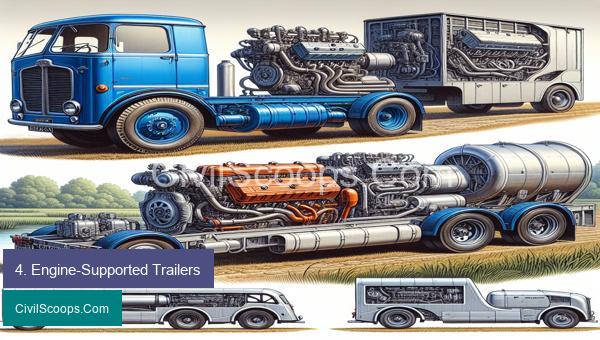
Engine-supported trailers, also known as semi-trailers, are a widely used type of trailer in the transportation industry. These trailers consist of a detachable front section, known as the tractor or cab, and a back section that is attached to the tractor by a fifth wheel coupling. The front section houses the engine and driver’s cabin, while the back section is designed to carry cargo.
The use of engine-supported trailers began in the early 1900s with the development of the internal combustion engine. Prior to this, horse-drawn wagons were the main mode of transportation for goods. Engine-supported trailers revolutionized the transportation industry, allowing for faster and more efficient delivery of goods.
One of the key features of engine-supported trailers is their versatility. They come in various sizes and configurations, allowing them to transport a wide range of cargo. From standard dry goods to refrigerated or hazardous materials, these trailers can accommodate different types of loads with ease.
The structural design of engine-supported trailers is carefully engineered to withstand heavy load capacities. The tractor, made of reinforced steel, provides the necessary power to pull the trailer and withstand the stress of long-distance travel. The back section of the trailer, known as the chassis, is also made of robust materials such as steel or aluminum, with multiple reinforcements to support the weight of the cargo.
Engine-supported trailers also have various safety features to ensure the protection of both the driver and the cargo. They are equipped with air brakes, anti-lock braking systems, and electronic stability control, making them easier to operate and safer to drive. The tractor and trailer also have multiple lights, reflectors, and warning signs to alert other drivers on the road.
These trailers also have advanced technology incorporated into their design. Many have GPS tracking systems, which allow for real-time monitoring of the location and condition of the cargo. This not only ensures a smooth delivery process but also provides security against theft or damage to the goods.
In addition to transportation, engine-supported trailers also play a vital role in the construction industry. They are frequently used to transport heavy construction materials such as steel beams, lumber, and pipes to job sites. The tractor’s powerful engine and sturdy design make it suitable for hauling these types of materials and navigating through challenging terrains.
In conclusion, engine-supported trailers have played a significant role in the evolution of the transportation and construction industries. Their versatility, strength, and safety features make them an essential tool for moving goods and materials across short distances or cross-country. With advancements in technology and design, these trailers will continue to be a crucial component of modern transportation systems. As a civil engineer, it is important to understand the design and functionality of these trailers in order to incorporate them effectively into transportation infrastructure projects.
5. Other Applications

While designing buildings and structures may be the most common application of civil engineering, there are many other industries and fields where the skills and knowledge of civil engineers are utilized. Here are five other applications of civil engineering:
1. Transportation Engineering
Civil engineers play a vital role in designing and maintaining our transportation systems, including roads, highways, bridges, airports, and railways. They use their expertise in surveying, geometry, and materials science to ensure the safe and efficient movement of people and goods. They also design intelligent transportation systems and use data to improve traffic flow and reduce congestion.
2. Water Resources and Environmental Engineering
Another important application of civil engineering is in the development and management of water resources. Civil engineers are involved in the design and construction of water supply systems, wastewater treatment plants, and flood control structures. They also work on environmental engineering projects, such as the remediation of contaminated sites and the design of sustainable infrastructure to protect and preserve natural resources.
3. Geotechnical Engineering
Geotechnical engineers specialize in the study of soil, rocks, and the behavior of earth materials. They use this knowledge to design foundations for buildings, dams, and other structures, as well as to analyze and mitigate the risks associated with natural hazards, such as landslides and earthquakes. Geotechnical engineers also play a crucial role in underground construction projects, such as tunnels and subways.
4. Structural Health Monitoring
As our infrastructure ages, the need for monitoring and maintaining its structural health becomes increasingly important. Civil engineers use sensors and other monitoring technology to collect data on the performance and condition of bridges, dams, and other structures. This information allows them to identify potential issues early and take corrective measures to prevent failures and ensure the long-term safety and durability of our infrastructure.
5. Construction and Project Management
Civil engineers are involved in all stages of a construction project, from initial planning to final completion. Their expertise in project management, cost estimation, and materials selection is essential for the successful execution of construction projects. They also work closely with architects, contractors, and other professionals to ensure that a project is completed on time, within budget, and meets all safety and quality standards.
In addition to these five applications, civil engineering also has a role in many other industries such as manufacturing, telecommunications, and energy production. From constructing factories and power plants to designing safe and efficient communication networks, civil engineers play a critical role in shaping the built environment and improving our daily lives in countless ways.
Conclusion
In conclusion, hydraulic trailer technology has revolutionized the world of transportation and hauling. The advancements in this technology have made it possible to safely and efficiently transport heavy loads over long distances. From the development of hydraulic cylinders to the introduction of electronic control systems, this technology has continuously evolved to meet the demands of the industry. With its advantages of increased loading capacity, improved stability, and reduced wear and tear, hydraulic trailer technology is undoubtedly a game changer in the transportation sector. As technology continues to advance, we can expect to see even more innovative solutions in the world of hydraulic trailers in the future.