
Pile foundations are an essential component of building construction, providing stability and support to structures of all sizes. This type of foundation is particularly crucial in areas with soft or weak soils, as it extends deep into the ground to transfer the weight of the building safely to more stable layers. However, despite their importance, pile foundations are not impervious to issues such as settlement, structural damage, and malfunction. In this article, we will explore the fundamentals of pile foundations, including their types, construction methods, and common problems. We will also delve into various remedies and techniques used to address these issues and ensure the proper functioning and longevity of pile foundations. Whether you are a construction professional or a curious homeowner, this article will provide valuable insights into the
Table of Contents
FAILURE OF PILE FOUNDATION & REMEDIES
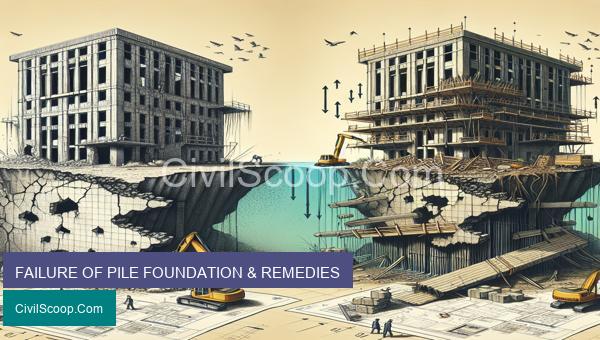
Failure of pile foundations is a common problem encountered in the construction industry. Piles are deep foundation elements that transfer the structure’s load to a deeper and more competent layer of soil or rock. They are typically used when the surface soil is not strong enough to support the structure.
The failure of pile foundations can be caused by various factors, such as inadequate design, improper construction techniques, poor soil conditions, unexpected changes in the ground conditions, or incorrect installation of piles. It can result in significant structural damage, delays in the project, and costly repairs.
Some of the common types of failures of pile foundations are:
1. Structural Failure:
This type of failure occurs when the load-carrying capacity of the piles is insufficient to support the structure’s weight. It can happen due to inadequate pile size, spacing, or depth, resulting in excessive settlement, tilting, or collapsing of the structure.
2. Bearing Capacity Failure:
This type of failure occurs when the load-carrying capacity of the soil is overestimated, resulting in excessive settlement of the pile foundation. It can happen due to poor soil conditions, such as soft clay or loose sand, or inadequate pile design.
3. Lateral Failure:
Lateral failure occurs when the piles are unable to withstand horizontal loads, such as wind or seismic forces. It can happen due to inadequate pile spacing, inadequate depth, or soft soil conditions.
Some of the common remedies for the failure of pile foundations are:
1. Proper Design and Planning:
The most crucial step in mitigating the failure of pile foundations is to ensure proper design and planning. This involves conducting thorough soil investigations and designing the pile foundations based on the soil conditions and the structure’s weight and loading requirements. It is essential to consider any potential changes in the ground conditions during the design process.
2. Quality Control during Construction:
Proper quality control during the construction phase is critical to ensure the pile foundation’s success. This involves regular monitoring and testing of the soil and proper installation of piles as per the design specifications. Any discrepancies should be addressed promptly to avoid costly repairs in the future.
3. Strengthening Measures:
In cases where the pile foundations have already failed, strengthening measures can be implemented to improve their load-carrying capacity. This can include adding more piles, underpinning, or inserting reinforcing elements into the weak piles.
4. Grouting:
Grouting is a widely used technique to improve the quality and strength of the soil surrounding the piles. It involves injecting a cement-based grout into the ground to fill any voids or improve the soil’s strength, creating a stronger bond between the pile and the soil.
5. Change in Foundation Type:
If the soil conditions are not suitable for pile foundations, a change in the foundation type may be necessary. This can include using shallow foundations, such as spread footings or raft foundations, or using deep foundations, such as drilled piers or caissons.
In conclusion, the failure of pile foundations can be a significant setback in any construction project. Therefore, it is essential to prioritize proper design, planning, and construction techniques to avoid such failures. In case of any failure, timely and appropriate remedial measures should be taken to ensure the safety and stability of the structure.
Conclusion
In conclusion, understanding the fundamentals of pile foundations and potential remedies is crucial for any construction project. From the types of pile foundations to their advantages and disadvantages, it is important to consider all factors before choosing the appropriate foundation for a building. Additionally, if issues arise with a pile foundation, there are various remedies available such as underpinning, grouting, or replacement, depending on the specific problem. It is essential to work with a knowledgeable engineer and contractor to ensure the proper planning, design, and execution of pile foundations for a safe and sturdy structure. By following these guidelines, constructing a strong and durable foundation is achievable and will help to avoid any potential problems in the future. Overall, pile foundations and their remedies play a crucial role in the