
Masonry, a building technique that uses materials such as brick, stone, and concrete to create durable structures, has been utilized for centuries. While it is often praised for its strength and longevity, it is not impervious to moisture. The penetration of water can weaken masonry structures and lead to costly damage, making it crucial to understand and address this issue. In this article, we will delve into the topic of masonry resistance against the penetration of water, exploring the various factors that contribute to water intrusion and the measures that can be taken to prevent it. By understanding the fundamentals of masonry resistance to water, we can ensure the longevity and stability of our structures.
Table of Contents
How to Improve Masonry Resistance Against Penetration of Water?
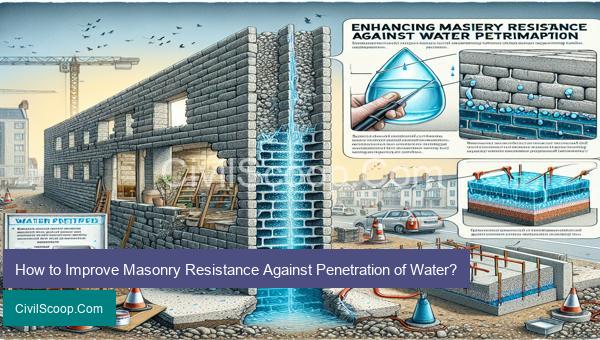
Masonry is a widely used construction material due to its strength, durability, and low cost. However, one of the biggest challenges faced by masonry structures is the penetration of water, which can lead to structural damage and deterioration over time. As a civil engineer, it is important to understand how to improve masonry resistance against penetration of water. In this article, we will discuss some effective methods for achieving this.
1. Proper water repellent treatment:
The first and most important step in improving masonry resistance against water penetration is to apply a water repellent treatment. This treatment involves applying a water repellent coating or sealant on the surface of the masonry. This coating creates a barrier that prevents water from penetrating into the masonry. It also helps to reduce the absorption of moisture, which can lead to efflorescence and other forms of water damage.
2. Properly designed drainage system:
Another important factor in preventing water penetration into masonry is proper drainage. A well-designed drainage system ensures that water is directed away from the masonry structure. This can be achieved by installing gutters, downspouts, and a proper slope in the surrounding landscape. This will prevent water from accumulating and penetrating into masonry, reducing the risk of damage.
3. Use of correct materials:
The use of correct materials in masonry construction can significantly improve its resistance against water penetration. For example, using water-resistant or waterproof bricks, mortar, and other materials can greatly reduce the absorption of water by the masonry. Care should also be taken to ensure that these materials are properly installed and bonded together to minimize any gaps where water can seep in.
4. Properly designed and constructed joints:
Joints are a vulnerable point in masonry structures, as they are prone to cracking and allow water to enter. Therefore, it is essential to design and construct joints properly to minimize water penetration. This can be achieved by using joint reinforcement, proper mortar mix, and a sufficient sealant. It is also important to ensure that the joints are regularly maintained and repaired as needed.
5. Implementation of waterproofing membranes:
In addition to water repellent treatments, the use of waterproofing membranes can also improve masonry resistance against water penetration. These membranes are installed on the exterior surface of the masonry and act as a barrier to prevent water from entering into the structure. They are particularly effective in areas that are prone to heavy rainfall or high moisture content in the surrounding soil.
6. Regular maintenance and inspection:
Regular maintenance and inspection are crucial for identifying any water penetration issues in masonry structures. Any cracks, gaps, or deterioration should be addressed promptly to prevent further damage. It is also important to keep the surrounding landscape well-maintained to prevent water from accumulating near the masonry.
In conclusion, improving masonry resistance against water penetration requires a multifaceted approach that includes proper design, use of correct materials, and timely maintenance. As a civil engineer, it is your responsibility to ensure that these measures are implemented during the design and construction of masonry structures to ensure their durability and longevity.
Methods to Improve Masonry Resistance Against Water Penetration
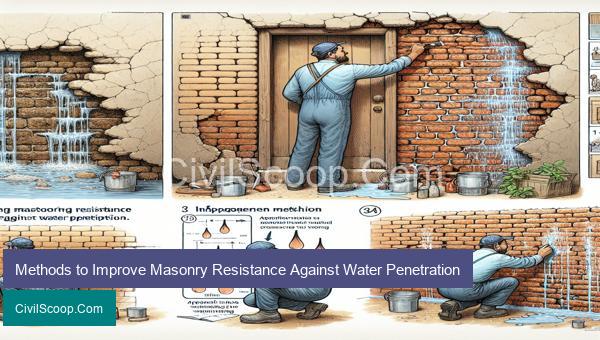
Masonry, which refers to construction using materials such as bricks, stone, and concrete blocks, is a common type of construction used in both residential and commercial buildings. However, one of the main challenges of using masonry as a building material is its susceptibility to water penetration. Water penetration can cause structural damage, compromising the integrity of the building. Therefore, it is essential to implement methods to improve masonry resistance against water penetration. In this article, we will discuss some of the ways to achieve this.
1. Properly prepare and lay the masonry units:
The first and most crucial step in improving masonry resistance against water penetration is to ensure that the masonry units are correctly prepared and laid. This includes proper preparation of the foundation to ensure that it is level and stable. Additionally, the masonry units should be laid with adequate mortar, and all joints should be properly filled to prevent water from seeping through.
2. Use waterproof membranes:
Waterproof membranes are a cost-effective way to prevent water penetration in masonry. These membranes are applied to the surface of the masonry before the application of the finish. The membranes work by creating a barrier that prevents water from seeping through the masonry units. They are available in both liquid and sheet form and can be easily applied by a professional.
3. Employ proper ventilation:
Proper ventilation is crucial in preventing water penetration in masonry. It allows for proper air circulation, which helps to remove any moisture that may be trapped in the masonry units. This is especially important in areas such as bathrooms and kitchens, where high levels of humidity can lead to water penetration.
4. Seal the masonry:
Another effective method to prevent water penetration is to seal the masonry. This involves applying a sealant, such as a water-repellent coating, to the surface of the masonry. The sealant acts as a barrier, preventing water from seeping through the masonry units. Regular inspections and re-application of the sealant may be required to maintain its effectiveness.
5. Incorporate proper drainage:
Proper drainage is essential in preventing water from accumulating in and around the masonry. This can be achieved through the installation of gutters, downspouts, and drain tiles. These systems help to redirect water away from the building, reducing the risk of water penetration in the masonry.
6. Consider using water-resistant masonry:
In areas with high levels of moisture or standing water, it may be beneficial to use water-resistant masonry units. These units are specially designed to prevent water penetration and can be used in areas such as basements, foundations, and retaining walls.
7. Regular maintenance:
Regular maintenance is crucial in ensuring the long-term resistance of masonry against water penetration. This includes regular inspections, repairing any cracks or gaps, and promptly addressing any signs of water damage. Regular maintenance can help to identify any weaknesses or vulnerabilities in the masonry and take corrective measures before the issue becomes more severe.
In conclusion, it is essential to take proactive steps to improve masonry resistance against water penetration to prevent costly and potentially dangerous structural damage. These methods, when used together, can significantly enhance the masonry’s ability to withstand water penetration, ensuring the longevity and safety of the building.
Conclusion
In conclusion, masonry resistance against penetration of water is a crucial aspect of building construction. As discussed, by using appropriate materials, techniques, and design considerations, structures can be built to resist water penetration and prevent damage. The proper use of waterproofing and drainage systems, such as weep holes and flashing, can play a significant role in protecting masonry from water damage. It is essential for builders, architects, and contractors to understand and implement these measures to ensure the longevity and safety of the structures they construct. With proper planning and execution, masonry can withstand the challenges of water penetration and stand strong for many years to come.