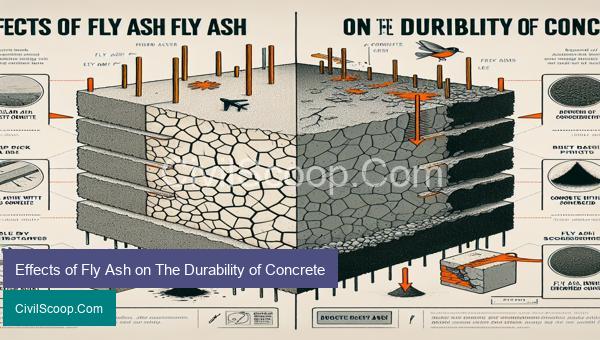
Concrete is one of the most widely used construction materials due to its durability and strength. However, in recent years, concerns have been raised about the environmental impact of traditional concrete production. This has led to the incorporation of alternative materials such as fly ash, a byproduct of coal combustion, in concrete mixtures. While fly ash has been shown to improve the strength and workability of concrete, its effect on the durability of concrete remains a topic of debate. In this article, we will explore the effects of fly ash on the durability of concrete, including its potential benefits and drawbacks. By understanding the role of fly ash in concrete, we can make informed decisions about its use in construction and its impact on the environment.
Table of Contents
Effects of Fly Ash on The Durability of Concrete
Fly ash is a by-product of burning coal in power plants, and is commonly used as a supplementary cementitious material in concrete. Its use has gained popularity due to its cost-effectiveness and environmental benefits. However, there have been concerns about fly ash’s potential negative impact on the durability of concrete. In this article, we will discuss the effects of fly ash on the durability of concrete.
1. Reduced strength: Fly ash typically results in slower strength gain compared to traditional concrete mixes. This can lead to a lower compressive strength, which can affect the durability of concrete structures. It is important to carefully design the concrete mix to compensate for the lower strength gain of fly ash.
2. Higher water demand: Fly ash has a high surface area and can absorb water, leading to an increased water demand in concrete mixes. This can result in a higher water to cement ratio, which can negatively impact the strength and durability of concrete.
3. Increased permeability: Permeability is the ability of water, gases, or other substances to pass through concrete. The use of fly ash can increase the permeability of concrete, which can result in a higher rate of carbonation and corrosion of reinforcement steel. This can significantly reduce the durability of the concrete structure.
4. Sulphate attack: Sulphates present in the environment can react with the calcium hydroxide in concrete and form a compound that can cause expansion and cracking of concrete. Fly ash can mitigate this effect by consuming the calcium hydroxide and reducing the risk of sulphate attack. However, excess use of fly ash can lead to an increased sulphate content in concrete, which can have a negative impact on its durability.
5. Alkali-silica reaction: Alkali-silica reaction (ASR) is a chemical reaction between the alkaline cement paste and reactive forms of silica in aggregates, resulting in the formation of a gel that can expand and cause cracking in concrete. The use of fly ash in concrete can reduce the alkalinity of the cement paste and decrease the risk of ASR. However, it is crucial to use the right type of fly ash and limit its content, as excess fly ash can worsen the ASR.
6. Freeze-thaw resistance: The microscopic air voids in concrete help in accommodating the expansion of water when it freezes, preventing damage to the concrete structure. Fly ash, being a supplementary cementitious material, can improve the air void system in concrete and enhance its freeze-thaw resistance. However, excessive use of fly ash can also lead to an increased water demand and reduce the effectiveness of the air void system.
In conclusion, the use of fly ash in concrete has both positive and negative effects on its durability. While it can improve certain aspects like sulphate resistance and freeze-thaw resistance, excessive use can lead to a higher water demand, increased permeability, and risks of ASR. It is essential to carefully design the concrete mix and control the amount of fly ash used to ensure its optimum performance and long-term durability of the structure.
Conclusion
In conclusion, fly ash has shown to have both positive and negative effects on the durability of concrete. While it can improve the strength and reduce permeability of concrete, it can also lead to delayed setting and potential alkali-silica reaction. Overall, the use of fly ash in concrete should be carefully considered and controlled, taking into account the quality and quantity of fly ash used. Proper testing and monitoring can ensure the optimal benefits of fly ash in increasing the durability of concrete, without compromising its performance. More research and advancements in technology surrounding the use of fly ash in concrete are needed to fully understand its long-term effects and maximize its potential in sustainable construction practices.