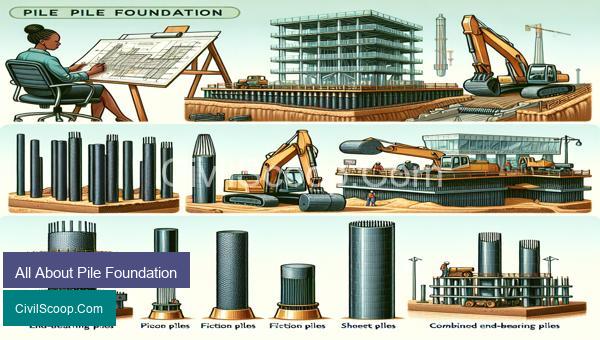
Pile foundations are a crucial element in the construction of any structure, whether it be a small house or a towering skyscraper. They are used to transfer the weight of the building to a stronger, more stable layer of soil or rock deep beneath the ground. Without properly designed and constructed pile foundations, buildings can sink, tilt, or even collapse under their own weight. In this article, we will delve into the world of pile foundations, exploring their history, types, design considerations, and construction methods. By the end, you will have a comprehensive understanding of all things pile foundation and the vital role they play in the world of construction.
Table of Contents
Pile Foundation
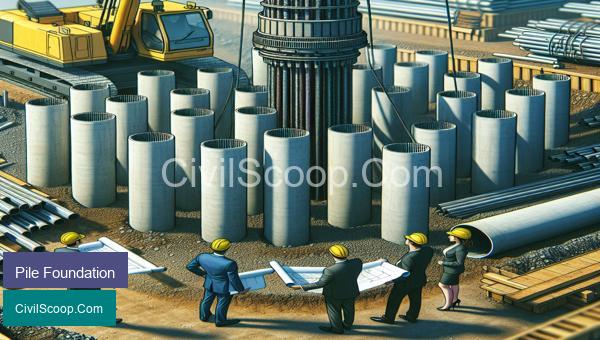
Pile foundation is a type of deep foundation used in civil engineering for providing stable support to structures built on top of it. It is used in situations where the soil near the surface is weak or the structure is heavy and conventional shallow foundations cannot provide adequate support. Pile foundation transfers the load of the structure to a deeper, more competent layer of soil or rock.
The primary function of pile foundation is to withstand and transfer heavy vertical loads from the structure to the deeper layers of soil or rock. It is also used to resist lateral forces such as wind or seismic loads and moments from the superstructure. Piles can be made of various materials such as steel, concrete, timber, or a combination of these materials.
There are different types of pile foundations based on the method of installation, type of load transfer, and the materials used. The most common types are driven piles, precast concrete piles, and drilled shafts. Driven piles are typically made of steel or concrete and are installed by driving them into the ground using a hammer. Precast concrete piles are made at a manufacturing plant and then driven into the ground at the construction site. Drilled shafts are constructed by drilling a hole into the ground and filling it with concrete.
The selection of the type of pile foundation depends on various factors such as the load-carrying capacity of the soil, the depth of the weak soil layer, the type of structure, and the availability of construction equipment. Extensive geotechnical investigations and soil testing are conducted to determine the appropriate type and length of piles to be used.
One of the major advantages of pile foundation is the ability to transfer heavy loads to deeper soil layers, thus reducing the settlement of the structure. It is also beneficial in areas with high water tables or where the soil is prone to liquefaction during seismic events. Pile foundations also have a smaller footprint compared to conventional shallow foundations, making them suitable for limited space construction sites.
However, pile foundation also has some limitations. It can be costly and time-consuming to install, especially in situations where the pile depth is significant. The process of driving or drilling piles into the ground can also cause vibrations and noise, which may be a concern in urban areas. Moreover, piles can be susceptible to corrosion if proper precautions are not taken during construction.
In summary, pile foundation is a crucial technique in civil engineering for providing stable support to structures. Its ability to transfer heavy loads to deeper layers of soil makes it suitable for various types of projects. However, proper design, construction, and maintenance are essential to ensure the longevity and stability of the foundation.
Conclusion
In conclusion, pile foundations are a crucial aspect of building construction that provide support and stability to structures. They distribute the weight of the building evenly onto the ground and prevent settling or structural failure. With the advancement in technology and techniques, pile foundations have evolved to become more efficient, cost-effective and sustainable. It is important for engineers and builders to carefully consider the type of soil, load requirements and building design when selecting the most suitable pile foundation for a project. By understanding the basics of pile foundations and staying updated with the latest technologies, we can ensure safe and stable structures for generations to come.