
Transit time is a crucial factor in the world of ready mix concrete. It refers to the time it takes for the concrete to be transported from the mixing plant to the construction site. This journey plays a significant role in the quality and workability of the concrete, as well as the overall cost and efficiency of the project. In this article, we will delve into the various aspects of transit time on ready mix concrete, exploring its impact on construction projects and the different factors that affect it. Whether you are a construction professional or simply curious about the world of concrete, this article will provide valuable insights into the often overlooked yet critical element of transit time.
Table of Contents
EFFECT OF TRANSIT TIME ON READY MIX CONCRETE
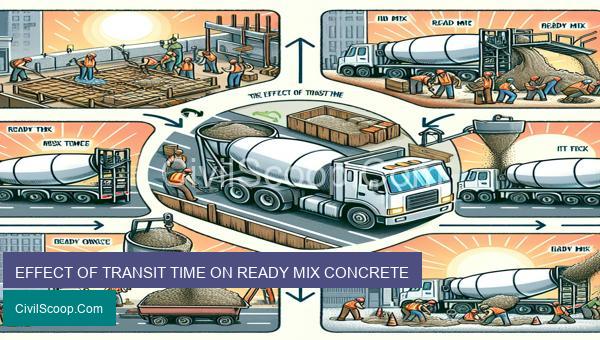
Ready mix concrete (RMC) is a type of concrete that is delivered to construction sites in a freshly mixed and unhardened state. It is produced in specialized batch plants and then transported to the construction site using transit mixers. Transit time, which refers to the time taken for the delivery of RMC from the batch plant to the construction site, is a crucial factor that can significantly affect the properties and performance of the concrete.
The following are some of the effects of transit time on ready mix concrete:
1. Loss of workability: RMC is a perishable material and has a limited time in which it can be used before it begins to harden. During transit, the concrete is subjected to continuous agitation and movement, which can cause the loss of water and fines from the mix. This results in a reduction of workability, making it difficult to place and finish the concrete at the construction site.
2. Variation in slump: The slump of a concrete mix is a measure of its workability. Long transit times can cause significant variations in the slump of RMC, resulting in inconsistency in the workability of the mix. This can be particularly problematic for construction projects where precise control of slump is necessary, such as in the case of high-rise buildings.
3. Delayed setting time: The setting time of RMC determines the time available for placing and finishing the concrete at the construction site. During transit, the concrete is subjected to vibrations and changes in temperature, which can affect its setting time. If the transit time is long, the setting time may be delayed, resulting in difficulties in placing and finishing the concrete.
4. Changes in strength: The compressive strength of RMC is an essential property that determines its structural performance. However, during the transit time, the concrete is subjected to continuous agitation and temperature variations, which can result in changes in its strength. If the transit time is prolonged, the concrete may lose its strength, leading to structural problems in the finished structure.
5. Risk of segregation: Segregation is the separation of coarse and fine aggregates in a concrete mix, resulting in an uneven distribution of these materials. Long transit times can increase the risk of segregation due to the continuous movement and vibration of the concrete. Segregation can affect the strength and durability of the concrete, compromising its overall quality.
To minimize the effects of transit time on RMC, it is essential to carefully plan and schedule the delivery of the concrete to the construction site. The use of set retarders can also help to extend the setting time and reduce the effects of transit time on the concrete. Additionally, proper handling and storage of the RMC at the construction site can also help to minimize the detrimental effects of transit time.
In conclusion, transit time is a critical factor that can significantly affect the properties and performance of ready mix concrete. Long transit times can lead to the loss of workability, changes in slump, delayed setting time, changes in strength, and increased risk of segregation. Hence, it is essential to carefully consider and manage transit time to ensure the quality and durability of RMC in construction projects.
Conclusion
In conclusion, transit time on ready mix concrete plays a crucial role in the overall quality and efficiency of a construction project. Several factors, including distance, traffic, and weather conditions, can affect transit time and ultimately impact the strength and workability of the concrete. It is important for construction companies to carefully consider the transit time when planning and scheduling concrete deliveries to ensure timely and consistent placement. Additionally, regular monitoring and maintenance of transit mixers can help minimize delays and ensure that the concrete arrives at the job site in optimal condition. By understanding and managing transit time effectively, contractors can ensure the successful completion of their projects with high-quality ready mix concrete.