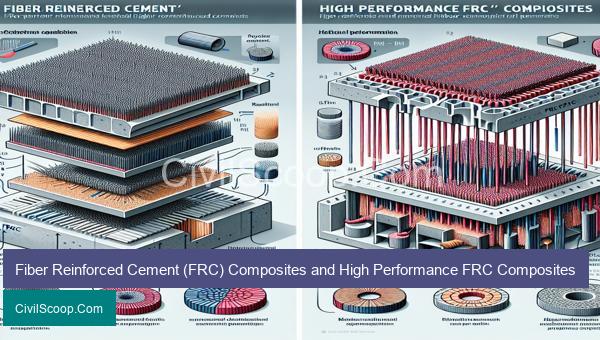
Fiber reinforced cement (FRC) composites have been widely used in the construction industry for decades due to their high strength, durability, and fire resistance. With the increasing demand for sustainable and high-performance building materials, the development of FRC composites has evolved to meet these requirements. This has led to the emergence of high performance FRC composites, which offer enhanced mechanical, thermal, and durability properties. In this article, we will explore the evolution of FRC composites, the manufacturing process, and the unique advantages of high performance FRC composites in various applications.
Table of Contents
Introduction to Composites of Cement and its Performance Improvement
Composites of cement, also known as fiber-reinforced cement composites, are a type of building material that combines a cement matrix with different types of fibers to improve its performance. These fibers can be natural or synthetic, and are typically added to the cement mixture to enhance properties like strength, durability, and impact resistance.
The concept of using fibers in cement dates back to ancient times, where straw or animal hair was added to mud bricks to improve their strength. In modern times, the use of fibers in cement has evolved and now offers a wide range of benefits compared to traditional cement.
The most common types of fibers used in cement composites include glass, carbon, basalt, polypropylene, and nylon. These fibers are embedded in the cement mixture in the form of short strands, continuous filaments, or woven mats to create a strong and durable material.
One of the main advantages of composites of cement is their high strength-to-weight ratio. The addition of fibers improves the tensile strength of the material, making it less prone to cracking and more able to withstand bending and tension forces. As a result, composites of cement are often used in applications where high strength and durability are required, such as in bridge construction, seismic retrofitting, and precast concrete manufacturing.
In addition to strength, the use of fibers in cement also improves its durability. By creating a more tightly-packed matrix, fibers help to reduce the permeability of the material, making it less susceptible to water and chemical penetration. This makes composites of cement ideal for use in harsh environments such as coastal areas, where saltwater and exposure to the elements can cause rapid deterioration of traditional cement structures.
Another benefit of using composites of cement is its improved impact resistance. The addition of fibers helps to absorb energy and distribute it evenly, making the material more resistant to impact and minimizing the risk of cracks and fractures. This property is particularly useful in areas with high traffic or heavy machinery, as well as in industrial applications.
Furthermore, composites of cement offer better fire resistance compared to traditional cement. The presence of fibers helps to slow down the spread of fire, providing valuable time for evacuation and emergency response. This makes it a preferred choice for high-rise buildings and structures where fire safety is a top priority.
In conclusion, composites of cement offer a myriad of benefits over traditional cement, including improved strength, durability, impact resistance, and fire resistance. These versatile materials have revolutionized the construction industry and are continuously being developed and used in various applications to further enhance their performance and utility.
Fiber Reinforced Cement (FRC) Composites
Fiber Reinforced Cement (FRC) composites, also known as fiber reinforced concrete, are a type of building material that combines the strength and durability of concrete with the added benefits of fibers. These fibers, typically made of steel, glass, or synthetic materials, are added to the concrete mixture to improve its mechanical properties and enhance its performance.
FRCs have been used in construction for many decades, but their popularity has increased in recent years due to advancements in material technology and an increased focus on sustainability. FRCs offer several advantages over traditional concrete, making them a popular choice in a variety of applications, including infrastructure, commercial buildings, and residential projects.
One of the main benefits of using FRCs is their high strength and durability. The addition of fibers enhances the tensile strength of the concrete, making it less prone to cracking and improving its overall structural integrity. This is particularly beneficial in areas with high seismic activity, as FRCs can withstand greater stress and deformation without failing.
Moreover, FRCs have a lower carbon footprint compared to traditional concrete. The use of fibers reduces the amount of cement required in the mixture, which is a major contributor to carbon emissions during the production process. Additionally, the increased durability of FRCs also reduces the need for maintenance and repairs, leading to further environmental benefits.
Another advantage of FRCs is their versatility in design. The fibers can be incorporated in different shapes and sizes, allowing for a wide range of applications and design possibilities. They can be used in thin panels, pipes, and even 3D printing processes. This flexibility in design makes FRCs suitable for a variety of projects, including high-rise buildings, bridges, and tunnels.
FRCs also have a high resistance to chemical corrosion, making them ideal for use in harsh environments. This is particularly useful in structures that are exposed to chemicals, such as wastewater treatment plants, where the material’s durability is crucial for long-term performance.
However, like any building material, FRCs also have some limitations. The use of fibers in the concrete mix can increase its cost compared to traditional concrete, making it less feasible for some projects. Additionally, proper handling and placement of the fibers during the pouring process are crucial to ensure their effectiveness, and failure to do so can result in reduced performance.
In conclusion, Fiber Reinforced Cement composites offer an innovative and practical solution for modern construction. With their high strength, versatility, durability, and sustainable properties, they are a valuable addition to the civil engineering industry. As technology continues to advance, it is likely that FRCs will play an even bigger role in shaping the buildings and infrastructure of the future.
High Performance Fiber Reinforced Cement Concrete (HPFRC)
High Performance Fiber Reinforced Cement Concrete (HPFRC) is a type of concrete that is strengthened by incorporating fibers into the mix. These fibers, usually made of steel, glass, or synthetic materials, enhance the mechanical and durability properties of the concrete, making it a highly efficient and effective construction material.
The use of fibers in concrete dates back to ancient times, where animal hair and straw were used to reinforce mud bricks. However, with advancements in technology, concrete fibers have evolved to become much stronger and more versatile. HPFRC, in particular, has gained popularity in recent years due to its superior performance compared to traditional concrete.
The addition of fibers in concrete improves its tensile strength, which is the ability to resist pulling or stretching forces. Traditional concrete has low tensile strength, but the incorporation of fibers increases its resistance to cracking and improves its ductility. This is particularly important in structures such as bridges, roads, and tunnels, which are subject to heavy loads and harsh environmental conditions.
HPFRC also has high compressive strength, which is the ability to resist crushing or pushing forces. This is essential in high-rise buildings and structures that need to withstand heavy loads. The inclusion of fibers also improves the flexural strength of concrete, making it more resistant to bending forces. This is crucial for structures that are prone to lateral movements, such as retaining walls and dams.
In addition to its mechanical properties, HPFRC also has excellent durability. The fibers act as a barrier against moisture and chemical attack, preventing the concrete from deteriorating. This makes HPFRC ideal for structures exposed to harsh environments, such as seawater or chemical spills.
The use of HPFRC in construction offers many benefits. Due to its high strength and durability, structures made with HPFRC have a longer lifespan and require less maintenance, reducing life cycle costs. HPFRC also allows for smaller and thinner sections to be used, which can result in material and cost savings. Furthermore, the addition of fibers makes the concrete more resistant to cracking, ensuring better performance and safety.
The production of HPFRC requires specialized equipment and expertise, which may increase the initial cost. However, the long-term benefits outweigh the initial investment. Moreover, the use of HPFRC promotes sustainable construction practices as it reduces the amount of traditional concrete used, as well as the carbon footprint of the structure.
In conclusion, High Performance Fiber Reinforced Cement Concrete is a revolutionary construction material that offers superior strength, durability, and performance compared to traditional concrete. Its use in various structures has proven to be beneficial, making HPFRC a promising material in the field of civil engineering. With ongoing research and development, it is expected that HPFRC will continue to evolve and become a more widely used construction material in the future.
Deflection Hardening and Deflection Softening Applications
Deflection hardening and deflection softening refer to two types of behavior exhibited by materials when subjected to a load. These phenomena are commonly observed in structures and civil engineering applications. In this article, we will discuss the applications of deflection hardening and deflection softening in civil engineering.
Deflection Hardening:
Deflection hardening, also known as strain hardening, is a property displayed by materials where they become stronger and harder when subjected to a load. This occurs due to the dislocation of atoms in the material’s crystal structure, resulting in an increase in the material’s yield strength and stiffness. The application of deflection hardening in civil engineering can be seen in the following ways:
1. Reinforced Concrete Structures:
Reinforced concrete, which is a common building material used in civil engineering, exhibits deflection hardening behavior. The addition of steel bars to concrete increases its strength and stiffness, making it more resistant to deflection. This property makes reinforced concrete structures more durable and able to withstand heavy loads, making it ideal for use in buildings, bridges, and other structures.
2. Earthquake-Resistant Structures:
Deflection hardening is a crucial property used in the design of earthquake-resistant structures. These structures need to withstand the intense vibrations and forces caused by seismic activity. By utilizing materials that exhibit deflection hardening, such as reinforced concrete and steel, engineers can design buildings that can withstand these forces without collapsing.
3. Road Pavements:
Road pavements are another essential application of deflection hardening. As vehicles pass over the pavement, it experiences repeated loads, which can cause fatigue and eventual failure. By using materials that exhibit deflection hardening, such as asphalt and concrete, engineers can design durable and long-lasting road pavements that can withstand heavy traffic and loads.
Deflection Softening:
Deflection softening, also known as strain softening, is a property displayed by materials where their strength and stiffness decrease when subjected to a load. This occurs when the material’s internal structure experiences irreversible changes, causing a decrease in the material’s strength. The application of deflection softening in civil engineering can be seen in the following ways:
1. Soil Behavior:
Deflection softening plays a significant role in soil behavior and its ability to support structures. Soils tend to exhibit deflection softening when they are subjected to repeated loads, such as those from a structure’s weight. This can lead to excessive settlements, which can cause structural instability and damage.
2. Pavement Failure:
Deflection softening is a common cause of pavement failure. As heavyweight vehicles pass over the pavement repeatedly, it can cause the soils beneath to experience deflection softening. This can lead to the formation of potholes, cracks, and other types of pavement damage, resulting in the need for frequent repairs and maintenance.
3. Dams and Embankments:
Dams and embankments are also vulnerable to deflection softening. As these structures are subjected to water pressure, the soil beneath can soften and deform, leading to dam failures and catastrophic consequences.
In conclusion, deflection hardening and deflection softening are essential properties in the field of civil engineering. Understanding these behaviors and their applications is crucial for designing safe, durable, and long-lasting structures. By utilizing materials and designs that account for these phenomena, engineers can ensure the structural integrity and reliability of various civil engineering projects.
Conclusion
In conclusion, Fiber Reinforced Cement (FRC) composites have revolutionized the construction industry by providing a lightweight, strong and durable alternative to traditional building materials. The addition of high performance fibers, such as carbon, has further enhanced the strength and durability of FRC composites, making them suitable for a wide range of applications, from structural elements to decorative elements. The use of FRC composites has not only led to cost and time savings in construction projects, but also to a more sustainable approach to building. As research and development in this field continues, we can expect to see even more innovative uses for FRC composites in the future. Overall, FRC composites offer a promising solution for achieving high performance and sustainability in the