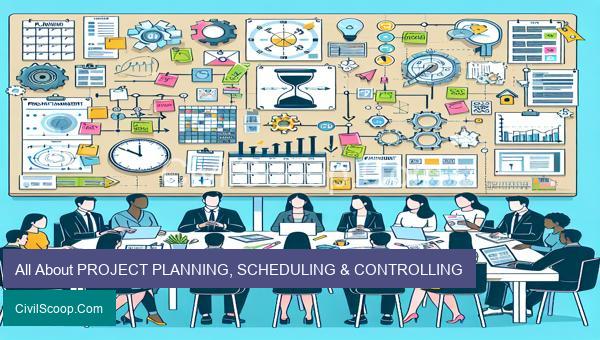
Project planning, scheduling, and controlling are essential elements of any successful project. They involve the process of strategizing, organizing, and managing the various aspects of a project to ensure its timely completion and achievement of desired outcomes. These tasks require careful coordination, communication, and effective utilization of resources to keep projects on track and within budget. In this article, we will delve into the details of project planning, scheduling, and controlling, discussing their importance, key principles, and best practices to help you stay on top of your projects and deliver successful results.
Table of Contents
PROJECT PLANNING, SCHEDULING & CONTROLLING
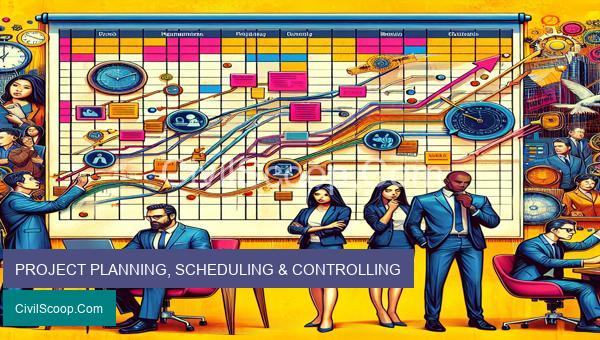
Project planning, scheduling and controlling are essential processes in civil engineering for the successful execution of a project. This involves creating a roadmap for the project, setting timelines, and implementing strategies to ensure that the project is completed within the given time and budget constraints while meeting the desired quality standards.
Project Planning:
Project planning is the first and crucial step in any civil engineering project. It involves setting the objectives of the project, defining the scope, and establishing a framework for its execution. This process requires the involvement of all stakeholders, including the client, engineers, architects, contractors, and suppliers. The main objectives of project planning are to identify the project requirements, assess the available resources, and create a realistic timeline for the project.
During this phase, a project manager utilizes various tools and techniques to develop a comprehensive project plan, including work breakdown structure (WBS), project network diagram, and Gantt chart. These tools help in visualizing the project scope, breaking down the work into manageable tasks, and estimating the time and resources required for each task. A well-defined project plan is essential for effective project management and helps in avoiding delays and cost overruns.
Project Scheduling:
Project scheduling is the process of creating a timeline for the entire project, including the start and end dates of each task. It involves determining the sequence of activities, their dependencies, and the resources required for each activity. The main purpose of project scheduling is to ensure that the project is executed in a timely and efficient manner.
In this phase, the critical path method (CPM) and program evaluation and review technique (PERT) are commonly used to identify the critical activities and determine the project duration. A project schedule serves as a baseline for measuring progress and also helps in identifying potential delays and taking corrective actions to mitigate them.
Project Controlling:
Project controlling is a continuous process that involves monitoring and controlling project progress to ensure that the project is proceeding as per the planned schedule and budget. It also involves identifying and managing any potential risks that may affect the project’s success. The project manager uses various tools such as progress reports, budget control, and quality control to assess and track the project’s performance.
Project controlling also involves effective communication among all stakeholders to ensure that everyone is on the same page and working towards achieving the project’s objectives. The project manager must also be proactive in identifying any potential deviations from the planned schedule and taking necessary corrective actions to bring the project back on track.
Benefits of Effective Project Planning, Scheduling and Controlling:
- Helps in identifying potential risks and implementing mitigation strategies
- Facilitates effective communication among project stakeholders
- Provides a roadmap for the project’s execution, ensuring timely completion
- Helps in optimizing resource allocation, thus reducing project costs
- Enables monitoring and control of project progress, thereby avoiding delays and cost overruns.
In conclusion, project planning, scheduling, and controlling are critical processes in civil engineering projects. They provide a structured approach to project management, leading to the successful completion of the project within the specified time, budget, and quality parameters. A well-planned and controlled project not only meets the client’s requirements but also leads to the overall success of the project team.
Conclusion
In conclusion, project planning, scheduling, and controlling are essential components of successful project management. Through careful planning, realistic scheduling, and effective controlling techniques, project managers can ensure that projects are completed on time, within budget, and to the satisfaction of all stakeholders. By utilizing various tools and techniques, such as Gantt charts, critical path analysis, and earned value management, project teams can effectively manage and track project progress, make necessary adjustments, and ultimately achieve project goals. It is crucial for project managers to understand the importance of these processes and to continuously improve and adapt them to the specific project needs. With proper project planning, scheduling, and controlling, organizations can increase their chances of successful project outcomes and achieve long-term success.