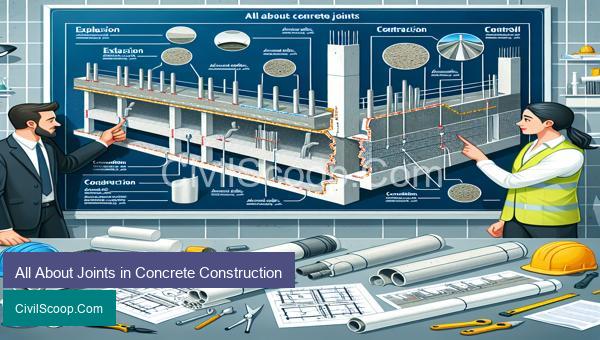
Concrete is one of the most widely used building materials, known for its strength and durability. However, one aspect of concrete construction that often goes unnoticed is the importance of joints. Joints play a critical role in maintaining the structural integrity and performance of concrete structures. In this article, we will explore all about joints in concrete construction, including their function, types, and design considerations. Understanding the significance of joints is vital for ensuring the longevity and safety of concrete structures, making it an essential topic for both architects and engineers. So, let’s delve into the world of joints in concrete construction.
Table of Contents
SPECIFICATIONS FOR JOINTS IN CONCRETE
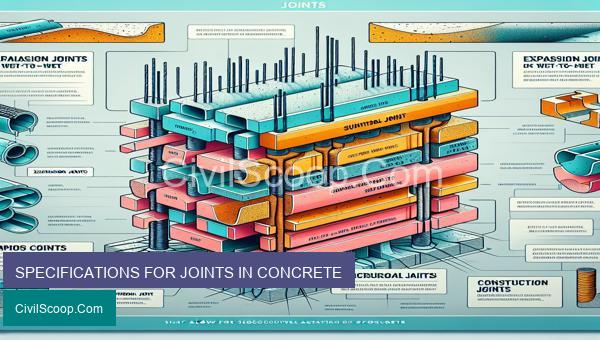
Joints are an essential component in concrete structures, serving to accommodate movement, distribute loads, and maintain structural integrity. They are designed to control cracks, prevent differential settlement, and allow for expansion and contraction due to changes in temperature and moisture. In order to ensure the longevity and functionality of concrete structures, the specifications for joints must be carefully considered and implemented.
1. Types of Joints:
There are various types of joints used in concrete structures, including construction joints, contraction joints, expansion joints, and isolation joints. Construction joints are used to divide the concrete into smaller sections to facilitate construction; contraction joints, also known as control joints, are used to control cracks caused by shrinkage; expansion joints are used to accommodate thermal expansion and contraction; and isolation joints are used to separate different parts of a structure that may have different load-bearing capacities.
2. Location of Joints:
The location of joints is a critical factor in the design of concrete structures. Joints must be placed in areas where cracks are most likely to occur, such as at changes in direction, thickness, or elevation. They should also be located at points of restraint, such as where the structure is connected to other elements or where embedded items such as pipes and columns are present.
3. Dimensions of Joints:
The dimensions of joints, including depth, width, and spacing, must be carefully calculated to ensure proper functionality. The joint depth should be at least equal to one-quarter of the slab thickness, and the joint width should be approximately one-eighth of the slab thickness. The spacing between joints should be in accordance with the ACI (American Concrete Institute) guidelines, which recommend a maximum spacing of 24 times the slab thickness.
4. Sealant Materials:
Joint sealants are used to provide a watertight seal and protect the joints from moisture, chemicals, and debris. The selection of appropriate sealant materials is crucial to the durability and performance of joints. Typically, silicone, polyurethane, or polysulfide sealants are used for interior and exterior joints, while butyl rubber is used for cold joints.
5. Joint Construction:
Proper construction of joints is essential to ensure their effectiveness. The concrete at the joint should be clean and free of debris before the placement of sealant materials. The sealant should be installed to manufacturer specifications, and it should be tooled to achieve the desired profile and prevent air pockets. The use of backer rods and bond breakers is also recommended for improved joint performance.
6. Maintenance and Repair:
Regular maintenance and timely repairs are necessary to ensure the long-term functionality of joints. Sealant materials must be inspected and replaced if damaged or deteriorated. Cracks must be repaired promptly to prevent further damage and ensure the joint’s effectiveness. Inadequate maintenance can lead to water infiltration, which can cause deterioration and structural issues.
Overall, joints in concrete structures must be designed and constructed in accordance with industry standards and best practices to ensure their effectiveness and longevity. Proper consideration of the type, location, dimensions, and materials is crucial to prevent premature failure and maintain structural integrity. Regular maintenance and timely repairs are also essential to ensure that joints continue to serve their intended purpose.
Conclusion
In conclusion, understanding the importance of joints in concrete construction is vital in ensuring the structural integrity and longevity of any concrete structure. From expansion and contraction due to temperature changes, to preventing cracking and allowing for movement, joints play a crucial role in the performance of concrete structures. Proper design, placement, and maintenance of joints are essential in achieving a durable and functional concrete construction. By following the guidelines and best practices for joint construction, we can create structures that stand the test of time and provide safe and reliable solutions for our built environment. As the field of concrete construction continues to evolve, it is imperative to stay updated on the latest techniques and strategies for proper joint construction to ensure the success of our projects.