
Fiber Reinforced Polymer (FRP) has emerged as a successful material for strengthening Reinforced Concrete (RCC) structures. Among various FRP techniques, NSM (Near-Surface Mounted) FRP has gained popularity due to its efficiency, cost-effectiveness, and non-intrusive nature. It involves the bonding of FRP laminates or bars in a groove created on the concrete surface near the tension zone of an RCC beam. This article aims to provide a comprehensive understanding of NSM FRP, its benefits, installation techniques, and its potential impact on the strength and durability of RCC beams.
Table of Contents
Use of NSM Fiber Reinforced Polymer For Strengthening of RCC Beam

Fiber Reinforced Polymer (FRP) materials have gained widespread use in civil engineering for the strengthening and retrofitting of structures. One of the commonly used FRP systems is Near-Surface Mounted (NSM) technique, which involves the bonding of FRP bars or strips to the surface of reinforced concrete members.
NSM FRP strengthening is primarily used for strengthening of RCC beams, which are common in most building structures. This method involves the use of FRP bars or strips, typically made of carbon or glass fibers, embedded into grooves or slots cut into the concrete surface of the beam. The adhesive used for bonding the FRP to the concrete surface is usually a high-strength epoxy resin.
The use of NSM FRP for strengthening of RCC beams has several advantages over traditional methods such as external bonding or external prestressing. Firstly, NSM FRP can provide more localized strengthening, as the bars or strips can be placed only in the areas requiring reinforcement. This minimizes the impact on the appearance and overall dimensions of the beam.
The bonding of FRP to the concrete surface also increases the efficiency of the reinforcement as it eliminates the slip between the concrete and the reinforcement, which is a common failure mechanism in traditional methods. This results in higher load-carrying capacity of the beam and improved structural performance.
Furthermore, the use of FRP bars or strips allows for a more flexible and tailored strengthening approach. More than one layer of FRP can be applied, and the orientation and spacing of the reinforcement can be customized to address specific structural deficiencies. This allows for a cost-effective solution as the reinforcement can be optimized based on the actual structural requirements.
NSM FRP strengthening also has a minimal impact on the existing structure, as the installation process is quick and involves minimal disturbance to the surrounding areas. This makes it an ideal choice for strengthening of existing structures that are in use.
In addition, FRP materials are non-corrosive, providing long-term durability to the strengthened structure. They are also lightweight and have high strength-to-weight ratio, which minimizes additional load on the structure. This is particularly beneficial in seismic-prone regions, where the added weight from traditional reinforcement methods can be a disadvantage.
However, the use of NSM FRP does have some limitations. The success of the strengthening technique is highly dependent on the surface preparation and the quality of the bond between the FRP and the concrete. Additionally, the long-term performance of FRP materials is still being studied, and more research is needed to determine their behavior over an extended period.
In conclusion, the use of NSM FRP for strengthening of RCC beams offers numerous advantages over traditional strengthening methods. It provides a flexible and cost-effective solution while ensuring improved structural performance and long-term durability. With continuous improvements in the technology and further research, NSM FRP will continue to be a widely used technique for strengthening of concrete structures in the civil engineering industry.
Near Surface Mounted FRP Technique Procedures:

Near Surface Mounted Fiber Reinforced Polymer (NSM FRP) technique is a widely used method in civil engineering for the strengthening and repair of deteriorated concrete structures. This technique involves bonding fiber reinforced polymer (FRP) bars or strips to the surface of a concrete element, usually on its tension side, in order to increase its load carrying capacity and durability.
The procedure for implementing NSM FRP technique can be divided into the following steps:
1. Assessment of structure: The first step is to assess the structural elements that require strengthening or repair. This involves a detailed inspection and evaluation of the existing concrete elements, including their dimensions, loading conditions, and level of deterioration.
2. Design: After the assessment, a detailed design is carried out to determine the required amount and type of NSM FRP reinforcement. This involves considering the structural load capacity, material properties, and compatibility between the concrete and FRP materials.
3. Surface preparation: The concrete surface must be cleaned thoroughly to remove any dirt, grease, or loose particles. It is then roughened using mechanical means such as sandblasting or water jetting to create a suitable bonding surface for the NSM FRP reinforcement.
4. Bonding adhesive application: A bonding adhesive, such as epoxy resin, is applied to the prepared concrete surface. This adhesive acts as the interface between the concrete and the FRP reinforcement and ensures a strong bond between the two.
5. FRP application: The FRP bars or strips are then installed onto the adhesive or embedded into the concrete surface, depending on the type of NSM FRP reinforcement used. Special care must be taken during the installation to ensure correct alignment and spacing of the reinforcement.
6. Curing: The bonding adhesive and the FRP reinforcement need to be cured according to the manufacturer’s instructions. This helps in achieving the required bond strength between the FRP and the concrete.
7. Quality control: Quality control measures, such as pull-out and load tests, should be conducted to ensure the effectiveness of the NSM FRP reinforcement. Any defects or discrepancies should be addressed and rectified before proceeding with the strengthening process.
8. Additional measures: Depending on the design and structural requirements, additional measures such as anchoring of the FRP reinforcement, may be required for effective strengthening and repair.
9. Finishing: Once the NSM FRP reinforcement is fully cured, the surface can be finished using appropriate methods, such as finishing mortar, to achieve a smooth and aesthetically pleasing surface.
NSM FRP technique offers several advantages compared to traditional strengthening methods such as externally bonded FRP reinforcement. These include the ability to accommodate bending and shear stresses, improved durability, and minimal impact on the appearance and functionality of the structure.
In conclusion, NSM FRP technique is a reliable and efficient method for strengthening and repairing concrete structures. It requires careful planning, skilled execution, and strict quality control measures to ensure its effectiveness and durability.
Properties of FRP bars:
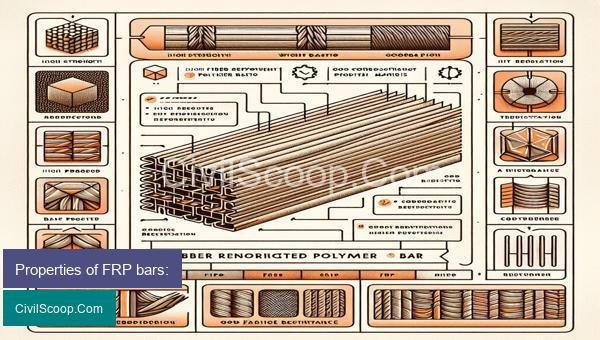
FRP (Fiber Reinforced Polymer) bars are gaining popularity in the construction industry due to their numerous advantages over traditional steel bars. These bars are made up of fibers, usually glass or carbon, which are embedded in a polymer matrix such as epoxy or vinyl ester resin. They possess high strength, lightweight, corrosion resistance, and non-magnetic properties, which make them suitable for a wide range of applications. Let’s take a closer look at the properties of FRP bars.
1. High strength to weight ratio:
FRP bars have a high strength to weight ratio, which means they can carry heavy loads with less weight compared to traditional steel bars. This makes them ideal for use in structures where weight is a critical factor, such as bridges, highways, and high-rise buildings.
2. Non-corrosive:
One of the major advantages of FRP bars is their resistance to corrosion. Unlike steel, they do not rust when exposed to moisture, chemicals, or saltwater. This makes them ideal for use in harsh environments, such as marine structures, wastewater treatment plants, and chemical processing plants.
3. Non-magnetic:
FRP bars are non-magnetic, which makes them suitable for use in sensitive areas, such as MRI rooms, IT server rooms, and military installations. They are also beneficial in bridge construction, as they do not interfere with the operation of electronic navigational systems.
4. High durability:
FRP bars have a longer lifespan compared to traditional steel bars due to their resistance to corrosion and other environmental factors. They also have a high impact and fatigue resistance, making them suitable for use in seismic zones and high traffic areas.
5. Easy to handle and install:
FRP bars are lightweight and easy to handle, which reduces labor costs and installation time. They can also be cut, bent, and molded onsite, making them ideal for use in complex geometries and shapes.
6. Thermal and electrical insulation:
FRP bars have low thermal and electrical conductivity, making them suitable for applications where heat or electricity needs to be controlled, such as in electrically sensitive structures and thermal insulation systems.
7. Eco-friendly:
FRP bars are eco-friendly as they are non-toxic, non-hazardous, and do not emit any harmful fumes during installation or in service. This makes them a sustainable alternative to traditional steel bars and contributes to green building practices.
In conclusion, FRP bars possess several properties that make them a suitable and advantageous option for various applications in the construction industry. Their high strength, corrosion resistance, durability, and ease of handling make them a preferred choice for engineers and architects worldwide.
Advantages of Near Surface Mounted Fiber Reinforced Polymers Technique:

Near Surface Mounted Fiber Reinforced Polymers (NSM-FRP) technique is a relatively new method for strengthening and repairing concrete structures. It involves the use of fiber reinforced polymer (FRP) strips or bars that are embedded into the concrete surface to enhance its strength and durability. This technique has gained popularity in recent years due to its many advantages over traditional strengthening methods.
1. Increased Flexural and Shear Strength:
The main advantage of using NSM-FRP technique is that it significantly increases the flexural and shear strength of the concrete structure. The FRP bars or strips are bonded to the concrete surface, creating a strong composite section that enhances the overall structural capacity. This is especially beneficial for older structures that may have deteriorated over time or do not meet the current design codes.
2. Durable and Long-lasting:
FRP materials used in NSM technique are known for their excellent durability. They are resistant to corrosion, chemicals, and severe weather conditions, making them ideal for reinforcing concrete structures in harsh environments. This helps to extend the life of the structure and reduce the need for frequent repairs and maintenance.
3. Easy and Quick Installation:
Compared to other strengthening techniques, the NSM-FRP technique is relatively easy and quick to install. The FRP strips or bars can be easily cut to the required lengths and bonded to the concrete surface using adhesives. This reduces the need for heavy equipment and minimizes disruptions to the structure, making it a cost-effective option.
4. Economical:
The NSM-FRP technique is a cost-effective solution for strengthening concrete structures. The materials used are lightweight, which reduces the load on the structure and eliminates the need for additional structural support. Moreover, the quick installation process can result in significant cost savings on labor and equipment.
5. Versatile:
The NSM-FRP technique can be used for a variety of strengthening applications, including increasing the load-carrying capacity, repairing damaged or cracked structures, and reinforcing joints and intersections. The flexibility of FRP materials allows for customized solutions to suit different structural requirements.
6. Non-Destructive:
The NSM-FRP technique is a non-destructive method, meaning it does not cause damage or disruption to the existing structure. This is an advantage over other traditional strengthening techniques that may involve drilling into the concrete or adding additional structural members.
In conclusion, the Near Surface Mounted Fiber Reinforced Polymers technique offers numerous advantages over traditional strengthening methods. It is a durable, cost-effective, and versatile solution that can significantly improve the performance and lifespan of concrete structures. With its many benefits, it is expected to gain even more popularity in the construction industry in the coming years.
Disadvantages of NSM FRP Technique:

NSM (Near-Surface Mounted) FRP (Fiber Reinforced Polymer) technique is a widely used method in civil engineering for strengthening and repairing reinforced concrete structures. While this technique has many advantages, it also has certain disadvantages that must be considered before using it.
1. High cost: One of the main drawbacks of NSM FRP technique is its high cost. The materials used in this method, such as carbon or glass fibers and epoxy resins, are expensive. Additionally, the installation process requires skilled labor, which further increases the cost.
2. Expertise required: The installation of NSM FRP requires a high level of expertise and technical knowledge. The process involves drilling precise holes in the concrete, filling them with epoxy, and then inserting the FRP strips or bars. If not done correctly, it can compromise the effectiveness of the strengthening or repair.
3. Durability concerns: The long-term durability of NSM FRP is still an area of concern. While these materials are resistant to corrosion, they may degrade over time due to environmental factors such as UV exposure and moisture. This can affect the overall performance and effectiveness of the technique.
4. Limitations in application: NSM FRP technique is not suitable for all types of structures and situations. It is more commonly used for repairing and strengthening members such as beams and columns, and may not be effective for structures with complex geometries or heavily corroded reinforcements.
5. Time-consuming process: The installation process of NSM FRP is time-consuming, especially for larger structures. It involves several steps such as surface preparation, drilling, epoxy injection, and FRP installation, which can take a significant amount of time, causing inconvenience to building occupants.
6. Aesthetic concerns: The NSM FRP technique involves drilling into the concrete surface, which can affect the visual appearance of the structure. This may be a concern for buildings with more aesthetic value, such as historical structures or architectural landmarks.
7. Limited research: Compared to other strengthening methods, the NSM FRP technique is relatively new and has fewer studies and research done on its long-term performance. This may cause hesitation among engineers and building owners in using this technique for critical structures.
In conclusion, while NSM FRP technique has advantages such as high strength, minimal intrusion, and compatibility with smaller structures, its disadvantages must also be carefully evaluated. The high cost, technical expertise, durability concerns, and limitations in application may make it a less favorable choice for some projects. Therefore, thorough analysis and consideration of these drawbacks is necessary before deciding to use this technique.
Design of Near Surface Mounted Fiber Reinforced Polymers Technique:

The Near Surface Mounted Fiber Reinforced Polymers (NSM FRP) technique is a method used in civil engineering for strengthening and repairing concrete structures. This technique involves attaching fiber reinforced polymer (FRP) bars or sheets to the near surface of a concrete element, providing additional tensile strength and improving its overall structural integrity.
Designing an effective NSM FRP solution requires a thorough understanding of the characteristics and behavior of both FRP materials and the concrete element being reinforced. Here are some key considerations in the design process:
1. Determining design requirements: The first step in designing an NSM FRP solution is to determine the specific needs and goals for the structure. This includes understanding the loading conditions, the type and severity of damage, and the expected service life.
2. Selection of FRP materials: The type, size, and shape of the FRP reinforcement should be carefully considered based on the design requirements. Commonly used FRP materials include carbon, glass, and aramid fibers, with carbon being the most widely used due to its high strength and stiffness.
3. Bonding mechanism: The success of NSM FRP reinforcement relies heavily on the bond between the FRP and the concrete substrate. The design should account for the mechanical and chemical bonding mechanisms between the two materials, as well as environmental factors such as moisture and temperature changes.
4. Arrangement and spacing of reinforcement: The arrangement and spacing of NSM FRP reinforcement depend on the type and severity of the loading conditions, as well as the geometry of the structure. Proper spacing and alignment of the reinforcement will ensure that the load is evenly distributed and that the FRP is fully utilized.
5. Anchorage systems: In order to transfer the load from the FRP reinforcement to the concrete element, anchorage systems are used at the ends of the FRP strips or near the corners of sheets. The type and design of the anchorage should be carefully selected to provide adequate strength and prevent premature failure.
6. Durability considerations: NSM FRP systems are subjected to various environmental and chemical factors that can affect their performance over time. Designers should consider factors such as corrosion, UV exposure, and chemical or temperature fluctuations, and select materials and design details that can withstand these conditions.
7. Quality control and testing: Proper quality control and testing procedures are crucial to ensure the effectiveness and durability of the NSM FRP reinforcement. These may include pull-out tests, bond tests, and quality checks during installation to ensure that the reinforcement is properly bonded and placed according to design specifications.
In conclusion, the design of NSM FRP reinforcement requires a comprehensive understanding of the structure and its loading conditions, as well as proper selection and placement of materials and anchorage systems. By addressing these key design considerations, NSM FRP can provide an effective and long-lasting solution for strengthening and repairing concrete structures.
Factors affecting design of NSM Fiber Reinforced Polymer Concrete:

NSM (Near-Surface Mounted) Fiber Reinforced Polymer (FRP) concrete is a type of strengthening technique used in concrete structures by embedding FRP reinforcing bars or strips into the concrete near its surface. This method is gaining popularity due to its high strength, durability, and cost-effectiveness. However, the design of NSM FRP concrete involves a number of factors that need to be carefully considered in order to ensure the efficient and safe functioning of the structure. Some of the important factors affecting the design of NSM FRP concrete are discussed below:
1. Type and properties of FRP: The type and properties of the FRP material used for NSM strengthening can have a significant impact on the design. Different types of FRP, such as carbon, glass, or aramid, have different tensile strengths, elastic modulus, and failure modes. These properties need to be carefully analyzed and incorporated into the design to ensure that the reinforcement is capable of withstanding the required loading conditions.
2. Stress transfer mechanism: In NSM FRP concrete, the stress is transferred from the FRP reinforcement to the concrete through bonding. The effectiveness of this stress transfer mechanism depends on several factors, such as the type of adhesive used, surface preparation, and insertion depth of the reinforcement. The design should consider these factors to ensure proper bonding and stress transfer between the FRP and the concrete.
3. Service and failure loads: The design of NSM FRP concrete should consider both the service loads and the failure loads. Service loads are the normal loads that the structure is expected to withstand during its lifetime, while failure loads are extreme loads that may cause structural failure. The reinforcement should be designed to withstand both types of loads, considering factors such as the type of structure, its purpose, and the loading conditions.
4. Failure modes: The type of failure that may occur in the structure should also be considered during the design. For example, FRP reinforcement may fail due to debonding, rupture, or excessive strains. These failure modes should be analyzed and incorporated into the design to ensure that the structure can effectively resist them.
5. Environmental factors: The design of NSM FRP concrete should also consider the environmental factors that the structure will be subjected to. These include temperature changes, moisture, and exposure to chemicals. The type of FRP material and the adhesive used should be selected based on their ability to withstand these environmental conditions.
6. Quality control: Quality control is an essential aspect of NSM FRP concrete design. The bonding between the FRP and the concrete, as well as the quality of the reinforcement and adhesive, should be regularly monitored to ensure that the structure meets the design requirements.
7. Design codes and standards: Design of NSM FRP concrete should follow relevant design codes and standards specific to the region or country. These codes provide guidelines and requirements for the design, construction, and testing of FRP concrete structures, ensuring their safety and reliability.
In conclusion, the design of NSM FRP concrete is a complex process that requires careful consideration of various factors. It is essential to thoroughly assess these factors and incorporate them into the design to ensure the safe and efficient functioning of the structure. It is also important to regularly monitor the structure during and after construction to ensure that it meets the design requirements.
Conclusion
In conclusion, the NSM Fiber Reinforced Polymer (FRP) technique has proven to be an effective and efficient method for strengthening RCC beams. It offers numerous advantages such as high strength, durability, and ease of installation, making it a preferred choice in the construction industry. The use of NSM FRP has been extensively researched, and its performance has been validated through numerous studies and real-world applications. This innovative technique has the potential to extend the service life of structures and improve their load-carrying capacity, making it a valuable asset for infrastructure projects. With continued advancements and improvements in NSM FRP technology, it is expected that this technique will continue to play a significant role in strengthening and enhancing the durability of RCC beams in the years