
Solid waste disposal and management is a crucial aspect of maintaining a healthy and sustainable environment. With the ever-increasing global population and consumerism, the generation of solid waste has also reached unprecedented levels. The improper handling and disposal of solid waste not only pose a threat to public health but also pollute the air, land, and water. In this article, we will delve into the topic of solid waste disposal and management, exploring its key components, challenges, and solutions. By understanding the intricacies of this critical issue, we can take informed steps towards a cleaner and greener future.
Table of Contents
Methods of Solid Waste Disposal and Management
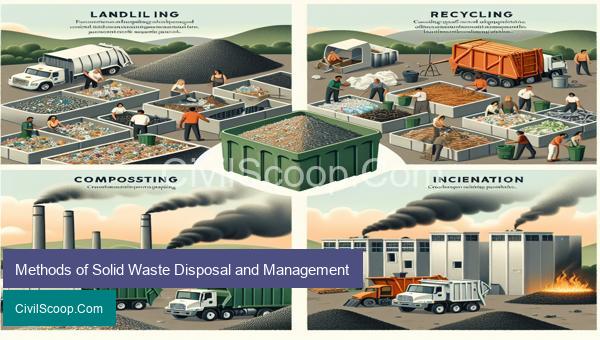
Solid waste disposal is an essential aspect of civil engineering as it involves the proper handling, treatment and disposal of waste materials generated from various sources. Solid waste disposal and management are crucial for maintaining the environmental and public health. It includes collecting, transporting, treating, and disposing of solid waste materials in an appropriate manner. Here are some of the commonly used methods of solid waste disposal and management:
1. Landfill
Landfill is one of the oldest and most widely used methods of solid waste disposal. It involves burying the waste in a designated area of land, which is then covered with layers of soil. Landfill sites must be carefully engineered to prevent groundwater contamination and to minimize the impact on the environment. Modern landfill sites use liners, leachate collection systems, and daily cover to minimize contamination and reduce odors.
2. Incineration
Incineration is the process of burning waste materials in a controlled environment to convert them into ash, gas, and heat. This method is suitable for non-recyclable waste and can reduce the volume of waste by 90%. However, incineration also produces air pollution and requires strict regulations and monitoring to prevent the release of harmful emissions.
3. Composting
Composting is a natural process of decomposing organic waste materials by microorganisms to produce nutrient-rich soil. This method is suitable for food waste, yard waste, and other biodegradable materials. Composting can reduce the volume of waste, prevent methane gas emissions from landfills, and produce a valuable product that can be used for gardening and farming.
4. Recycling
Recycling is the process of collecting, sorting, and processing waste materials to produce new products. This method reduces the amount of waste sent to landfills, conserves natural resources, and saves energy. Commonly recycled materials include paper, plastic, glass, and metal. Recycling also creates job opportunities and contributes to the economy.
5. Plasma Gasification
Plasma gasification is a relatively new method of solid waste disposal that uses high temperatures and a gasifier to convert waste into synthetic gas (syngas). This method is suitable for hazardous and toxic waste as it can destroy harmful substances and produce usable energy.
6. Pyrolysis
Pyrolysis is a thermal decomposition process that uses high temperatures in the absence of oxygen to convert waste materials into gas and charcoal. This method can convert almost all types of waste into useful products, such as fuels and chemicals. It is an emerging technology that has the potential to increase resource recovery and reduce waste volume.
In conclusion, solid waste disposal and management require a combination of different methods to be effective and sustainable. The selection of the appropriate method depends on the type and amount of waste, available infrastructure and resources, and environmental considerations. A well-designed and comprehensive waste management plan is essential to ensure the proper disposal of waste and to protect the environment and public health.
Conclusion
In conclusion, proper solid waste disposal and management play a crucial role in protecting our environment and promoting public health. From understanding the types of waste and their impact on the environment, to implementing efficient disposal methods and encouraging responsible consumer habits, we can make a significant difference in reducing the negative effects of solid waste. By working together and continuously educating ourselves and others, we can create a cleaner, healthier, and more sustainable future for generations to come. Let us all do our part in properly managing and disposing of solid waste, and make a positive impact on our planet.