
Concrete topping slab is gaining immense popularity in the construction industry due to its numerous benefits and versatility. This innovative flooring product offers a cost-effective option for resurfacing damaged or worn-out concrete surfaces, while also providing a durable and customizable finish. From commercial spaces to residential properties, the use of concrete topping slabs has become increasingly prevalent in various construction projects. In this article, we will delve into all aspects of this material, including its composition, installation process, and various applications, to provide a comprehensive guide on all things concrete topping slab.
Table of Contents
What is Concrete Topping Slab
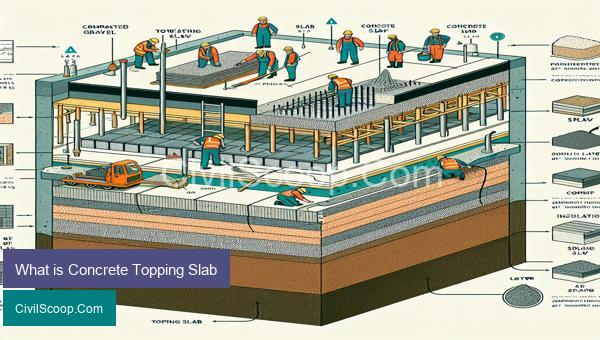
Concrete topping slab, also known as a wearing course or a topping screed, is a layer of concrete that is applied on top of an existing concrete surface to enhance its properties and provide a smooth and level finish. It is commonly used in construction projects such as high-rise buildings, parking garages, and industrial floors.
There are several reasons why a concrete topping slab may be necessary. One of the main reasons is to improve the structural integrity of the existing concrete surface. Over time, the original concrete surface may become damaged or weakened due to heavy use, exposure to extreme weather conditions, or other factors. The topping slab can act as a protective layer that reinforces the existing structure, making it more durable and able to withstand heavy loads.
Another reason for using a topping slab is to level or smooth out an uneven or rough surface. This is particularly important in areas where the surface needs to be flat for safety reasons, such as in warehouses or factories. The toppings slab can also be used to correct surface imperfections, such as cracks, spalling or unevenness. It can also provide a level base for the installation of flooring materials such as tiles, carpet, or other types of finish.
The construction process for a topping slab typically involves cleaning and prepping the existing concrete surface to ensure proper adhesion of the new layer. Any surface defects or cracks may also need to be repaired before the topping slab is applied. Depending on the project requirements, the thickness of the topping slab can range from 25mm to 100mm or more. The type of topping material used may vary, but it is usually a concrete mix with additives to improve its strength, durability, and workability.
There are also different methods of applying a topping slab, depending on the size and complexity of the project. For smaller areas, a hand application may be possible, while for larger areas, a mechanical screed may be used to ensure an even and consistent thickness. It is crucial to carefully match the topping material and application method to the project requirements to ensure a high-quality finished product.
In conclusion, a concrete topping slab is an essential component of many construction projects, offering various benefits such as structural reinforcement, surface leveling, and improved durability. As a civil engineer, it is crucial to understand the proper application and construction methods of a topping slab to ensure the success and longevity of a project.
Types of Concrete Topping Slab
Concrete topping slab, also known as concrete overlay, is a type of concrete layer that is applied on top of an existing concrete surface to improve its appearance and durability. It is commonly used in both commercial and residential buildings to repair, level, or enhance the existing concrete slab.
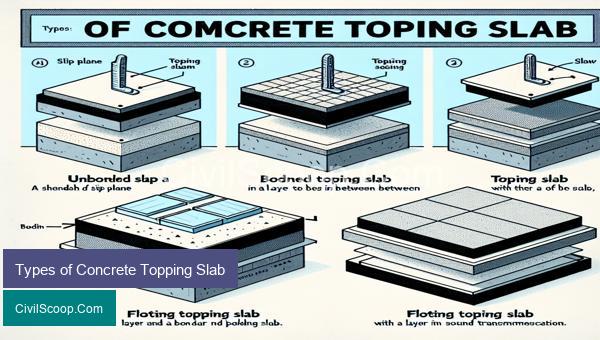
There are various types of concrete topping slabs that are available in the market, depending on their application, design requirements, and desired end result. Below are the four common types of concrete topping slabs:
1. Bonded Topping Slab:
This type of topping slab is applied directly on the existing concrete surface using a bonding agent to improve adhesion. It is commonly used to provide a smooth and level surface for floor coverings, such as tiles, carpets, or vinyl. Bonded topping slabs are usually applied in thin layers, ranging from ¼ inch to 2 inches, depending on the surface condition and desired end result.
2. Unbonded Topping Slab:
Unbonded topping slab is not directly bonded to the existing concrete surface, but rather separated by a layer of bonded insulation or membrane. This type of topping slab is commonly used in areas where the existing concrete surface is cracked, damaged, or uneven. The unbonded layer allows the topping slab to move independently, providing a smooth, crack-free surface. It is often used in garage floors, industrial floors, and outdoor pavements.
3. Floating Topping Slab:
Floating topping slab, also known as floating screed, is a type of concrete topping that is used to level and smooth out large areas of substrate. It is commonly used in industrial buildings, where the substrate may have a high degree of variation and needs to be leveled quickly and efficiently. Floating topping slabs are applied in thick layers, usually 3 to 6 inches, and are reinforced with steel mesh or fibers to increase strength and prevent cracking.
4. Waterproof Topping Slab:
Waterproof topping slab is a specialized type of topping that is designed to seal and protect concrete surfaces from water damage. It is commonly used in areas with high moisture, such as basements, balconies, and swimming pools. Waterproof topping slabs are usually applied in multiple layers, using special waterproofing additives and sealants to ensure a watertight finish.
In conclusion, concrete topping slabs are versatile and cost-effective solutions for repairing, leveling, and enhancing the existing concrete surfaces. The type of topping slab chosen depends on the condition of the substrate, the intended use of the surface, and the desired end result. Proper installation and maintenance of topping slabs can extend the lifespan of the concrete surface, providing a durable and aesthetically pleasing finish.
Uses of Concrete Topping Slab
Concrete topping slab, also known as a concrete overlay, is a layer of concrete that is placed over an existing surface to improve its strength and durability. It has a wide range of uses in various construction projects and has become a popular choice for various applications due to its versatility and cost-effectiveness. In this article, we will discuss the uses of concrete topping slab in civil engineering.
1. Repair and Rehabilitation:
One of the main uses of concrete topping slab is for repair and rehabilitation purposes. It can be used to repair and restore a damaged or deteriorated concrete surface, such as a road, pavement, or bridge deck. Topping slab can help to cover up cracks, potholes, and other damages, enhancing the surface’s structural integrity and longevity.
2. Increase Load-Bearing Capacity:
In some cases, existing concrete surfaces may not have the required load-bearing capacity to support heavy traffic or equipment. Topping slab can be used to increase the load-bearing capacity of the surface, making it suitable for heavy-duty applications. This is commonly seen in industrial facilities, where topping slabs are applied to warehouse floors to withstand the weight of heavy forklifts and equipment.
3. Resurfacing:
Concrete topping slab can be used to resurface an old or deteriorated concrete surface, giving it a fresh new look. This is a cost-effective alternative to completely replacing the existing surface. Topping slab can be colored and textured to create a variety of design options, making it an attractive option for driveways, patios, pool decks, and other residential applications.
4. Waterproofing:
Topping slab can be used to create a waterproof surface, making it a popular choice for roof decks, balconies, and other outdoor areas. By using specialized waterproofing admixtures and sealants, topping slab can protect the underlying structure from water damage and moisture intrusion.
5. Concrete Pumping:
Topping slab is often used in concrete pumping operations to cover up the pipeline and prevent damage to the pipeline joints and the surrounding area. It also provides a smooth surface for the pump to operate on, ensuring the safety of the workers and the efficiency of the pumping process.
6. Fireproofing:
In high-rise buildings, topping slab is used to provide fireproofing to the structural steel beams and columns. It is sprayed on the steel surface to create a protective layer, preventing the steel from weakening and collapsing in case of a fire. This application is essential for the safety of the building and its occupants.
7. Sound Insulation:
Topping slab can also act as a sound barrier, reducing the transmission of noise between floors in a building. It is commonly used in multi-story residential and commercial buildings to create a comfortable and quieter living and working environment.
In conclusion, concrete topping slab has a wide range of uses in civil engineering, from repair and rehabilitation to decorative and protective applications. It is a cost-effective and efficient solution for various construction projects, making it a popular choice among engineers and builders.
Conclusion
In conclusion, concrete topping slab is a highly versatile and durable solution for enhancing the look and functionality of any surface. It offers a wide range of benefits including improved strength, durability, and design options. Whether you are looking to repair and renew existing concrete surfaces or create a new one, concrete topping slab is a cost-effective and efficient choice. With its customizable options, it can cater to a variety of needs and requirements. So, the next time you consider any concrete project, consider the versatility and durability of concrete topping slab. It is sure to exceed your expectations and provide a long-lasting solution for all your concrete needs.