
Welding plays a crucial role in the construction of structural steel, making it a fundamental process in the building and manufacturing industry. However, the quality and durability of welded joints can greatly impact the safety and strength of structures. This is where inspection and testing of welds comes into the picture. It is a critical step in ensuring the integrity and reliability of welded connections in structural steel. In this article, we will delve into the various aspects of inspection and testing of welds in structural steel, including its importance, methods, and guidelines for ensuring quality welds. Whether you are a construction professional or simply interested in learning more about the welding process, this article will provide valuable insights into the world of inspection and testing of welds in structural steel
Table of Contents
INSPECTION & TESTING OF WELDS IN STRUCTURAL STEEL
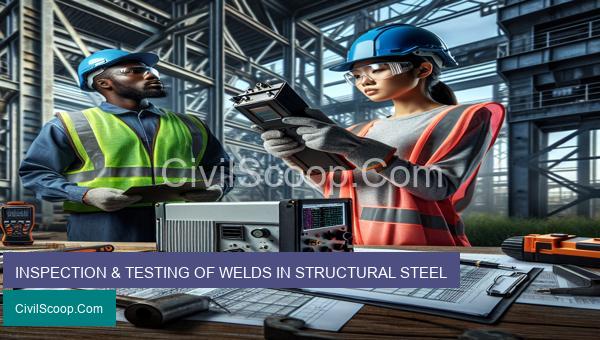
Inspection and testing of welds in structural steel is a crucial process in ensuring the safety and integrity of any structure. Welds are used to join different pieces of steel together, and any defects or flaws in the weld can weaken the overall structure, potentially leading to catastrophic failures. Therefore, it is essential to conduct detailed and thorough inspections and testing of welds to detect any potential issues that may compromise the structural integrity.
The inspection and testing of welds in structural steel can be divided into two categories: visual inspection and non-destructive testing (NDT).
Visual Inspection:
Visual inspection is the most basic form of inspection and involves a direct visual examination of the weld. A qualified weld inspector examines the weld for any visual defects, such as surface cracks, porosity, poor fusion, undercutting, and inadequate root penetration.
The inspector also checks for proper joint geometry and overall appearance of the weld. Any visible defects are marked and recorded for further evaluation and corrective actions. Visual inspection is a critical first step in the process as it helps detect issues that could be missed by other testing methods.
Non-Destructive Testing (NDT):
NDT methods use various techniques to evaluate the integrity and quality of the weld without damaging the structure. NDT techniques are highly sensitive and can detect both surface and subsurface defects. Some common methods used for NDT of welds in structural steel are:
1. Ultrasonic Testing (UT): In this method, high-frequency sound waves are used to detect any flaws or defects. UT is useful in detecting internal defects like cracks, porosity, and inclusions. The result is displayed as a visual image, known as a B-scan, which helps determine the size, location, and orientation of the defect.
2. Radiographic Testing (RT): RT uses X-rays or gamma rays to penetrate the steel and produce an image on a radiograph film. These images can detect defects such as cracks, voids, and porosity. RT is suitable for detecting defects in complex welding joints and thick sections.
3. Magnetic Particle Testing (MT): MT is used to detect surface and near-surface defects in ferromagnetic materials. A magnetic field is applied to the weld, and iron oxide particles are applied to the surface. If there is a defect, the particles will accumulate at the flaw location, making it visible to the inspector.
4. Liquid Penetrant Testing (PT): PT is used to detect surface defects in non-porous materials. A dye solution is applied to the weld, which penetrates any defects, making them visible under UV light.
Inspection and Testing Procedure:
The inspection and testing of welds in structural steel must be conducted following a specific procedure to ensure accuracy and reliability. The American Welding Society (AWS) has established standards and procedures for conducting inspections and tests.
The first step is to identify the test location and set up the equipment required for inspection. Then, the welds are cleaned of any contaminants and inspected visually to detect any surface defects. After that, NDT methods are employed to detect any internal or subsurface defects.
The results are then evaluated to determine the severity of any defects and compare them to the established acceptance criteria. If any defects are found that do not meet the acceptance criteria, corrective actions are taken, and the weld is re-inspected after repairs have been made.
Conclusion:
In conclusion, the inspection and testing of welds in structural steel are crucial processes to ensure the safety and integrity of
Conclusion
In conclusion, the inspection and testing of welds in structural steel is a crucial process that ensures the safety and integrity of structures. It involves various techniques and methods to detect and evaluate any defects or imperfections in the welds before they cause catastrophic failures. By following proper welding procedures, conducting thorough inspections, and utilizing advanced testing methods, welders and engineers can ensure that welded structures are built to the highest standards and will withstand the demands of their intended use. The importance of proper inspection and testing cannot be overstated, as it not only ensures the quality of the welds but also guarantees the safety of individuals and the longevity of structures. We must continue to prioritize and invest in this aspect of structural welding to maintain the highest levels of safety and