
Concrete is a crucial material in the construction industry, used in a variety of structures from buildings to roads. While it may seem like a simple mixture of cement, water, and aggregates, the quality and durability of concrete is highly dependent on the core extraction and testing processes. These procedures are essential in assessing the strength, integrity, and overall performance of concrete, and are critical in ensuring the safety and longevity of structures. In this article, we will delve into the world of core extraction and testing of concrete, exploring its importance, methods, and various factors that can affect the results. Whether you are a construction professional or simply interested in learning more about this fascinating process, this article will give you a comprehensive understanding of core extraction and testing of concrete.
Table of Contents
TIPS FOR CORE EXTRACTION & TESTING OF CONCRETE
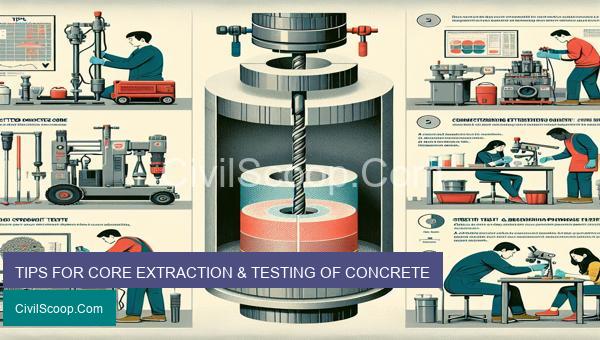
Core extraction and testing of concrete is a crucial process in civil engineering projects as it helps in determining the quality and strength of the concrete. It involves taking a cylindrical sample of concrete from an existing structure or freshly cast concrete and subjecting it to various tests for evaluation. Here are some tips for efficient and accurate core extraction and testing of concrete:
1. Use specialized equipment: The first and foremost tip is to use specialized equipment for core extraction. This includes a core drill, core barrels, water pump, and a sample extraction tool. These tools are designed specifically for this purpose and ensure proper extraction without causing any damage to the surrounding structure.
2. Identify the right location for extraction: Before starting the extraction process, it is crucial to identify the correct location for extraction. This is usually based on the type of testing required and also considering the structural integrity of the building or element.
3. Follow proper safety measures: Core extraction and testing involve the use of heavy machinery and can be hazardous if proper safety measures are not taken. It is essential to wear protective gear such as gloves, safety goggles, and a hard hat during the process.
4. Use the correct size of drill bit: The size of the core drill bit should be carefully chosen based on the size of the concrete structure and the testing requirements. Using a smaller or larger drill bit can result in inaccurate core samples and affect the testing results.
5. Take multiple core samples: It is recommended to take multiple core samples from different locations for more accurate testing results. The samples should be evenly distributed throughout the structure to get a representative sample.
6. Handle the core samples carefully: Once the core samples are extracted, they should be handled with care to avoid any damage. Any cracks or chips on the sample can affect the testing results. It is essential to handle the samples with gloves and store them in a dry and temperature-controlled environment.
7. Follow standard testing procedures: The core samples should be tested according to standard procedures, such as ASTM standards, to ensure accurate results. These standards provide guidelines for sample preparation, compression testing, and other necessary tests.
8. Record and analyze the test results: It is crucial to maintain a record of the testing results for future reference. The test results should be analyzed to determine the strength and quality of the concrete and to identify any potential issues.
9. Take corrective measures if necessary: If the test results show unsatisfactory results, it is essential to take corrective measures to improve the quality and strength of the concrete structure. This may include using higher grade concrete or reinforcing with additional steel.
In conclusion, core extraction and testing of concrete require careful planning and implementation to obtain accurate and reliable results. Following these tips can ensure a successful testing process that can help in evaluating the structural integrity and durability of concrete structures.
Conclusion
In conclusion, core extraction and testing of concrete are fundamental processes that play a crucial role in ensuring the quality and strength of concrete structures. It involves extracting a cylindrical sample from a concrete structure and conducting various tests to assess its compressive strength, durability, and other important properties. This information is vital for the proper design, construction, and maintenance of concrete structures. Furthermore, the advancements in technology have led to the development of non-destructive testing methods, making the process more efficient and cost-effective. With the increasing demand for durable and safe infrastructure, the importance of core extraction and testing of concrete cannot be overstated. It is a crucial aspect of the construction industry and must be executed with utmost precision and accuracy to ensure the longevity and safety of our