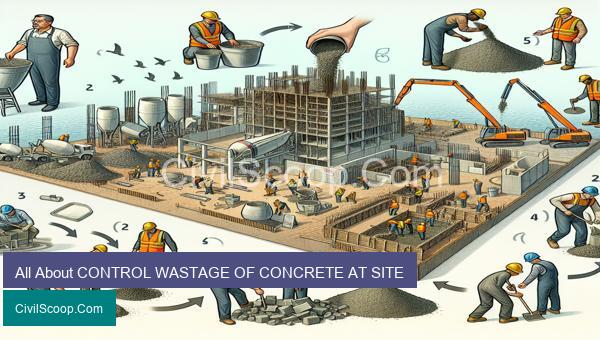
Concrete is one of the most widely used construction materials in the world, making it an integral part of any building project. However, it is not only important to ensure that the right amount of concrete is used, but also that it is used efficiently. The wastage of concrete on construction sites not only results in financial losses, but also has detrimental effects on the environment. Therefore, it is crucial to have proper control measures in place to minimize the wastage of concrete at construction sites. In this article, we will delve into the various aspects of controlling concrete wastage at the site, including causes of wastage, its impact, and steps that can be taken to effectively manage and reduce it. So, let us explore the world of controlling concrete
Table of Contents
HOW TO CONTROL WASTAGE OF CONCRETE AT SITE?

Concrete is the most widely used material in the construction industry. It is known for its strength, durability, and versatility. However, it is also a material that can easily be wasted if proper control measures are not taken. Wastage of concrete can not only lead to higher costs but also harm the environment. Therefore, it is crucial to control and minimize the wastage of concrete at construction sites. Here are some ways to control wastage of concrete at site:
1. Accurate estimation and ordering: The first step in controlling wastage of concrete is accurate estimation and ordering. This involves careful planning and calculation of the required quantity of concrete based on the project design and specifications. It is essential to take into account factors such as the type of structure, size, and shape of elements, and allowance for spillage and shrinkage.
2. Proper storage and handling: Concrete should be stored and handled properly to prevent wastage. It should be stored in a covered area to protect it from moisture, extreme weather conditions, and contamination. The storage area should also be free from debris and other materials that could mix with the concrete and affect its quality. Concrete should also be handled with care during transportation and pouring to avoid spillage.
3. Use of appropriate equipment: Using the right equipment and tools can help in controlling wastage of concrete. For example, a pump or conveyor belt can be used to transport concrete to higher levels, reducing the need for manual handling and potential spillage. Mechanical vibrators can also be used to consolidate the concrete and eliminate air pockets, thus reducing the chances of wastage.
4. Reuse and recycling: Reusing and recycling of concrete can significantly reduce wastage. Concrete waste can be crushed and used as aggregate in other construction projects such as road construction. This not only reduces the disposal of concrete waste but also saves natural resources and energy used in manufacturing new aggregates.
5. Train and educate workers: Proper training and education of workers can also help in controlling wastage of concrete. Workers should be trained in handling and pouring techniques to minimize spillage, and they should also be made aware of the importance of conserving materials and reducing waste.
6. Supervision and monitoring: Regular supervision and monitoring of the construction site can help in identifying areas where concrete wastage is occurring and taking corrective measures. It is also important to track the actual usage of concrete against the estimated quantity to identify any discrepancies and adjust future estimations accordingly.
7. Quality control: Proper quality control measures should be in place to ensure the concrete mix is of the correct proportions and quality. This will help in reducing the chances of over-ordering and consequent wastage of materials.
In conclusion, controlling wastage of concrete at construction sites requires proper planning, storage, handling, and use of appropriate equipment. It also involves educating and training workers, regular supervision, and ensuring quality control. By implementing these measures, we can minimize the wastage of concrete, reduce construction costs, and promote sustainable construction practices.
Conclusion
In conclusion, it is essential for construction companies to prioritize control of concrete wastage on their sites to minimize costs and environmental impact. By implementing simple measures such as proper planning, proper storage, and proper handling of material, wastage can be significantly reduced. Frequent monitoring and evaluation of the site’s concrete usage can also identify areas for improvement and lead to a more efficient use of resources. Additionally, educating and training workers on the importance of concrete management can further contribute to minimizing wastage. As stakeholders in the construction industry, it is our responsibility to prioritize sustainable and responsible practices, including the control of concrete wastage on our sites. By doing so, we can not only save money but also contribute to creating a cleaner and more eco-friendly environment