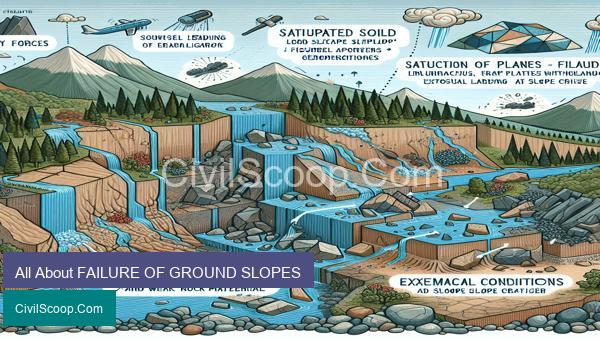
Ground slopes are a common occurrence in natural landscapes, from gentle inclines to steep cliffs. These formations play a significant role in shaping the terrain and creating distinct features in our environment. However, there are times when these slopes fail or collapse, resulting in devastating consequences. The failure of ground slopes can lead to landslides, mudslides, and other types of mass movement, causing damage to infrastructure, property, and even loss of life. In this article, we will delve into the causes and effects of ground slope failures, as well as measures that can be taken to prevent them. Understanding the complexities of slope failure is crucial in minimizing its impact and ensuring the safety of our communities.
Table of Contents
CAUSES OF FAILURE OF GROUND SLOPES
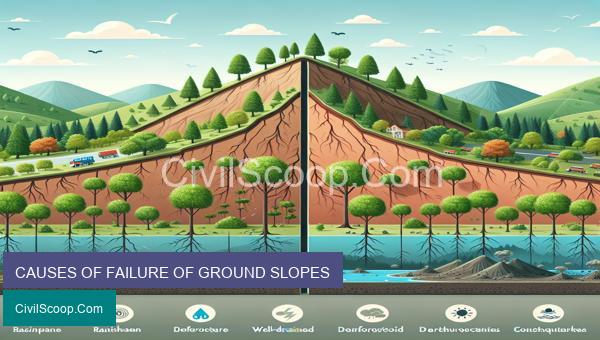
Ground slopes are an essential aspect of any construction project and are often used as a natural feature to enhance the architectural design. However, they can be susceptible to failure, posing a significant risk to the safety and stability of the surrounding area. The causes of failure of ground slopes can vary depending on a combination of factors, including geology, topography, soil properties, and external forces. In this article, we will discuss the common causes of ground slope failure.
1. Natural Geological Features
Geological structures, such as faults, joints, and fractures, can significantly influence the stability of ground slopes. These features can weaken the slope’s overall strength and stability, making it prone to failure. For example, a fault running parallel to the slope can create a weak plane, resulting in a landslide or rockfall. The presence of rock layers with different strengths and erosion-resistant capabilities can also lead to the failure of ground slopes.
2. Steep Slope Angle
The angle of a slope plays a crucial role in its stability. Slopes with steep angles are at a higher risk of failure, primarily when coupled with poor soil conditions or external forces such as rain or seismic activity. As the slope angle increases, it tends to become unstable due to the added weight and pressure from the overlying soil or rock. This can result in a sudden and massive collapse, often leading to landslides or debris flow.
3. Weak Soil and Rock Properties
Soil and rock properties are essential factors in determining the stability of ground slopes. The strength, cohesion, permeability, and density of the soil and rock layers in a slope can significantly affect its stability. For instance, soil layers with high water content are prone to liquifaction, causing failure. Similarly, loose or poorly compacted soil layers can trigger slope failure due to instability and reduced bearing capacity. Rock layers with extensive joints or fractures can also contribute to slope failure by creating weak planes.
4. External Forces
External forces such as heavy rainfall, earthquakes, and human activities can often trigger ground slope failure. Rainfall can infiltrate the soil layers, increasing the water content and reducing the soil’s internal strength and cohesion. This can lead to erosion and a decrease in the slope’s stability, resulting in landslides or debris flow. Similarly, earthquakes can cause the soil and rocks to shift and settle, leading to slope failure. Human activities such as excavation, construction, or vibration can also cause slopes to fail if not carefully planned and executed.
5. Poor Design and Construction Practices
A poorly designed and constructed ground slope can significantly increase the risk of failure. For example, an inadequate drainage system can result in excessive water accumulation, leading to soil saturation and subsequent failure. The use of improper materials, inadequate slope angles, and improper compaction can also contribute to slope failures. Inadequate supervision and maintenance also play a crucial role in preventing ground slope failure.
In conclusion, the failure of ground slopes can have severe consequences, ranging from property damage to loss of life. As a civil engineer, it is essential to consider all the possible causes of ground slope failure and design structures that are stable and safe. Proper site investigation, analysis, and construction techniques are crucial in mitigating the risks associated with ground slope failure. Regular monitoring and maintenance are also crucial in ensuring the long-term stability of ground slopes.
Conclusion
In conclusion, understanding the factors that contribute to the failure of ground slopes is crucial in preventing and mitigating potential disasters. From natural causes such as weather and erosion to human activities like improper construction and lack of maintenance, slope failure can have devastating impacts on both the environment and human lives. By implementing proper engineering techniques, regular monitoring, and proactive measures, we can work towards minimizing the risks of slope failure and ensure the safety of our communities. It is imperative that we continue to study and learn from these failures, in order to improve our understanding and management of ground slopes for a safer and more sustainable future.